26. January 2026
INGENIUM Charts Strategic Future at Landmark Alliance Council Meeting in Iași
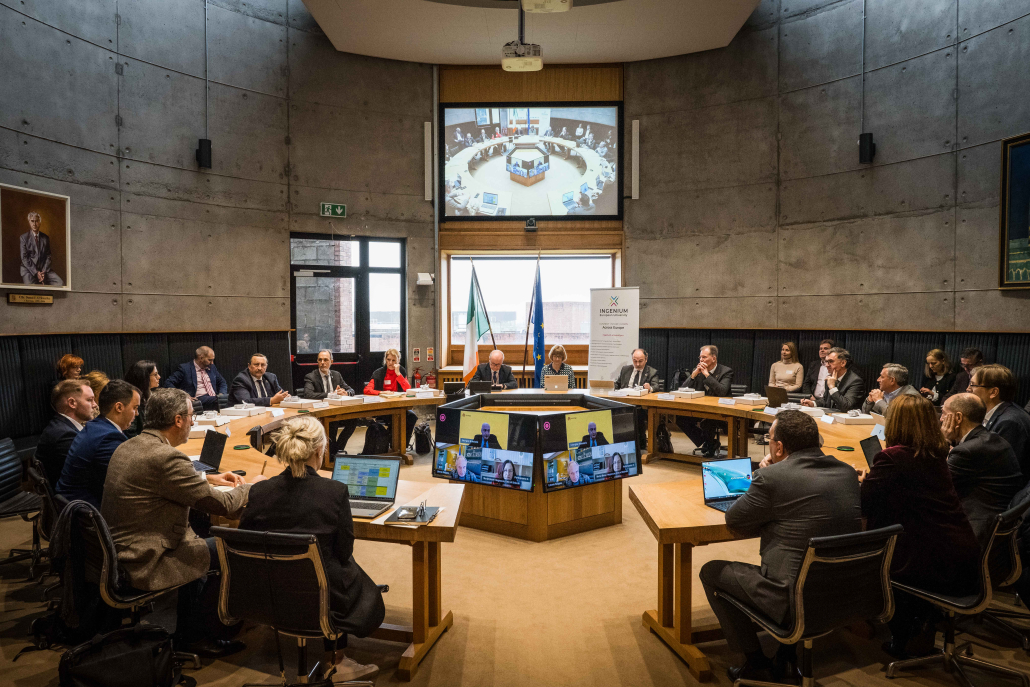
IAȘI, ROMANIA, 26 January 2026. The INGENIUM European University alliance will convene its Alliance Council meeting this Wednesday at the Palace of Culture in Iași. The meeting takes place during the sixth edition of the ‘10 Days of INGENIUM’ hosted by “Gheorghe Asachi” Technical University of Iași.
The Alliance Council, the alliance’s highest decision-making body, includes the Rectors and Presidents of the ten member universities, as well as representatives from the newly restructured Student Board. This structure ensures that both institutional leadership and student perspectives shape the alliance’s strategy.
The meeting will mark the transition from the alliance’s pilot phase to the ‘Next INGENIUM’ period, which will focus on systemic integration. This development represents a significant step towards establishing the ten-university collective as a unified European institution within the evolving European Higher Education Area.
Moving Towards “Next INGENIUM” (2027–2028)
During the meeting, members of the Alliance Council will finalise the ‘Next INGENIUM’ Concept Note, which sets out the alliance’s approach for the 2026 funding application. This strategy is designed to provide a clear roadmap for the 2027–2028 funding cycle, aligning with European Commission requirements for structural cooperation and supporting long-term institutional stability beyond individual project cycles.
The alliance aims to operate as a ‘University of 10 Campuses’. A University that will offer students opportunities for study and research across national borders. The shift from ad hoc coordination to systemic integration will be supported by three measures: developing joint academic programmes to meet labour-market needs, expanding mobility to ensure international access for all students and staff, and consolidating governance through a central legal entity.
In this regard, the Alliance Council will also review progress on the European Grouping of Territorial Cooperation (EGTC), the instrument chosen to provide the Alliance with legal personality and serve as its institutional backbone. The EGTC is currently undergoing formal registration in Finland. Once this new status is in place, INGENIUM will be able to hire dedicated staff and participate in large-scale funding opportunities, ensuring stability beyond the Erasmus+ grant.
The proposal for a legal entity under the EGTC framework has received formal endorsements from all ten partners’ governing bodies and is currently under ministerial review by national authorities. Entry into the EU registry is anticipated by Summer 2026, with full operational capacity, including the appointment of an EGTC Director and the commencement of initial activities, expected by late 2026.
This development will mark the transition to a sustainable, long-term governance model, with the EGTC serving as the central coordination and service hub.
Joint Education and Financial Solidarity
A central objective for the 2026/2027 academic year is the launch of the INGENIUM European Campus. The alliance wants to make international experience a standard part of every student’s education. It aims to embed mobility within degree re-accreditation processes and pursue the European Degree.
To support these aims, the Council will review the implementation of ten INGENIUM Pathway Programmes across five universities, designed to provide flexible mobility opportunities for students. The alliance also plans to introduce at least two Joint Master programmes by Autumn 2026 and is working towards the accreditation of four joint doctoral programmes. These initiatives will be underpinned by a unified Micro-credentials Framework, offering accredited short-form learning opportunities aligned with EU standards and labour market requirements.
To sustain this pace, the Council is expected to approve a joint budget model for 2026 that includes an envelope for joint education and mobility. This financial commitment is supported by the alliance’s proven execution capacity, as evidenced by a 2025 implementation report citing a 73% completion rate for strategic priorities.
The summit will include a monitoring visit by EACEA Project Officer Ms Ana Sofia Coutinho, representing the European Commission. This engagement is intended to validate INGENIUM’s progress towards the ‘Union of Skills’ and to ensure alignment with key EU policy objectives for 2026.
The Rectors will consider further strategic questions to address barriers to cooperation. Planned commitments include an increase in English-taught courses by 2028 and the establishment of thematic hubs in areas such as engineering and health sciences to connect senior management with departmental leaders. These hubs are intended to support institutional transformation across all academic and research settings, ensuring alignment between strategic leadership and faculty implementation.
As the ten Rectors and Presidents, alongside the newly appointed student representatives, prepare to gather at the Palace of Culture, the Iași summit marks a watershed moment in the transition to the ‘Next INGENIUM’ era. Following its conclusion and the formal validation of these strategic commitments, a comprehensive update will be published outlining the key decisions and the roadmap for the launch of the INGENIUM European Campus in the 2026/2027 academic year.