
Tag Archive for: Education Lab

What’s a dream teaching method of a young innovator? Share your idea to INGENIUM’s competition!

Tag Archive for: Education Lab

Special Edition Staff Academy webinar: Education Lab Results

As the holiday season approaches we welcome you to the festival of webinars!

During December in this special edition of Staff Academy webinars the Joint Education Lab projects are showcasing their projects!

Throughout the academic year, INGENIUM organises several public Staff Academy webinars where there are 1–3 short case presentations on cutting-edge teaching practices, followed by a lively discussion and Q&A session. The webinars unfold on Zoom and are hosted by the South-Eastern Finland University of Applied Sciences (Xamk).

Preliminary Schedule

12:00–12:20 COIL course, “Tackle Real Work Life Challenges.
12:20-12:30 Discussion
12:30–12:50 Investigating Norman Cistercian Influences: A Cross-Cultural Exploration Between Normandy and Abruzzo

12:50–13:00 Discussion
13:00–13:20 Shared experimentation between European universities of the “L’Ascolto” project and implementation of AI in the “L’Ascolto” web platform.
13:20–13:30 Discussion

Register to the Webinar

https://xamk-fi.zoom.us/meeting/register/P-SNuP_pSI6ZoV9cd7uTQA 

Registered persons will receive a confirmation email with the joining link.

Projects in this webinar

COIL course, “Tackle Real Work Life Challenges
This COIL course project is led by Mariya Loginova from Xamk. Xamk is partnering with UNIOVI, MTU, URN, TUIASI in this project. They are developing and testing the Ingenium COIL course, “Tackle Real Work Life Challenges.” This course, in collaboration with local companies, provides students with real-world challenges. Teachers will act as coaches, guiding international, multilingual student teams through problem-solving processes, enhancing their practical skills, and preparing them for global workplaces.

Students will engage with business representatives, work in multidisciplinary teams, and develop problem-solving abilities. Teachers will facilitate learning and support student teams to ensure successful outcomes. The course also aims to foster networking among all parties involved: company representatives, students, teachers, and RDI specialists, creating a new model for international cooperation among Ingenium partners. The outcome will be a tested course and cooperation module. The process will be documented and an article published in an international scientific journal.

Investigating Norman Cistercian Influences: A Cross-Cultural Exploration Between Normandy and Abruzzo

This project offers students a unique, hands-on experience with medieval cultural heritage. By visiting Cistercian abbeys and the State Archive of Siena, students engage directly with both architectural monuments and historical documents. The program combines field trips, guided analysis, lectures, and creative activities such as photo and video contests for a webinar. The aim is to enhance students’ understanding of medieval history, archival research, and cultural context, while promoting active learning and collaboration. The project highlights the value of experiencing historical sources in person, beyond digital tools, and serves as a model for experiential learning in cultural heritage education.

Maria Carreri (Ud’A),  Mario MarrocchiMarcella Lacanale , and Gabriella Gente Magnan will be present at the webinar.

Shared experimentation between European universities of the “L’Ascolto” project and implementation of AI in the “L’Ascolto” web platform.

This project is led by Ida Verna from G.d’Annunzio University of Chieti-Pescara. MUS and Xamk are also joined in the project. Their goal is to experiment with the L’Ascolto project between European universities and to implement AI in the L’Ascolto web platform. The L’Ascolto is a web platform whose objective is the creation, management and sharing of knowledge by education actors (teachers, students, institutional bodies and other stakeholders). The creation of such knowledge is the result of a holistic approach to teaching-learning processes, based on a framework that combines the Deming cycle with the QFD Quality Function Deployment and Kolb’s experiential learning cycle. The aim of the L’Ascolto Approach is to enable teachers, students and institutional bodies to use the same methodological approach to teaching improvement (innovation), with a single web platform. Although the actors of education use the platform at different times and in different ways, they work towards the common goal of educational innovation, with the same language (Listening Framework: constructive alignment combination of Biggs, Bloom, Dublin Descriptors, Deming Cycle, Kolb’s experiential learning). The creation, management and sharing of knowledge is the output of a continuous cycle of planning, management, evaluation and improvement of all teaching processes (Curriculum and individual teaching considered as a whole), while these are in progress and for the benefit of all actors:

TEACHERS: development of teachers’ professionalism (ENQA, 2007; OCDE, 2012; EC, 2013; EHEA, 2020) through their continuous self-training, the result of the knowledge-sharing process (best practices) among all the teachers using the platform;

STUDENTS: enhancement of learning (EC, 2017; ENQA, 2020; EHEA, 2020) implemented thanks to the promotion and drive for innovation that the holistic approach feeds into the Deming/Kolb cycle (Verna, 2020) and that the platform manages and shares among the actors, in terms of knowledge/competences;

COURSE COORDINATORS: development of academic leadership, implemented thanks to the knowledge-sharing system that provides continuous feedback (listening to needs) to the coordinator for the improvement/innovation of the teaching processes designed, managed and evaluated as a single system in continuous evolution.

L’Ascolto is ultimately a pedagogical model for experiential learning for teachers, students and institutional bodies.

Special Edition Staff Academy webinar: Education Lab Results

As the holiday season approaches we welcome you to the festival of webinars!

During December in this special edition of Staff Academy webinars the Joint Education Lab projects are showcasing their projects!

Throughout the academic year, INGENIUM organises several public Staff Academy webinars where there are 1–3 short case presentations on cutting-edge teaching practices, followed by a lively discussion and Q&A session. The webinars unfold on Zoom and are hosted by the South-Eastern Finland University of Applied Sciences (Xamk).

Preliminary Schedule

12:00–12:20 Sustainable development of teaching and learning environments – developing the Ingenium Learning Spaces Learning Community 
12:20-12:30 Discussion
12:30–12:50 INVEX (International VR-Experience)  

12:50–13:00 Discussion
13:00–13:20 IoT-Driven Environmental Monitoring for Innovative Sustainable Education (IT-EMISE)
13:20–13:30 Discussion

Register to the Webinar

https://xamk-fi.zoom.us/meeting/register/xBfB9j__TcKU3hFEUQtyWQ

Registered persons will receive a confirmation email with the joining link.

Projects in this webinar

Sustainable development of teaching and learning environments – developing the Ingenium Learning Spaces Learning Community 

The “Sustainable Development of Teaching and Learning Environments – Developing the Ingenium Learning Spaces Learning Community” project brings together Munster Technological University, Ireland (MTU), University of Skövde, Sweden (HiS), South-Eastern Finland University of Applied Sciences (XAMK), and Technical University of Iași, Romania (TUIASI) in a collaborative exploration of learning environment development through complementary methodological lenses. Through a series of online meetings featuring virtual campus tours, presentations, and cross-institutional dialogue, culminating in a site visit to MTU Ireland for campus visits and a seminar on “the third place” – the social threshold spaces where informal learning and community-building occur between formal educational environments – the partnership has developed a multifaceted framework integrating MTU’s person-centric stakeholder engagement model grounded in social justice, identity, and empowerment principles; XAMK’s scenario-based visioning methodology using workshop-generated personas to conceptualize future learning environments; HiS’s participatory action research approach yielding both theoretical frameworks and concrete spatial implementations; and TUIASI’s critical interrogation of the tension between architectural iconography, heritage preservation, and the creation of “spaces of radical openness” that challenge rather than merely accommodate learners. This Education Lab project addresses the complex interplay between physical space design, pedagogical practice, organizational culture, and stakeholder participation, recognizing that sustainable learning environment development requires not only innovative spatial solutions but also continuous engagement with the communities who inhabit, transform, and ultimately give meaning to these spaces.

Each member of the team, Peter Fogel (HIS), Matti Strengell (Xamk), Ancuta Rotaru (TUIASI) and Katie Power (MTU)  will share the presenting for the webinar.

INVEX (International VR-Experience)  

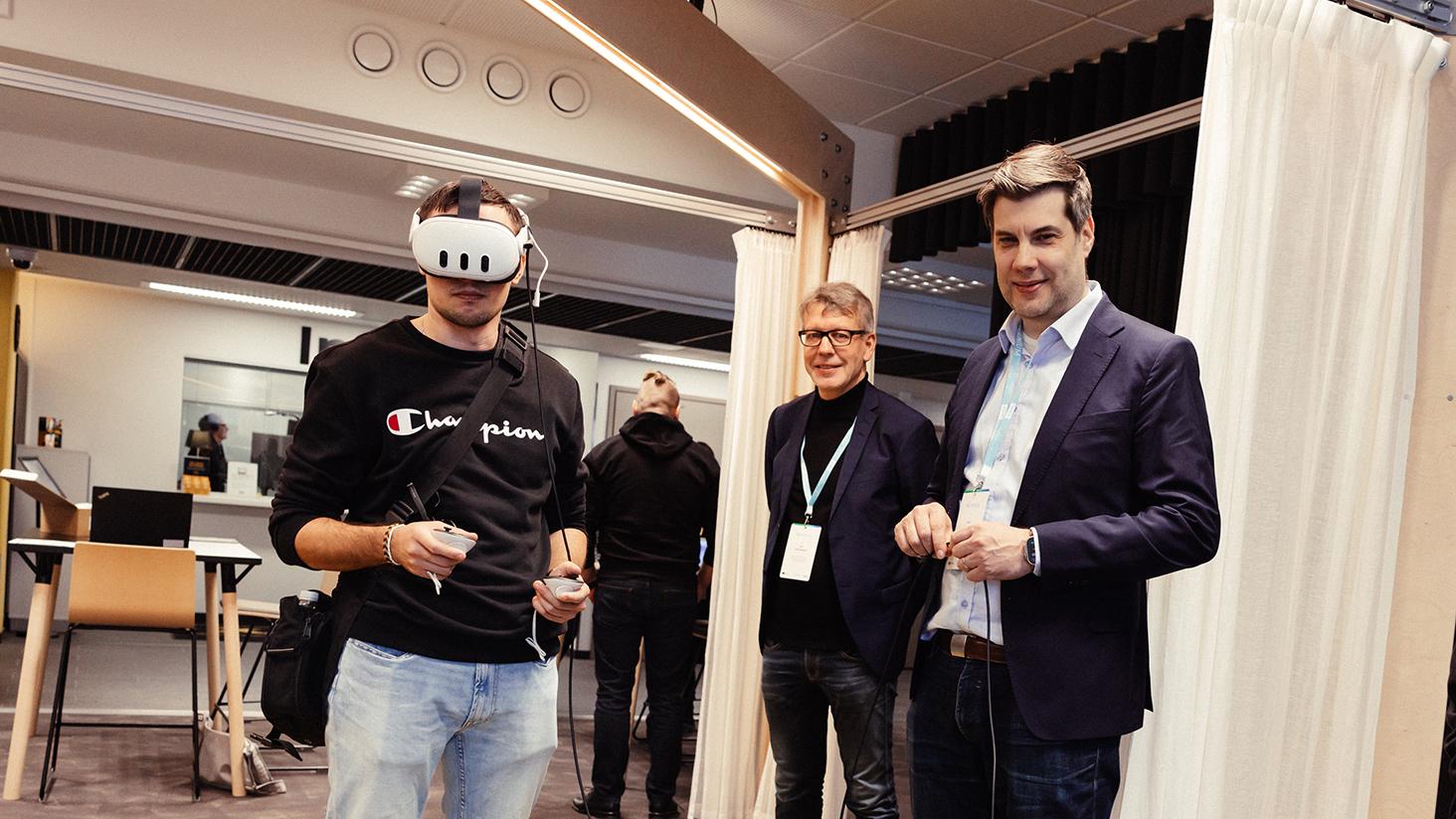
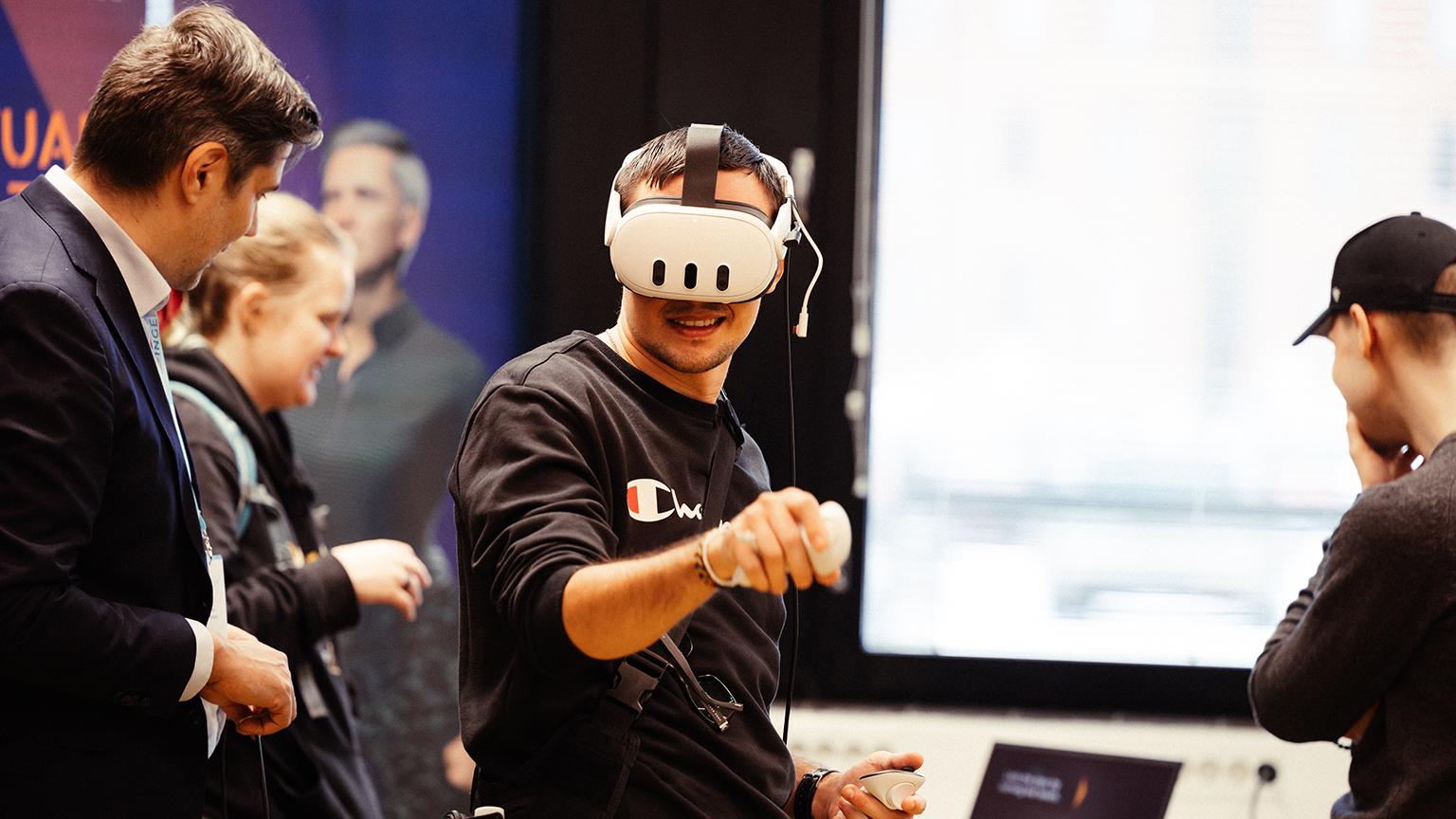
As part of the EU4M Master’s program (of the ingenium universities Skövde, UNIOVI and Karlsruhe), students have the opportunity to study in Gijón (UNIOVI), Spain. To promote the program, a simulator is built that enables a virtual surfing experience on the beaches of Gijón. The initial mechanical setup and the infrastructure for data collection (360° videos + acceleration data) have already been developed in Germany. Data collection is carried out in parallel by students in Spain. In addition, students in Sweden set up VR simulation models for the optimization of the surfing experience. Finally, all partners contribute to the function of the systems making students experience the work in an international project.

 Speakers: Prof. Enrique Ruiz Zúñiga, University of Skövde; Prof. Alberto Garcia Martinez, UNIOVI; Prof. Martin Kipfmüller, Hochschule Karlsruhe


IoT-Driven Environmental Monitoring for Innovative Sustainable Education (IT-EMISE)

This project aims to assemble Internet of Things (IoT) devices to create real-time environmental monitoring sensors. These sensors will analyse carbon dioxide (CO₂), particulate matter (PM), air temperature, and air pressure. The primary goal is to build these sensors using readily available components and integrate them into educational courses related to environmental sampling and monitoring.

Shakil Regmi from Xamk will be presenting their work and Adrian O’Sullivan from MTU will also be present. Pictured also one project member Kati Kontinen form Xamk.

Special Edition Staff Academy webinar: Education Lab Results

As the holiday season approaches we welcome you to the festival of webinars!

During December in this special edition of Staff Academy webinars the Joint Education Lab projects are showcasing their projects!

Throughout the academic year, INGENIUM organises several public Staff Academy webinars where there are 1–3 short case presentations on cutting-edge teaching practices, followed by a lively discussion and Q&A session. The webinars unfold on Zoom and are hosted by the South-Eastern Finland University of Applied Sciences (Xamk).

Preliminary Schedule

12:00–12:20 Rethinking Assessment and Feedback for Inclusive Learning amid Contemporary
Issues in Higher Education (RAFIL-CIHE)
12:20-12:30 Discussion
12:30–12:50 CHEMIT: Exploring Organic Chemistry Through Immersive Technologies  

12:50–13:00 Discussion
13:00–13:20 Using assessment “OF, FOR and AS” learning to develop a more impactful and authentic Intercultural Communication learning experience for students of MTU and HKA.
13:20–13:30 Discussion

Register to the Webinar

https://xamk-fi.zoom.us/meeting/register/ge-HQIakSVukartZZMBPNA

Registered persons will receive a confirmation email with the joining link.

Projects in the Webinar

Rethinking Assessment and Feedback for Inclusive Learning amid Contemporary
Issues in Higher Education (RAFIL-CIHE)

The INGENIUM Education Lab Rethinking Assessment and Feedback for Inclusive Learning brings together partners from Munster Technological University, the University of Crete, and South-Eastern Finland University of Applied Sciences to collaboratively design an innovative, research-informed micro-credential on assessment and feedback in higher education. Throughout the project the team organised monthly webinars to explore shared challenges while exchanging institutional expertise and co-developing module components. This work culminated in an in-person meeting at the University of Crete, where the team recorded structured webinar content covering assessment literacy, student-centred design, AI-enabled feedback, culturally responsive and multimodal assessment, and sustainable feedback practices. Together, these activities lay the foundation for a jointly developed, inclusive, and future-focused assessment and feedback module for the INGENIUM alliance.

Oana Elena Colt, Gheorghe Asachi Technical University of Iasi
Kallia Katsampoxaki-Hodgetts,University of Crete
Cai Weaver, South-Eastern Finland University of Applied Sciences
Tom O’Mahony, Munster Technological University

CHEMIT: Exploring Organic Chemistry Through Immersive Technologies  

The CHEMIT project brings together Munster Technological University (MTU), the University of Oviedo (UNIOVI), and Karlsruhe University of Applied Sciences (HKA) to explore how existing technological and didactic innovations in virtual-reality-based teaching can be transferred into new educational contexts. While HKA and MTU already use advanced VR infrastructures and social VR environments in their teaching, the University of Oviedo sees strong potential for applying VR in its Chemistry programmes. CHEMIT therefore aims to map the current state of VR use across the three institutions, identify opportunities for integrating VR into chemistry education, and outline future concepts for meaningful VR-supported learning.

Members of the team presenting
Raquel Soengas, University of Oviedo, Department of Organic and Inorganic Chemistry
Fiona Schmidbauer, Karlsruhe University of Applied Sciences, Institute for Intelligent Interaction and Immersive Experience (IIIX)
Jeremiah Spillane, Munster Technological University, Department of Technology Enhanced Learning

Using assessment “OF, FOR and AS” learning to develop a more impactful and authentic Intercultural Communication learning experience for students of MTU and HKA.
David O Hanlon from MTU is leading the project and MTU is collaborating with MTU. They focus on the development of intercultural competence (UNESCO, 2013) among students from Munster Technological University (MTU) and Karlsruhe University of Applied Sciences (HKA). By “internationalising” the learning experience (through the use of asynchronous and synchronous communication tools available on the INGENIUM Moodle Learning Management System- LMS), students of International Communication (from the International Business programme in MTU) and Business English (from a variety of programmes in HKA) will have the opportunity to experience authentic international communication between one another (without having to travel abroad). This project connects students through self- and peer-assessment of key communication and interpersonal skills (delivery of feedback, presenting to an international audience, networking and cultural/emotional intelligence) using co-designed rubrics. Online collaboration and reflection deepen intercultural understanding and support the development of cultural and emotional intelligence. They aim to refine the approach based on student feedback and share the project’s outcomes across INGENIUM.