Winners of the Best New Media Teaching Practices Come from Ireland
Last year INGENIUM’s Education Lab initiative hosted the Best New Media Teaching Practices Competition and its winners for both categories have been chosen! Purpose of this competition was to find innovative ideas in participatory learning and share them with the INGENIUM European University Alliance and beyond! There were two categories: The Innovations in Participatory Learning awards and The Young Innovators awards.
The proposals were evaluated by an evaluation board with a set criteria. They were evaluated by innovativeness (originality, technology, participatory methods and disruption) and impact and transferability (relevance, scalability & adaptability, evaluation and long-term impact). You can read more about the call and criteria on Education Lab’s page.
Get to know our winners and their excellent ideas below!
Young Innovators Awards: INGENIUM+ by Adam O’Neill, MTU
The Young Innovators awards was meant for forward-thinking, conceptually exciting, and original participatory learning projects, where emerging innovators have a chance to bring their most visionary ideas from the “garage” stage to implementation. The winning proposal, INGENIUM+, by Adam O’Neill, student at Munster Technological University, exemplifies bold thinking and conceptual originality, transforming a visionary idea into a practical, impactful solution. It reflects creativity, feasibility, and strong pedagogical relevance, aligning perfectly with the objectives of the call. The project demonstrates a learner-centered approach and innovative use of digital environments. 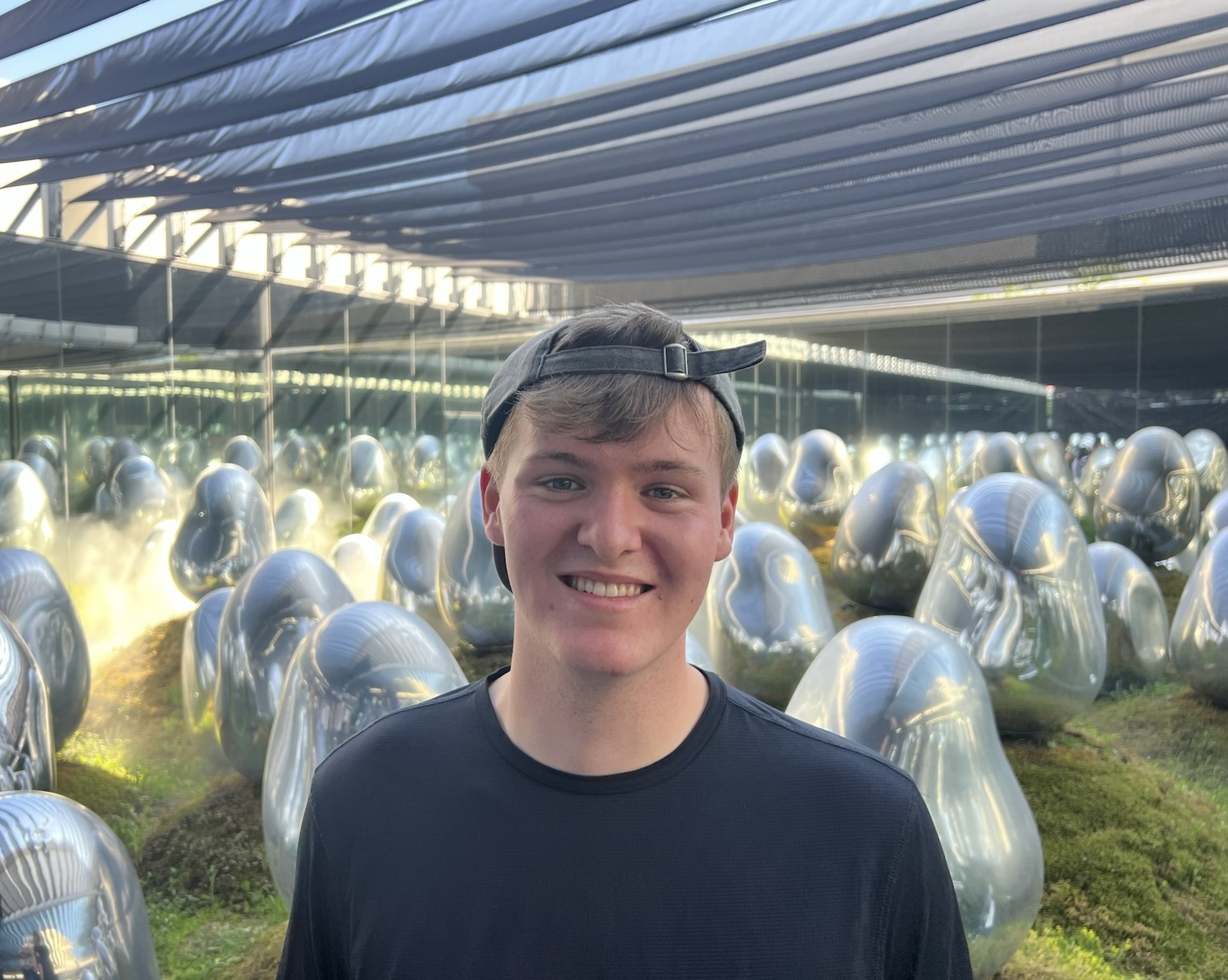
INGENIUM+ is a visual, graph-based social network that connects every student and staff member across the INGENIUM European University alliance. Using node-and-edge visualisation, the platform maps how people are linked through courses, disciplines, skills, and shared experiences. Instead of isolated lists or siloed systems, INGENIUM+ creates a living, participatory map of the university community.
Integrated into existing student systems, the platform automatically generates networks without requiring manual input. Students can then filter their map according to their needs: a first-year struggling with a module can instantly see peers and staff in their subject area; someone preparing for Erasmus can identify fellow exchange students and mutual connections at the host university; researchers can discover collaborators across disciplines and institutions. Educators can use the platform to form diverse project teams, design cross-faculty courses, or identify peer mentors.
The strength of INGENIUM+ is its scalability. At the classroom level it helps students form study groups; at the institutional level it breaks down silos between faculties; across the alliance it fosters true European collaboration, multilingual and multicultural by design. Looking forward, the platform could extend to alumni, industry, and local communities, creating lasting impact on lifelong learning and regional innovation.
INGENIUM+ does not simply connect people — it empowers them.
Adam wants to contribute in a meaningful way
“I applied because I saw it as an opportunity to genuinely contribute to the INGENIUM alliance. I’ve always admired the scale of the initiatives and the doors they open for students across Europe, and I really wanted to be part of that environment. As a student of Munster Technological University, I felt the competition was the right moment to step forward, represent what we can do, and contribute something meaningful. It was a chance to challenge myself while using my degree, engage with the wider INGENIUM community, and push an idea that I truly believed in.”
Adam O’Neill, student at Munster Technological University
10 Days of INGENIUM gives an opportunity to boost and develop Adam’s winning idea
“From the Young Innovators Awards side, I want to show the real potential of my idea to both students and staff and help build genuine momentum behind it. Presenting at the 10 Days of INGENIUM event is a great opportunity to do that. I’m also really looking forward to the Junior Winter School at University of Skövde, as the focus on sustainability will challenge me to think more critically about how my project can create long-term, responsible impact.”
Adam O’Neill, student at Munster Technological University
Innovations in Participatory Learning: Co-Designing Authentic Assessments in a Live Case Digital Sandbox by Sharon Lehane, MTU
 The Innovations in Participatory Learning awards intended for designers of new learning environments, including major adaptations of existing models of gaming, world-building, social networking, or other virtual environments, and/or the development of entirely new programs. This category was for educators and teaching staff. The winning proposal, Co-Designing Authentic Assessments in a Live Case Digital Sandbox, by Sharon Lehane Lecturer at MTU, demonstrated exceptional originality and creativity in reimagining learning environments. It introduced innovative use of technology and participatory methods, ensuring interactive and co-creative learning experiences. The design challenged traditional educational models and offered a disruptive, forward-thinking approach.
This project reimagines assessment as a participatory, technology-enhanced process where students and educators collaborate to co-create authentic assessments anchored in a live industry case, such as the Munster Technological University partnership with the Marina Market. Within a digital sandbox, students help design the rubric using Canvas’ contribution-locked tools, ensuring originality of thought before engaging in collective synthesis. Students then analyse exemplars, complete short quizzes to test knowledge, and provide anonymous peer feedback through Canvas. This process is enriched by AI integration, where students compare and critique feedback generated by GenAI tools alongside human perspectives, building critical digital literacy.
Learning journeys are captured through digital scrapbooks, which showcase rubric contributions, feedback exchanges, and reflections. Educators are supported with practical guides for structuring one-hour co-design and exemplar workshops, making the model scalable across disciplines. Student voices, captured through quotes and reflections, demonstrate the approach’s impact: equity, ownership, motivation, skill development and learning. By merging live case learning, new media technologies, and participatory methods, the digital sandbox challenges traditional educator-led models, making assessment itself a powerful form of learning.
Students benefit from Sharon’s winning idea
“I applied for the competition because I wanted to showcase how participatory, student-centred authentic assessment design can transform learning by improving academic integrity, student engagement, and employability skills. I also wanted to highlight the innovative work happening at Munster Technological University in Cork, Ireland, in developing student-led and industry-informed authentic assessments.”
Sharon Lehane Lecturer at at Munster Technological University
Sharing, learning and connecting at the 10 Days of INGENIUM
“I hope to share my work and ideas with colleagues across the INGENIUM alliance, learn from other innovative projects, and explore opportunities to further develop and scale my approach to authentic assessment. I am also keen to build new collaborations that will support continued innovation in participatory learning and authentic assessment practices.”
Sharon Lehane, Lecturer at Munster Technological University
Celebrations during the 10 Days of INGENIUM in Skövde
The winners will be celebrated during the opening ceremony of the 10 Days of INGNEIUM in Skövde. In Skövde Adam will join the Junior School and present his winning idea to the audience of the opening ceremony. Sharon will join the opening ceremony remotely to present her winning idea. The event is an excellent opportunity to get feedback from educators and staff from all over INGENIUM and to network!