INGENIUM Becomes the First Alliance to Complete the Prestigious Institutional Evaluation of the European University Association
The final report is now available on DEQAR, the database of the European Quality Assurance Register for Higher Education, and confirms that the alliance is moving towards the fully integrated European university its founding partners envisaged
The evaluation also grants INGENIUM the right to display the Evaluated by EUA-IEP seal on its communication materials, a mark that certifies the alliance has undergone this independent review
How was this evaluation carried out?
The Institutional Evaluation Programme is a peer-review process run by the European University Association to help member universities review how they operate. For thirty years, it has evaluated over 460 universities in more than 50 countries. Each institution writes a self-assessment, then a team of university leaders from outside spends a week comparing that account with what they learn from staff, students, and leaders.
INGENIUM is the first alliance to be evaluated under this programme. Universities and alliances take part to gain an outside perspective, to see what may have gone unnoticed from inside and where there is room to improve.
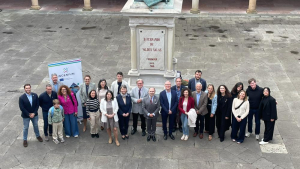
The evaluation began with a remote session in February to help evaluators understand INGENIUM’s goals and decide where to focus during their visit. The main phase ran from 6 to 10 April at the University of Oviedo, the alliance’s coordinating institution. During that week, evaluators spoke with about sixty people, including rectors, coordinators, staff, students, and associate partners.
Months earlier, INGENIUM had prepared a self-evaluation report that answered five key questions, along with supporting documents such as the original application to the European Commission’s funding call and details about INGENIUM’s governance, past and future. The report now responds to all these materials and the subsequent interviews.
Acting as one, a challenge every alliance is still working through
The report’s most detailed section looks at how INGENIUM makes decisions and organises its daily work, an area where the evaluators see room to keep advancing, as in any young alliance of this kind.
Three years in, INGENIUM still carries the imprint of the funding project that brought it into being. Its governance, budgeting, performance indicators, and internal vocabulary continue to reflect project management, and the evaluators see the alliance’s next stage of development as one of building institutional thinking alongside it.
On strategy, the evaluators found broad agreement among partners that deeper integration is a shared goal, with more work still to do on what that should actually look like over the next three to five years. INGENIUM’s new long-term strategy is read as a strong first step, with the fuller operational plan as the natural next step to build.
The plan to register INGENIUM as a European Grouping of Territorial Cooperation, a legal structure meant to let the alliance function more like a single institution, is the piece of this picture furthest along, with its statutes approved and national authorisations underway. The one point the evaluators invite the alliance to think through further is how far it wants this new structure to take it, and whether it is ready to use it as the framework for moving past the confederation of institutions, growing into the fully integrated European university its founding partners set out to build.
Quality culture, one step closer to daily practice
In 2025, INGENIUM approved a Joint Quality Assurance Policy covering both an internal quality management system and a separate policy for joint academic programmes, aligned with European standards. The evaluators found the joint programmes side of this policy well advanced. It gives INGENIUM a solid basis for following the European Approach to quality assurance and, in time, accrediting its own joint programmes, easing its dependence upon on ten different national systems.
The internal quality management system is where the evaluators see the clearest opportunity to build further. Satisfaction data, one of the indicators the policy itself identifies as central, is currently collected separately by each partner university, and bringing it together under a shared standard would allow INGENIUM’s quality assurance bodies to draw on it directly. Several of the key performance indicators the policy sets out are ready for regular use, giving the alliance a natural next step in putting its framework into regular practice.
The evaluators encourage INGENIUM to build a system with well-defined procedures, clear responsibilities, regular review cycles, and visible follow-up, and welcome the alliance’s own plan to replace the current Quality Assurance Committee with a new Quality Assurance Board tied to an annual cycle of review.
Teaching and learning, real momentum to keep building on
In just over three years, INGENIUM has created a broad range of educational offerings, several of which are about to become real. The Chemical and Biochemical Process Technology master’s, run jointly by the University of Oviedo, the Gheorghe Asachi Technical University of Iaşi and the University of Rouen-Normandy, has already secured its accreditation from the Romanian quality agency under the European Approach, and enrolment for its first cohort is open, making it the alliance’s first fully accredited joint programme.
Twelve pathway programmes across five partner universities are launching their first cohort in the coming academic year, each one letting students combine home study with structured mobility and challenge-based work across the alliance. The catalogue of joint Blended Intensive Programmes for 2026/2027 is already published, and the list of micro-credentials keeps growing.
The evaluators see the next stage of this work as bringing all these pieces together into a single visible whole. This gives INGENIUM a real opportunity to build a single, shared view of its educational offering, one that lets every partner university and every student see the whole picture at once rather than the slice that falls under their own area.
Students interviewed confirmed the strength of what is already on offer, saying they valued the model’s flexibility.
The report suggests INGENIUM has an opportunity to concentrate its strength in a smaller number of well-supported flagship programmes, chosen against clear criteria of strategic relevance, institutional readiness and student demand, building real depth alongside the range it has already created. It also raises a question: whether INGENIUM has the chance to settle for itself in this next phase, who counts as an INGENIUM student, and what should be true of someone before they are called an INGENIUM graduate.
Working this out now, while the first joint master launches its first cohort and the first pathway programmes open their doors across five universities, would let the alliance grow its offer with a clearer sense of identity behind it.
Service to society, real reach waiting to be joined up
INGENIUM has publicly committed to the Sustainable Development Goals and has dedicated efforts to sustainability and inclusion across the alliance. The evaluators see a clear opportunity for INGENIUM to bring these commitments together into one framework that shows, in a single place, how they translate into practice across all ten universities.
Associate partners illustrate this well. These are the companies, public bodies and municipalities that already support INGENIUM’s work through their relationship with one member university, and interviews confirmed how strong that existing relationship is. What has not yet developed is awareness of the alliance as a whole among these same partners, a natural next step once local ties are already this solid.
The report recommends a stakeholder model that builds on these strong local relationships and adds a smaller number of partnerships designed to work across several INGENIUM universities simultaneously, so that the alliance’s combined scale becomes something associate partners can draw on directly.
Internationalisation, one of INGENIUM’s clearest successes
Mobility is, according to the evaluators, INGENIUM’s most valued achievement. Students spoke with real zeal about their experiences at other INGENIUM universities, and several partners have seen clear growth in the number of students going abroad since joining the alliance, a result few alliances this young can claim with the same confidence.
International students have embraced the offer with particular energy, and the evaluators see the same enthusiasm as fully within reach for local students as well, once academic calendars are aligned more closely across countries and administrative processes are brought into line.
Credit recognition, already working in many cases, is set to become fully consistent as agreements already in place extend across the whole alliance. Intercultural learning, already prized by everyone interviewed, has all the ingredients it needs to become an explicit, named part of INGENIUM’s educational design.
The evaluators recommend concentrating on the practical steps that will carry this furthest: aligning calendars, simplifying administration, clarifying credit rules, and giving staff greater recognition for the mobility work they already carry out so well, so that this strength rests on the whole alliance rather than on individual effort alone.
What happens now
Three years ago, ten universities agreed to test whether they could learn to act as one, and the evaluators left Oviedo having watched them do it. That is the quiet argument running under everything else in this report, that the case for INGENIUM no longer needs making, only building on, with the same people more evenly supported and a documentation of the alliance’s own progress that keeps pace with how fast it is moving.
Since this evaluation took place, the European Commission has selected INGENIUM’s Next INGENIUM proposal for two further years of Erasmus+ funding through to December 2028, giving the alliance the means to carry everything in this report considerably further.