INGENIUM Blended Intensive Programmes 2026/2027

What is a BIP?

A Blended Intensive Programme (BIP) is a short, intensive international learning experience that combines online collaboration with a physical mobility of typically 5 days at an INGENIUM partner university.

BIPs are open to students enrolled at any INGENIUM university. They offer ECTS credits recognised by your home institution, and your participation is funded through Erasmus+.

Virtual+ Physical: Online sessions over several weeks, plus a 5-day intensive abroad

3–5 ECTS recognised by your home university upon successful completion

Erasmus+ Funded: Travel and subsistence support — details vary by university

Study Language: English

Who can apply: Students enrolled at any INGENIUM partner university.
ℹ️ Want to find out more?

Download and read the full call document, general conditions, funding rules, and the complete list of BIPs for 2026/2027.

📌 INGENIUM Pathway Students

If you have been selected for an INGENIUM Pathway Programme, you do not need to apply through this call. Your BIP place is guaranteed and will be arranged directly by your Pathway Coordinator.

Why choose an INGENIUM BIP

13

Programmes

7

Countries

3-5

ECTS Credits

100%

Erasmus+ Funded

Available Programmes

Browse all 13 BIPs open to INGENIUM students this next academic year and discover which are available to you depending on your home university, semester and type of learning programme.

Transversal
3 ECTS
Discipline-specific
Sustainable Cosmetics & Entrepreneurship
3 ECTS
Transversal
Study Skills
3 ECTS
Cross-disciplinary
Digital Competence & Innovation in Health Care
3 ECTS
Transversal
INGENIUM Inclusion BIP
3 ECTS
Discipline-specific
Conditions apply
SeismicX: Engineering Structures for the Real World
3 ECTS

Available Programmes

Browse all 13 BIPs open to INGENIUM students this next academic year and discover which are available to you depending on your home university, semester and type of learning programme.

Filter by:
Academic Communication
Transversal

Academic Communication

5 ECTS
HKA — Karlsruhe, Germany
Nov-Dec 2026
15-20 students (5 MTU | 5 Xamk | 5 URN | 5 other universities)

CLARITY-AI: Critical Learning in the Technology Age of AI
Transversal

CLARITY-AI: Critical Learning in the Technology Age of AI

3 ECTS
TUIASI — Iași, Romania
September 2026
15-25 students (5-15 HKA | 5-15 MUS | 5-15 other universities)

Exploring Ethical, Effective and Efficient Uses of AI to Support Health and Social Sciences Researchers
Transversal

Exploring Ethical, Effective and Efficient Uses of AI to Support Health and Social Sciences Researchers

3 ECTS
MTU — Cork, Irland
October 2026
15-25 students (6-10 students/university)

INGENIUM Inclusion BIP
Transversal

INGENIUM Inclusion BIP

3 ECTS
URN — Rouen, France
March 2027
15-25 students (1-3 students/university)
International Project Challenge (IPC): An Integrated Cross-Sector and International Collaborative Initiative
Cross-disciplinary

International Project Challenge (IPC): An Integrated Cross-Sector and International Collaborative Initiative

5 ECTS
XAMK — Kotka, Finland
April 2027
15-25 ( 5 UNIOVI | 6 URN | 5 other university)

MedChem BIP: Exploring Medicinal Chemistry – A Hands-On Journey for Future Scientists
Discipline-specific

MedChem BIP: Exploring Medicinal Chemistry – A Hands-On Journey for Future Scientists

3 ECTS
UdA — Pescara, Italy
June 2027
1-5 UNIOVI | 1-5 HiS | 3-8 TUIASI
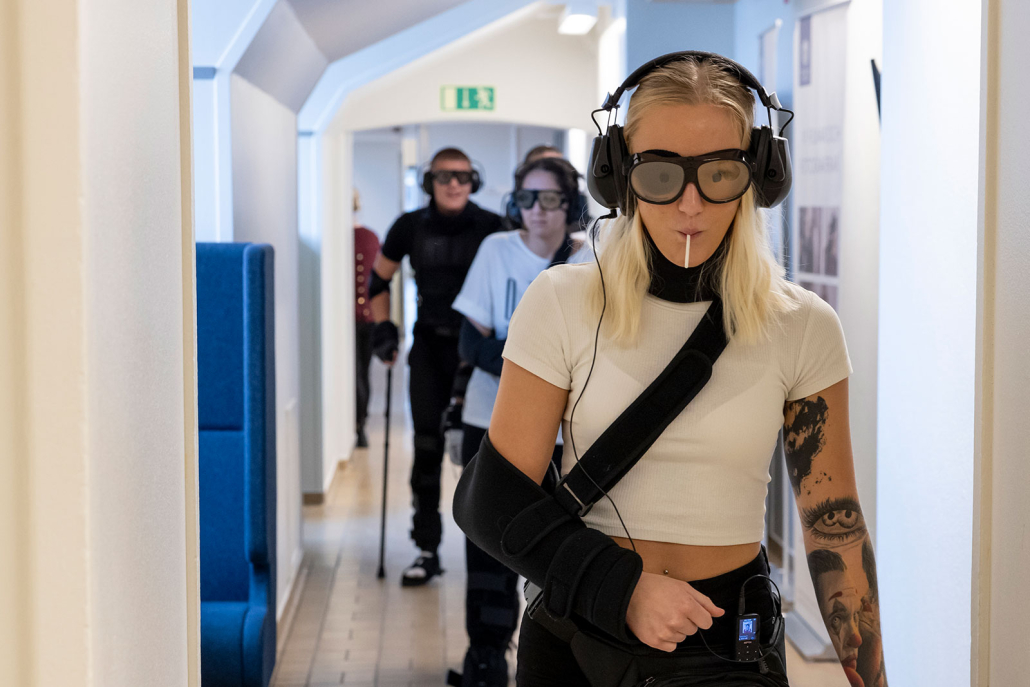
Multidisciplinary Approaches to Digital Competence and Innovation and Health and Social Care
Cross-disciplinary

Multidisciplinary Approaches to Digital Competence and Innovation and Health and Social Care

3 ECTS
HIS — Skövde, Sweden
November 2026
30 students (1-4 students/university)

Nature-Based Wellbeing Experience
Transversal

Nature-Based Wellbeing Experience

3 ECTS
XAMK — Kotka, Finland
May 2027
15-30 students (2-5 students/university)

Non-technical skills for Accountants
Discipline-specific

Non-technical skills for Accountants

5 ECTS
MTU — Cork, Irland
November 2026
15-25 students (max. 6 students/university)

School Community Development and Youth Work Approaches
Transversal
Conditions apply

School Community Development and Youth Work Approaches

3 ECTS
XAMK — Kotka, Finland
May 2027
15-25 students (max. 6 students/university)

SeismicX: Engineering Structures for the Real World
Discipline-specific
Conditions apply

SeismicX: Engineering Structures for the Real World

3 ECTS
TUIASI — Iași, Romania
November 2026
15-25 students ( 5-10 students/university)

Sustainable Cosmetics & Entrepreneurship
Discipline-specific

Sustainable Cosmetics & Entrepreneurship

3 ECTS
TUIASI — Iași, Romania
September 2026
15-25 students (2-5 UdA | 5 UNIOVI | 5-15 other INGENIUM universities)

Sustainable Development and Corporate Responsibility
Cross-disciplinary

Sustainable Development and Corporate Responsibility

3 ECTS
UOC — Heraklion, Crete, Greece
Nov-Dec 2026
15-25 students (1-4 students/partner)
How to Apply

Two simple steps to join a BIP

1. Choose Your BIP

Browse the programmes above and identify the BIP(s) that match your interests, field, and availability.

2. Apply at Your University

Each university has its own application process and deadlines. Click your university below for instructions.

3. Prepare for Mobility

If selected, your university will guide you through the Erasmus+ grant process and travel arrangements.

Frequently Asked Questions

A Blended Intensive Programme (BIP) is a short-term international learning experience that combines a short physical mobility (typically 5 days, but with the possibility of lasting up to 30 days) with a virtual learning component before, during or after the physical mobility. Unlike a regular Erasmus mobility (which usually lasts several months), BIPs are shorter, more flexible, and focused on intensive, collaborative learning.

A BIP typically includes several weeks of online activities followed by a short physical mobility of typically 5 days, but with the possibility of lasting up to 30 days, at a partner university.

Yes. Participation in both the virtual and physical components is mandatory. You must complete both parts in order to receive ECTS credits and Erasmus+ funding .

Yes. Students at all levels — short cycle, Bachelor, Master, and Doctoral — can apply. Some BIPs are open to all levels, while others may target specific study cycles. Please check each BIP for more details.

It depends on the BIP. Some programmes are open to all disciplines (transversal), while others require a specific academic background. You should check the eligibility criteria for each BIP before applying.

Yes, you may apply for multiple BIPs, depending on your university’s rules. However, you will typically only participate in one BIP at a time, depending on selection results and scheduling compatibility.

Yes. Participation in previous INGENIUM mobility activities does not prevent you from applying, although your home university may consider participation balance in the selection process.

No. If you are part of an INGENIUM Pathway Programme, your place in a BIP is arranged directly through your Pathway Coordinator and you do not need to apply through this call.

You must apply through your home university, usually via your International Relations Office or a dedicated application platform. Each university manages its own application process.

Application deadlines are set individually by each partner university. Please check your home university’s application page for the exact deadline.

Selection timelines vary by university. Your home institution will inform you directly once the selection process is completed.

Yes. All students receive Erasmus+ funding, which covers travel and daily expenses during the physical mobility period.

No. There is no participation fee for BIPs. Your main costs (travel and subsistence) are typically covered by Erasmus+ funding.

Each BIP awards between 3 and 5 ECTS credits, which corresponds to an expected workload in the programme. This includes hours for online lectures, self-study and/or group work, plus the number of hours allocated for the physical mobility. Please check each BIP for the number of allocated hours.

Yes. ECTS credits are recognised by your home university after successful completion of the BIP. The exact form of recognition depends on your programme and institution, and will be defined in your learning agreement.