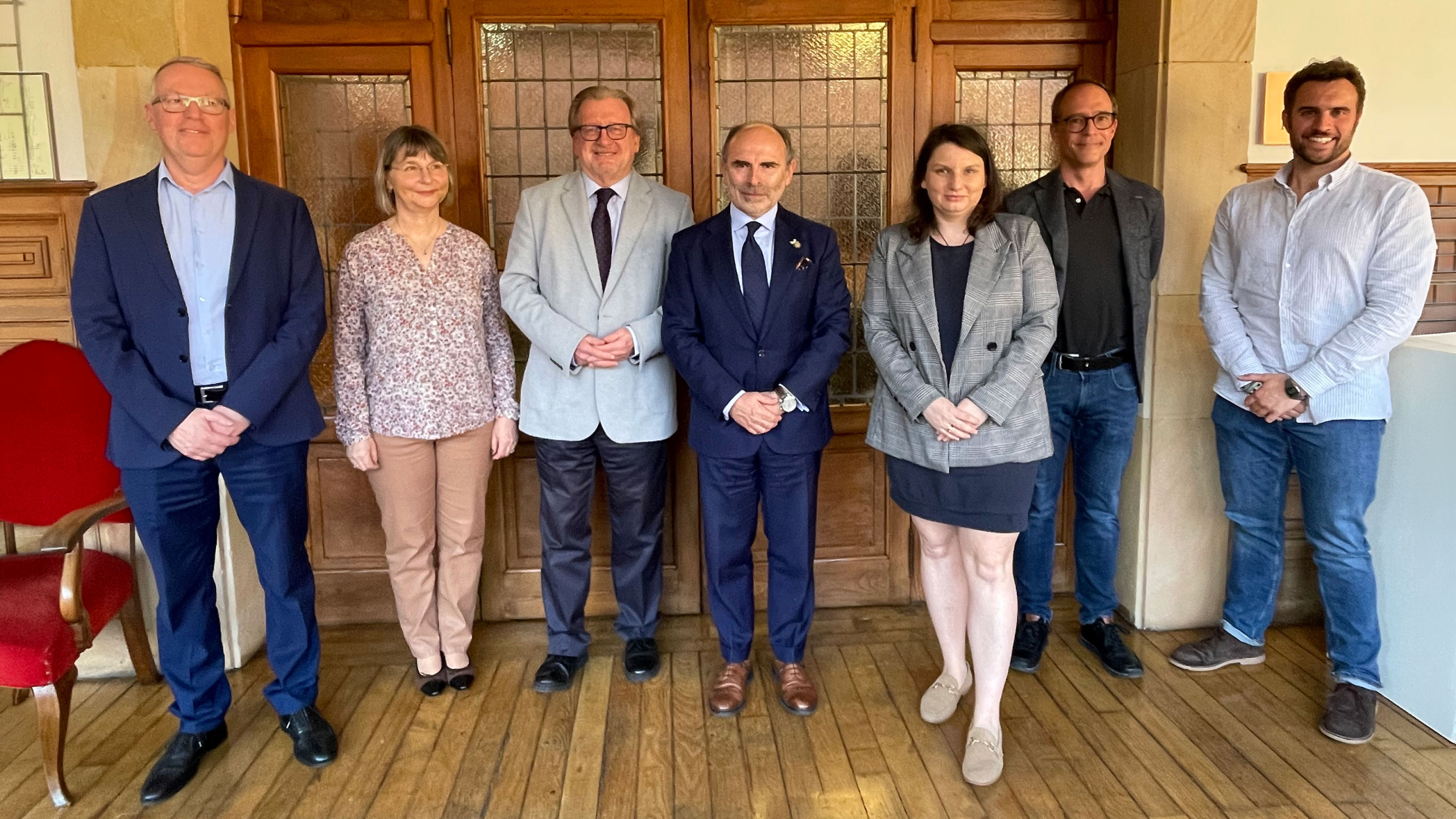
INGENIUM undergoes its first international evaluation in Oviedo
Our alliance becomes the first to undergo Europe’s most prestigious external review for higher education institutions. More than 40 representatives from the ten member universities and six evaluators are working together on the assessment. The programme of activities includes a seminar open to the whole community, designed to showcase plans for the future.
INGENIUM is becoming this week the first international university alliance to undergo a prestigious external review. The University of Oviedo, acting as coordinator, is hosting from 6 to 10 April the visit of the evaluation team from the Institutional Evaluation Programme (IEP) of the European University Association (EUA), together with representatives of the other nine partner institutions. Around 60 people in total, including rectors, academic staff, technical and management personnel, and students, are taking part in a programme that features sessions open to the wider community.
The IEP is the most prestigious peer review scheme in Europe for higher education institutions, and has been running for more than 30 years. Over that time, it has carried out more than 460 evaluations across over 50 countries. It has recently broadened its scope to offer, for the first time, reviews tailored to European university alliances, and INGENIUM is the first to take part in this new framework.
Unlike accreditations or rankings, the outcome of the IEP is not binding. Its purpose is constructive, aimed at improving governance and internal processes. The evaluation team, made up of experts in European higher education and university policy, is examining the alliance in depth to help INGENIUM strengthen its strategic leadership, its capacity to manage change and its internal quality culture.
The review is structured around five key questions that cut across every area of activity: what vision the alliance pursues, how it intends to achieve its goals, how it monitors progress, how it safeguards the quality of its educational, research and service offerings and, particularly importantly, how it plans to complete the transition from project-based management towards genuine integration and sustained cooperation.
An extensive programme
The visit runs over five days, with a packed schedule of meetings between the evaluation team and representatives of the ten INGENIUM universities, alongside a series of complementary activities.
Throughout the week, the evaluators are meeting with the Rector of the University of Oviedo, Ignacio Villaverde, with rectors and presidents from the other partner universities and with the coordinators of the INGENIUM Technical Secretariat. They are also holding interviews with academic staff responsible for the joint educational offer and for research and innovation activities, with those in charge of quality assurance, with students involved in alliance activities, with external stakeholders and with staff working on student services, mobility and internationalisation.
On the final day, Friday 10 April, the evaluation team will present a preliminary oral report setting out its conclusions and recommendations, first to the Rector and then to the wider alliance community in the closing working session.
As part of the programme, a seminar open to the whole university community will be held on Thursday 9 April at 16:45 in the Aula Magna of the Historical Building. It has been designed to encourage exchange among the members of the INGENIUM community gathered in Oviedo, and to share the main activities and achievements of the alliance with a broader audience. The seminar is structured around three round tables and a closing presentation.
A turning point
The visit comes at a pivotal moment for INGENIUM. In March, the alliance submitted its bid to the new European Universities funding call for the 2027-2028 period, along with a project proposal for the European Degree Label. At the same time, preparations are being finalised for the rollout of its joint educational offer for the coming academic year, which will feature new microcredentials, the launch of the Pathway programmes and the first joint undergraduate and postgraduate degrees.