Tuulevi Aschan: Physical activity as means to improve learning outcomes in higher education
Empowerment tools is a participatory, asynchronous learning model that adds an emotionally engaging, human-centered layer to subject-specific teaching. It supports psychological safety, self-determination, and learner participation in digital environments. Grounded in research from positive psychology (Seligman), self-determination theory (Deci & Ryan), and psychological safety (Edmondson), the model is adaptable across disciplines and learner groups.
The approach emphasizes multidimensional teacher presence through visual and audio elements (e.g., Canva, audio greetings in Moodle/Learn), fostering trust and modeling safe interaction. Learners share personal empowerment tools—images, sounds, or memories that evoke positive emotions—via platforms like Padlet. These are followed by appreciative peer feedback, enhancing emotional engagement and relatedness.
Reflective tasks and feedback in Moodle / Learn forums further support strengths-based interaction and recognition. The model does not require real-time participation, making it flexible and inclusive. While the teacher cannot learn on behalf of the student, the model offers tools to activate and support learner engagement. It promotes autonomy, competence, and connection—and provides a scalable foundation for humanizing digital learning.
Tuulevi Aschan
Health and Wellbeing Education Specialist
South-Eastern Finland University of Applied Sciences
ORCID: 0009-0009-0456-873X
Email: tuulevi.aschan@xamk.fi
LinkedIn: www.linkedin.com/in/tuuleviaschan/
Stamatios Papadakis: AI for All: Sustainable Creativity and No-Code App Design in Higher Education
This 1.5-hour interactive workshop blends short demonstrations, collaborative design, and guided reflection. Participants will experience how university students—especially those from non-technical disciplines—can use generative AI (ChatGPT, Gemini) to create meaningful educational apps without writing code. Working in small groups, attendees will design mini-apps responding to authentic learning challenges, from inclusive classroom activities to sustainable education awareness. Each group will move through ideation, AI-assisted prototyping, and peer feedback cycles. Reflection points will link the process to digital literacy, creative pedagogy, and sustainability in higher education. The format models a fully transferable practice adaptable to any field where educators wish to bridge creativity, technology, and active learning.
Stamatios Papadakis
Assistant Professor in Educational Technology
University of Crete
Email: stpapadakis@uoc.gr
ORCID: 0000-0003-3184-1147
LinkedIn: www.linkedin.com/in/stamatis-papadakis/
Staff Academy workshops
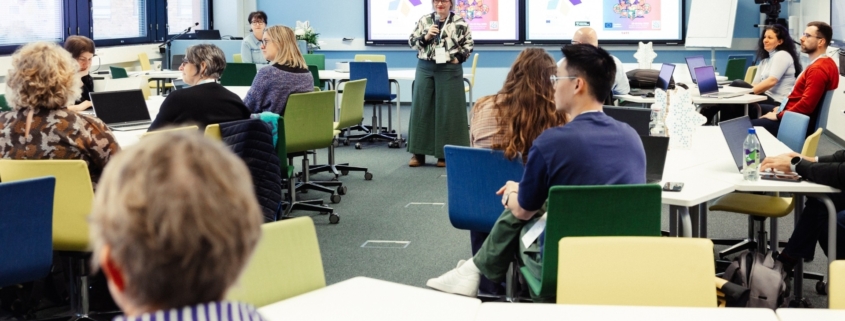
The INGENIUM Alliance organises Staff Academy workshops to share, transfer and showcase selected innovative pedagogical methodologies from the partner Universities. Each Staff Academy event has ten individual sessions, lasting an hour, with one from each partner university. The Staff Academy sessions are based on proposals submitted by Alliance staff implementing innovative learning methodologies or wishing to develop them in cooperation with INGENIUM partners.
Staff Academy workshops allow participants to gain and enhance their teaching and facilitation skills by providing additional time for hands-on learning and interaction with colleagues from diverse backgrounds and fields. It will also provide an appropriate framework for knowledge sharing and transfer, offer new networking opportunities, and open avenues for enhanced cooperation with the Alliance.