Now it’s time to get to know the projects from the third Joint Education Lab Projects call. Each project talks about their results in a 20-minute presentation, followed by questions and discussion.
You can join the webinar at any time, so if your schedule is busy, but you are interested in a specific project, you can join the webinar only to hear their presentation. Remember to register to the webinar to get the link to join.
The webinars are also recorded, and the recording will be added to our Education Lab playlist on YouTube.
INGENIUM Education Lab launched a Joint Education Lab Projects initiative to promote joint innovation projects. This initiative aims to fund collaboration between different faculty, educators, and RDI specialists in two or more INGENIUM universities to develop advanced teaching methods, micro credentials, courses, and educational products.
See the schedule below. More information about the projects and speakers will be added later. Register to the webinar and come to learn how your colleagues have been co-operationg through INGENIUM!
Register to the webinar in order to get the link to join: https://xamk-fi.zoom.us/meeting/register/ewrSt6rrTquDmoHO01ZUfg
Tuesday 1 Sept, 12:00-13:00 CEST
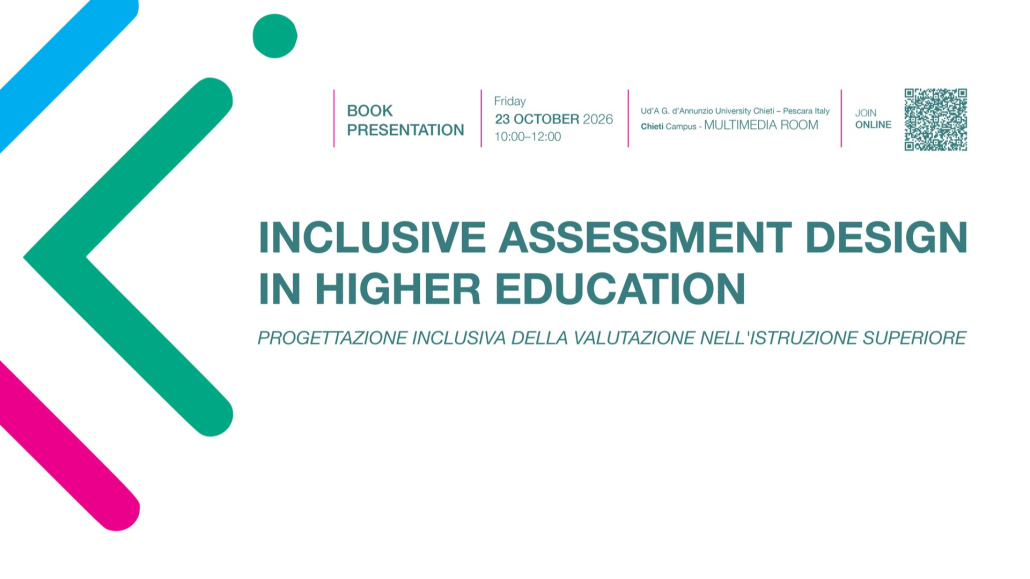
- 12:00-12:30 From MOOC to Action Research and EBOOK: Rewriting Assessment Narratives Through Research-Informed Practice: Insights for European University Higher Education Alliances
- Assessment sits at the heart of designing learning environments. It shapes what students study, how they engage with knowledge, and ultimately who succeeds and who is excluded. Yet despite its central role, assessment design often remains surprisingly under-theorised, guided by tradition, convenience, or institutional habit rather than by clear conceptual frameworks, discourse awareness, or research-informed design principles. As this book argues, assessment is not merely a tool for measuring learning or finding ways of detecting AI use. It is a pedagogical architecture that structures opportunities to demonstrate knowledge, participate in disciplinary practices, and develop academic identity.
- The open access peer-reviewed Ebook we edited, designed and authored entitled Inclusive Assessment Design in Higher Education: Feedback, Partnership, and AI-Supported Design addresses a significant gap in contemporary educational discourse. While universities increasingly speak about inclusion, equity, and innovation, there remains a lack of coherent guidance on how these aspirations translate into concrete assessment design decisions. Many educators face practical questions for which the literature provides fragmented answers: How can assessment systems become genuinely inclusive without lowering intellectual standards? How can feedback move beyond commentary toward meaningful learning processes? How can assessment design respond constructively to the emergence of generative AI while preserving academic integrity and student agency?
- This open access book responds to these challenges by bringing together theoretical insight, pedagogical models, and evidence-based case studies developed across the INGENIUM European University Alliance. A distinctive strength of this volume lies in its architecture. Each chapter moves systematically from scholarly foundations, to conceptual frameworks, to practical design models, and finally to applied case studies. For university teachers, programme leaders, educational developers, and policy makers, this book offers more than critique. It provides a language for thinking about assessment as a complex pedagogical system and equips educators with design literacy to rethink entrenched practices. By integrating perspectives from assessment research, multiliteracies, feedback literacy, Universal Design for Learning, and action research, the book situates inclusive assessment within a broader transformation of higher education pedagogy with a clear message: inclusive assessment does not emerge accidentally. It must be designed, researched, and continuously refined.
- Kallia Katsampoxaki-Hodgetts, UOC; Thomas O’Mahony, MTU; Cai Weaver, Xamk; Mercedes Bravo Rebolledo, URN; Oana Colt, TUIASI
- 12:30-13:00 Multimodal Artefacts for Reflective Chemistry Learning (MARCheL)
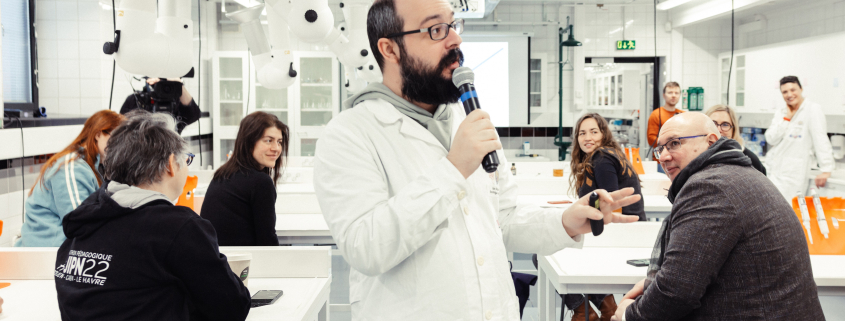
- How can laboratory assessment move beyond traditional lab reports? MARCheL introduces an innovative approach that combines reflective practice, co-created assessment rubrics, peer feedback and student-produced multimodal artefacts to enhance learning in STEM laboratories. Building on the successful “MCRs meet Multimodal Assessment” initiative at the University of Crete, the project brings together partners from Greece (UoC) and Spain (OVD) to explore how participatory and digital assessment can strengthen student engagement, scientific communication, and intercultural collaboration. During this webinar, the consortium will present the project’s pedagogical framework, implementation strategy and vision for developing transferable teaching practices across the INGENIUM Alliance.
- Ass. Prof Constantinos Neochoritis, UoC; Prof Raquel Maria Gonzalez Soengas, UNIOVI