
Funded through Erasmus+, spent at one or more partner universities.
Online, hybrid, COIL and guest-led components, without leaving home.
Mobility windows are pre-recognised by the home institution.
Access to courses offered across the ten INGENIUM partners.


Pathways launching in 2026/2027
Twelve Pathways open across five partner universities in this first cycle. Select a Pathway to see the corresponding programme page at the host university, where you will find local enrolment information, application dates and contact details. Application procedures are managed locally by each university.


Information Technologies for Telecommunications (IT4T)
Telecommunications software, wireless networks and embedded systems, with AI and 5G applications.
Discover the Pathway

Electrical Energy Conversion and Power Systems
Power engineering with four partner universities and a pan-European project challenge.
Discover the Pathway
Biotechnology of Environment and Health
Applied biotech research across INGENIUM laboratories, with AI-supported methodologies.
Discover the Pathway
Social Work
Comparative social intervention across four European countries, centred on inclusion.
Discover the Pathway
Commerce and Marketing
International marketing, corporate responsibility and AI applied to commercial analysis.
Discover the Pathway
Tourism
Sustainable, heritage-led tourism with international fieldwork across INGENIUM regions.
Discover the Pathway


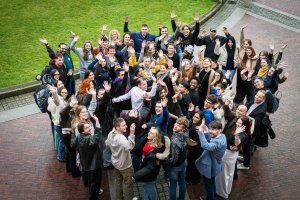
Long-term Mobility Opportunities

As a student of the INGENIUM European University, you are presented with an exciting array of opportunities for academic exploration through student mobility. Our university is part of a dynamic network comprising ten institutions across Europe. Through our exchange agreements, you have the chance to embark on transformative semesters abroad, immersing yourself in diverse cultures and academic environments that complement your study programmes. To delve into the details of these enriching opportunities, we encourage you to connect with your local international office. They are equipped to guide you through the process, offering personalized insights tailored to your academic aspirations and the availability of study programmes abroad. Recognizing the evolving landscape of education, we also offer flexible alternatives to traditional mobility experiences. Whether you are looking for shorter periods abroad or virtual learning experiences, we strive to accommodate your preferences and circumstances. Over time, you will find a curated selection of offerings from each of our partner institutions, each designed to enhance your academic journey and broaden your horizons. Embrace the diversity of opportunities that the INGENIUM European University has to offer, and embark on a journey of discovery that transcends borders, enriching your academic and cultural perspectives along the way. Our International Offices look forward to help you plan your international experiences.
Academic Calendars
The INGENIUM European University has ten campuses, all located in different countries. You can find the academic calendars for each partner university below.
Academic Year 2024/2025
Academic Year at 2024/2025 at UNIOVI
You can find the academic calendar for UNIOVI here.
Academic Year 2024/2025 at MUS
Toggle Content goes here
Academic Year 2024/2025 at UoC
Toggle Content goes here
Academic Year 2024/2025 at HKA
Beginning – End
1 September 2024 – 28 February 2025
Lecture period
30 September 2024 – 24 January 2025
Holiday
21 December 2024 – 6 January 2025 (Christmas)
Examination period
27 January – 14 February 2025
Academic Year 2024/2025 at XAMK
1 August 2024 – 31 December 2024
Starting dates of studies
- Between 1 August and 1 September 2024, teaching can be arranged for separately determined courses.
- New students start their studies with an orientation week from 26 August to 30 August 2024, continuing students start on 2 September 2024.
Teaching is not arranged during the following periods
- 21 October 2024 – 27 October 2024 (week 43)
- 21 December 2024 – 12 January 2025 (weeks 52, 1 and 2)
Academic Year 2024/2025 at UdA
Toggle Content goes here
Academic Year 2024/2025 at HIS
2 September 2024 – 19 January 2025
Further details can be checked here.
Academic Year 2024/2025 at MTU
Start date – Continuing students
10 September 2024
Start date – 1st-year students
Start date – De-semesterised Departments (Year 1 students)
16 September 2024
Reading Week
29 October – 1 November 2024
Last Day of Lectures – continuing students
6 December 2024
Review period
9 – 11 December 2024 (inclusive)
Terminal Examinations
12 – 21 December 2024 (inclusive)
Academic Year 2024/2025 at URN
Academic Year 2024/2025 at TUIASI
Toggle Content goes here
Academic Year 2025/2026
Academic Year 2025/2026 at UNIOVI
You can find the academic calendar for UNIOVI here.
Academic Year 2025/2026 at MUS
Toggle Content goes here
Academic Year 2025/2026 at UoC
Toggle Content goes here
Academic Year 2025/2026 at HKA
Beginning – End
1 March – 31 August 2025
Lecture period
17 March – 4 July 2025
Holiday
22 April 2025 (Easter)
9 – 13 June 2025 (Whitsun)
Examination period
7 – 25 July 2025
Academic Year 2025/2026 at XAMK
1 January 2025 – 31 July 2025
Starting dates of studies
- In January, both new and continuing UAS students will start on 13 January 2025.
Teaching is not arranged during the following periods
- 21 December 2024 – 12 January 2025 (weeks 52, 1 and 2)
- 24 February 2025 – 2 March 2025 (week 9).
Academic Year 2025/2026 at UdA
Toggle Content goes here
Academic Year 2025/2026 at HIS
20 January 2025 – 8 June 2025
Further details can be checked here.
Academic Year 2025/2026 at MTU
Start date – Continuing students
20 January 2025
Start date – 1st-year students
Start date – De-semesterised Departments (Year 1 students)
13 January 2025
Mid-term break
17 – 21 February 2025
Easter break
14 – 25 April 2025 (inclusive)
Last Day of Lectures – continuing students
2 May 2025 Kerry Campus
Review period
6 – 9 May 2025 (inclusive)
Terminal Examinations
12 – 22 May 2025 (inclusive)
Academic Year 2025/2026 at URN
Beginning – End
March 1–August 31, 2025
Lecture period
March 17–July 4, 2025
Holiday
April 22, 2025 (Easter)
June 9-June 13, 2025 (Whitsun)
Examination period
July 7-25, 2025
Academic Year 2025/2026 at TUIASI
Toggle Content goes here
 https://ingenium-university.eu/wp-content/uploads/2026/06/Social-Sciences-Public-Policy.jpg
1365
2048
Chiara Pintus
https://ingenium-university.eu/wp-content/uploads/2024/03/ingenium-main-logo.svg
Chiara Pintus2026-06-19 14:00:132026-08-27 09:57:27Call for INGENIUM PhD Mobility and Co-Supervision Scholarships is now open!
https://ingenium-university.eu/wp-content/uploads/2026/06/Social-Sciences-Public-Policy.jpg
1365
2048
Chiara Pintus
https://ingenium-university.eu/wp-content/uploads/2024/03/ingenium-main-logo.svg
Chiara Pintus2026-06-19 14:00:132026-08-27 09:57:27Call for INGENIUM PhD Mobility and Co-Supervision Scholarships is now open!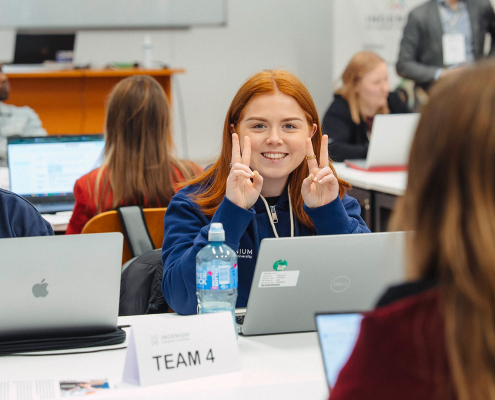 https://ingenium-university.eu/wp-content/uploads/2026/05/INGENIUM-BIPs-2026-2027-call-student-participation.jpg
1080
1920
Liuba Kopp
https://ingenium-university.eu/wp-content/uploads/2024/03/ingenium-main-logo.svg
Liuba Kopp2026-05-11 10:13:492026-08-27 09:58:35INGENIUM Opens BIPs Call for Students 2026/2027
https://ingenium-university.eu/wp-content/uploads/2026/05/INGENIUM-BIPs-2026-2027-call-student-participation.jpg
1080
1920
Liuba Kopp
https://ingenium-university.eu/wp-content/uploads/2024/03/ingenium-main-logo.svg
Liuba Kopp2026-05-11 10:13:492026-08-27 09:58:35INGENIUM Opens BIPs Call for Students 2026/2027 https://ingenium-university.eu/wp-content/uploads/2026/05/ilanet.png
781
1388
Messalina Muscalu
https://ingenium-university.eu/wp-content/uploads/2024/03/ingenium-main-logo.svg
Messalina Muscalu2026-05-01 16:20:522026-08-27 09:57:41Prepare for your mobility with ILANET initiatives!
https://ingenium-university.eu/wp-content/uploads/2026/05/ilanet.png
781
1388
Messalina Muscalu
https://ingenium-university.eu/wp-content/uploads/2024/03/ingenium-main-logo.svg
Messalina Muscalu2026-05-01 16:20:522026-08-27 09:57:41Prepare for your mobility with ILANET initiatives!