
FutureProof in action: INGENIUM students develop sustainability ideas together in Crete
FutureProof, one of the projects selected through INGENIUM’s Student Partnerships initiative, is moving forward with its implementation. Students from across the alliance recently came together at the University of Crete to test ideas, exchange sustainability practices and further develop the project through hands-on collaboration.
At the centre of FutureProof is a sustainability-themed escape room that the student team has been developing over the past year. The meeting in Crete gave members of the international FutureProof team the opportunity to work together in person, further develop the prototype and gather feedback that will help shape the project as it continues to evolve.
Among the students taking part were Alma Snäckerström, a third-year student in the Bachelor’s Programme in Ecology and Environmental Science at the University of Skövde, and Ivona Fekova, a second-year Biomedicine student.
For Alma, meeting the other members of the team in person was an important part of moving the collaboration forward.
“It was an amazing experience to visit Crete, learn about the history, nature and culture of the island. It was also so much fun to meet all the other students and finally getting to collaborate in real life on our project called FutureProof.”
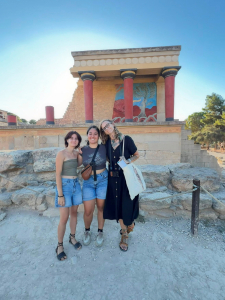
Ivona Fekova HiS, Anna Vienna UOC and Alma Snäckerström HiS
Testing and developing FutureProof together
A major focus of the meeting was the continued development of the FutureProof escape room. Members of the project team worked together on improving and building the prototype, while students from the University of Crete tested different puzzles and provided feedback that could be used to refine the experience.
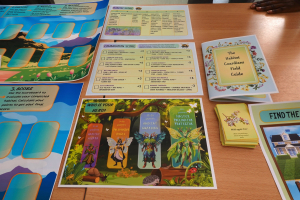
The programme also gave participants the opportunity to explore other approaches to sustainability education and action. Students tested a board game focused on biodiversity and pollinators, attended keynote lectures on climate action and biodiversity, and exchanged examples of sustainability initiatives already taking place on their campuses.
They also took part in a practical biodiversity activity, collecting natural materials and building a bug hotel on the University of Crete campus. Alongside the activity, the students developed a guide that can help others create similar habitats.
Together, these activities gave the FutureProof team new ideas and perspectives to take into the continued development of the project.
Learning across campuses
One of the strengths of the Student Partnerships approach is that students from different universities can bring their own experiences into a shared project and learn from initiatives already working elsewhere.
For Ivona, some of the most valuable ideas came from seeing the practical actions students are already taking on their campuses.
“What stood out to me most were the small actions students take that add up to a bigger impact. I learned about initiatives from other campuses, including bike and food sharing programs, pollinator-friendly meadows, and educational film evenings.”
These exchanges also open opportunities for successful ideas to travel between universities. Practices developed on one campus can inspire new initiatives elsewhere, while projects such as FutureProof can benefit from the different perspectives, expertise and experiences students bring from across the alliance.
“It was really exciting to work together with people from different countries and reflect and learn about the sustainability practices in their home universities,” says Ivona.
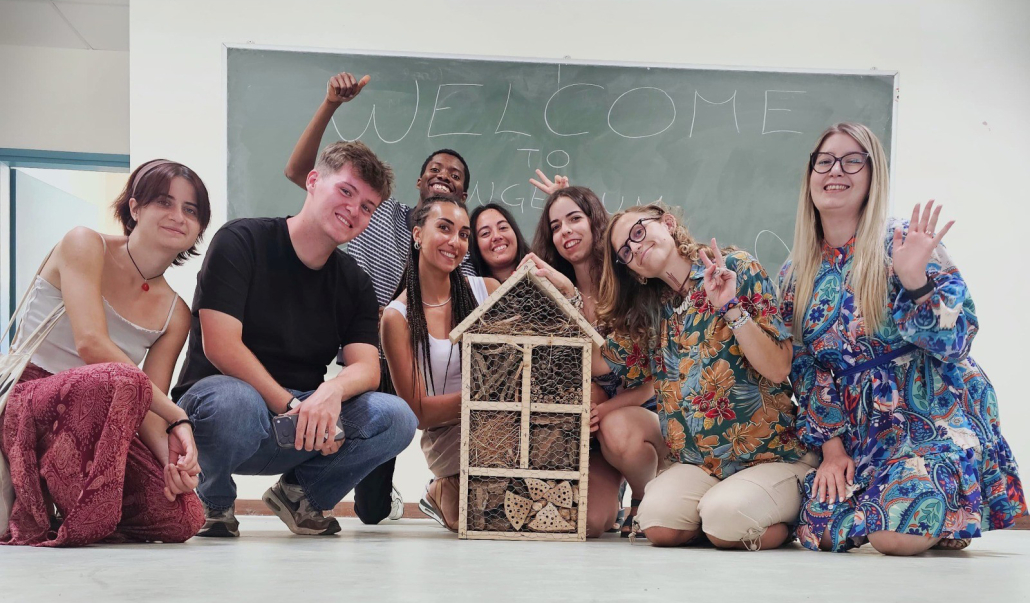
Ivona fekova HIS, Adam O’neill MTU, Anotida Marumbeyi HKA, Maria Lucia Monaco UNICH, Anna Vienna UOC, Sonia Maria Rodríguez Huerta UNIOVI, Alma Snäckerström HIS, Raluca-Maria Tâbuleac TUIASI
Student Partnerships in practice
FutureProof is one of the projects developed through INGENIUM’s Student Partnerships initiative, which gives students an active role in creating and implementing ideas together across the alliance.
The meeting in Crete shows what that approach can look like in practice: members of a student team from different INGENIUM universities coming together to develop a shared project, test their ideas, exchange knowledge between campuses and turn those ideas into activities that can be used by wider university communities.
As FutureProof continues its implementation, the ideas and feedback gathered in Crete will contribute to the next stage of the project and to the team’s work on sustainability learning across INGENIUM.