Enrolment is open for the INGENIUM micro-credential in Climate Adapted Urban Infrastructure
The course runs online from 5 to 30 October and enrolment closes on 19 September | Four weeks of teaching, 2 ECTS and an enrolment fee of 35 euros, with staff from two of the alliance’s technical universities | Thirty places, open to final-year bachelor’s students, master’s and doctoral candidates and to practising engineers and planners
Since 2021, an infrastructure project asking for European money has had to document what climate change will do to it across its service life and what the design does in response. That documentation is known as climate proofing. The obligation ends up with whoever drafts the project, and it asks for work that most civil engineering and urban planning degrees never taught.
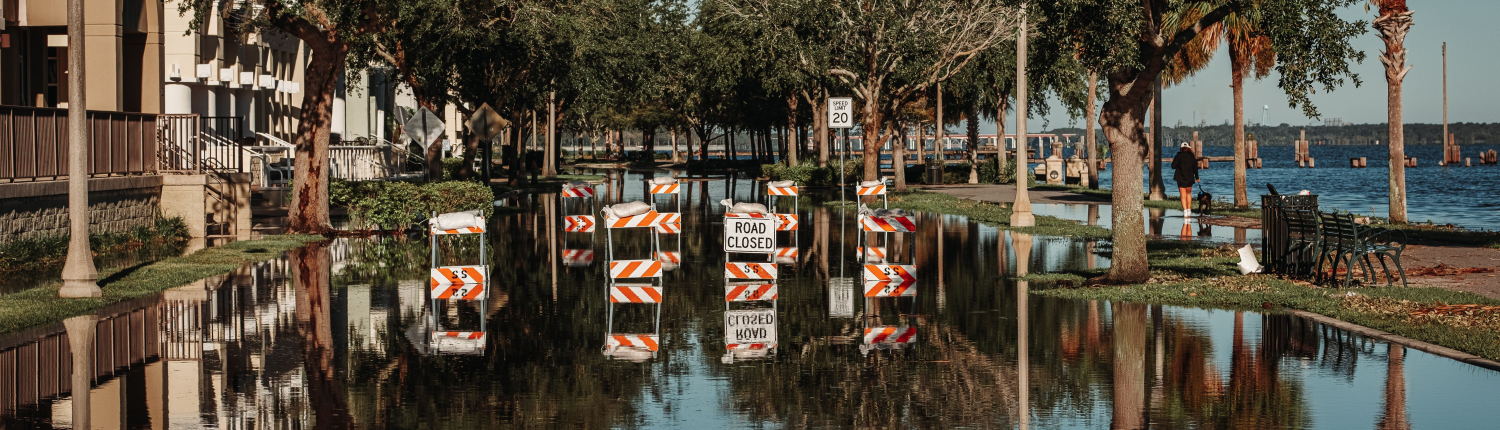
Underneath the terminology, the subject is the street outside. A street drains the rainfall it was sized for, and the storms now arriving were not in the record when the drainage was laid. The asphalt softens in heatwaves it was not specified against, and the trees planted to shade it come under drought. Someone must work out what to change, how much of the change the budget will carry and how to put the evidence in front of a European fund that will ask for it. This four-week course aims to prepare its students to take on this challenge.
Six units, four weeks, one street
The teaching object is a street. Participants start from the regulatory requirements and the concepts of climate risk and vulnerability assessment, then apply that framework to a real stretch of urban road, turning descriptive risk into numbers that can be compared between design options.
Once the risk is measured, the course moves to what can be done about it. One block goes to Sustainable Urban Drainage Systems and to how green infrastructure absorbs runoff, increases infiltration and relieves conventional drainage when it is written into street design. The course then turns to engineering and planning strategies drawn from German research on adapting city road networks to flash floods, heatwaves and drought.
The course closes with a modelling workshop where participants collect traffic data, calibrate a microsimulation of a street or an intersection and test alternative designs against the operational, safety and environmental results each one produces. By the end, a participant can say what a bioswale or a new lane layout does to the delay, the emissions and the crash risk at a junction, with the model output to show for it.
How three universities put one course together
The two people who designed the course come at climate proofing from opposite ends. One evaluates the climate and Do No Significant Harm studies that engineers submit with their funding applications, so the weak ones cross his desk. The other has been producing the methods those studies rely on, in research on urban streets. Before drafting their proposal they went looking for training that already covered this ground across the alliance and could not find it.
Teaching is shared between the Gheorghe Asachi Technical University of Iași (Romania) and Karlsruhe University of Applied Sciences (Germany), with the University of Oviedo coordinating the micro-credential. Everything runs on the INGENIUM e-learning platform, with a live session each week and individual and group work in between, supported by online tutoring and recorded lectures for a cohort that will arrive with uneven backgrounds.
Assessment has two graded pieces. One part is a practical project, submitted as a portfolio that carries the mapping and the technical work alongside a summary written for a manager or a policy reader. The other is the presentation of that project in the closing session on 30 October, with questions about the methods used and where they stop working. Both pieces are graded and supervised online.
Students and professionals in the same cohort
Thirty places are open to students in the last years of a bachelor’s degree, to master’s students, doctoral candidates and professionals outside the alliance. The profile covers civil and environmental engineers, urban planners, transport specialists and staff in public authorities handling EU-funded investments. There is no formal academic prerequisite, although the level of the content assumes some background in a related field. Teaching is in English.
Enrolment closes on 19 September 2026 and runs through the registration form below. The fee is 35 euros, with payment instructions sent once a place is confirmed and no refund except when the course is cancelled or the university cannot deliver the course. Questions go to marius.telisca@academic.tuiasi.ro.
Course Details Registration form