Proposals for Blended Intensive Programmes
- A short intensive programme abroad with a collaborative online component before or after it. Blended Intensive Programmes are the most established format in the alliance, and the single most effective way to give a large number of students a first international experience.
IN ONE MINUTE
- Hybrid learning: online and onsite components. Minimum of 5 days, maximum of 30. The usual duration is 5 days.
- Erasmus+ rules apply: at least three institutions, a minimum of 3 ECTS, 10 participants funded with Erasmus+ funds (or 20, depending on each BIP), and a BIP code obtained before delivery.
- For students, staff, or both.
- Both routes. Fast track by 16 October for delivery February–June 2027; general call by 18 December for 2027/2028.
- Blended Intensive Programmes aligned with a Pathway receive guaranteed places and priority weighting.
- BIPs embedded in courses or programmes, or those with a strategic outlook, score higher.
AT A GLANCE
| Who can apply | Academic and administrative staff at any INGENIUM partner university. |
| Minimum | Three institutions, at least 3 ECTS for participants, and a BIP code. |
| Route and dates | Fast track by 16 October 2026 for delivery February–June 2027. General call: expression of interest by 13 November, application by 18 December 2026, for delivery in 2027/2028. |
| When it starts | Fast track: programmes ready for implementation from early 2027. Selection can start from November, mobility can take place from March to June. General call: programmes take place throughout the Academic Year 2027/2028. The programmes are prepared in the first half of 2027, with recruitment taking place from April (for those happening in the second semester) or the next academic year. |
| Funding | Erasmus+ organisational support and KA131 for participants, with INGENIUM project funds covering costs beyond what Erasmus+ carries. Up to EUR 10,000 may be requested. |
| Assessment | Relevance 3 + Quality 4 + Impact 3 = 10. Six points to pass. |
| Who decides | Technical review by the mixed transition group with the Secretariat, then endorsement by an INGENIUM committee. |
| Places | Proposals should indicate the preferred number of places for students and staff. It is recommended to include as many partners as possible in the application phase as mobility partners. |
| All the info about BIPs | Besides the INGENIUM guides, you can check the Erasmus+ Programme Guide for all the information about BIPs. |
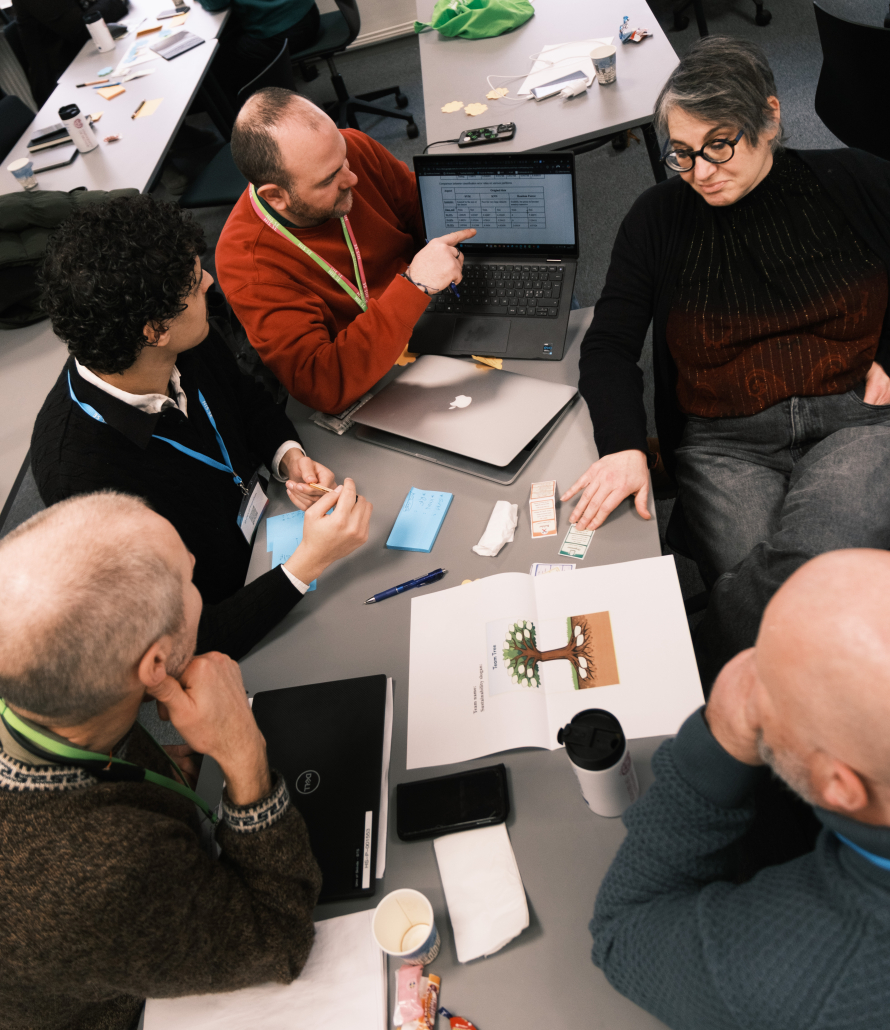
What makes a good Blended Intensive Programme
The quality elements below were consolidated by the colleagues who ran Blended Intensive Programmes across the alliance and met in Oviedo in June 2026. They are the accumulated answer to what went wrong, and they are the most useful thing to read before writing a proposal.
- Agree a two-page programme document up front covering learning outcomes, expectations and key dates. Obtain the BIP code and share it with partners.
- Set a student entry deadline, usually about a month from launch, and keep a clear administrative calendar.
- Confirm IT, Wi-Fi and access codes with the host well in advance. The recurring failure is connectivity that was never arranged.
- Use the INGENIUM Education Platform as the single dedicated space and direct everything to it. Provide an information pack covering logistics, insurance, a city guide and dietary needs.
- Plan the rooms in advance, including flexible seating that lets people stand up and work in groups, plus breakout rooms, fieldwork and the social half-day.
- Design for engagement and inclusion: generous breaks, an unpacked timetable, interactive rather than passive online components, and explicit design for learners with special educational needs.
- Shape the community: a warm welcome with real exposure to the host culture, multicultural working teams, and virtual options for those who cannot travel.
- Aim for a tangible student output, and collect feedback on the final in-person day rather than weeks later.
- Apply sustainability checklists, and add a two-page entry to the BIP library describing how the programme was run.
The Secretariat is preparing the full BIP materials for organisers, including the programme document template, the administrative calendar and the library entry format. The list above is the summary; the materials carry the operational detail.
How to apply
- From 14 September 2026
Choose your route
If the programme can run between February and June 2027 and the three partners are confirmed, use the fast track. If it launches in 2027/2028, or you still need partners, use the general call.
- By 16 October 2026
Fast track: apply directly
No expression of interest. Complete the application form and upload it. Proposals are reviewed as they arrive and approvals are communicated in early November.
- 13 November, then 18 December 2026
General call: express interest, then apply
The expression of interest feeds the networking phase, where a two-partner idea finds the third institution it needs.
- After selection
Prepare for delivery
Obtain the BIP code, agree the programme document, set the student entry deadline and complete the factsheet the alliance uses to promote the programme to students.
How your proposal is assessed
Relevance, Quality and Impact, scored out of ten in total. Six points are needed to pass. Assessment in this edition is light and enhancement-oriented: where a proposal falls short on one dimension but is otherwise strong, the feedback says what would fix it.
3
Relevance
Does it advance what the alliance has committed to?
- Contribution to the European Campus and to genuine jointness across the three partners
- Alignment with an existing or proposed Pathway
- Societal and labour-market relevance of the theme
- Fit with the alliance’s mobility objectives, including the autumn concentration
4
Quality
Is it well designed, and can it actually be delivered?
- Feasibility of the calendar across three academic timetables
- Quality of the online component, which should be interactive rather than a set of recordings
- Clarity of learning outcomes, credits and assessment
- Practical readiness: rooms, connectivity, information pack, entry deadline
- Inclusion, sustainability and design for learners with special educational needs
3
Impact
What will change, and will it last?
- Number of participants and the balance across partners
- A tangible student output
- Structural link to a programme, a course or a Pathway rather than a stand-alone week
- Prospects for a second edition
The three dimensions are common to the whole call; the points listed under each are the version that applies to this section. A small number of categories may carry a different weighting, which will be published here before the call opens.
Funding & Support
BIPs include up to 8000 euros of organisation support and travel support for all participants (students and staff). The organisational support could be complemented by INGENIUM funds for strategic initiatives. It can be used for any organisational aspect of the online or onsite components, according to the institutional rules of each university.
| What is being funded | source | Notes |
|---|---|---|
| Short staff mobility for teaching | Erasmus+ KA131 mobility funds or INGENIUM project funds | The use of Erasmus mobility is preferred. INGENIUM funds should only |
| Platforms, tools and materials | BIP organisational support or INGENIUM funds if the initiative has a clearly strategic dimension | Subject to the purchasing rules of the partner concerned |
| Bringing a stakeholder into the teaching | BIP organisational support | State the organisation where it is known. This should be done according |
| Staff time and compensation | Use of organisational support or INGENIUM funds possible. Institutional rules apply | Whether staff time can be bought differs by partner. Check the institutional rules published at your own university |
Fast-track application
For initiatives ready to run between February and June 2027. There is no expression of interest: complete the application form, then upload it here with any supporting material. Applications are reviewed as they arrive and approvals are communicated in early November 2026. Fast-track proposals should be deliverable from February 2027, which means the three partners are confirmed and the calendar is realistic.
Web form with document upload · closes 16 October 2026
Expression of interest
For programmes launching in 2027/2028. Short by design: a theme, a host, and what you still need. You do not need three partners yet — finding the third is one of the things the networking phase does best.
Airtable form · open 14 September – 13 November 2026
Frequently Asked Questions
Not for the expression of interest. You do need three institutions by the final application, and the networking phase exists to help you get there. Fast-track proposals need the three partners confirmed at submission.
The coordinating institution, through its own International Relations Office, once the programme is confirmed. Share it with the partners as soon as you have it — several administrative steps at the sending institutions depend on it.
Yes. Programmes for staff or for mixed audiences also serve as vehicles for the INGENIUM Staff Academy, and a training proposal can be built around one.
That the programme is designed to serve students in a specific Pathway, with guaranteed places reserved for them. These proposals carry priority weighting under relevance.
Costs beyond the Erasmus+ organisational support and KA131 grants — additional participant support, elements of the online phase, materials, or stakeholder involvement. The two streams are declared separately and no activity is funded twice.
Because the ten partners have different exam and holiday periods, and autumn is where they overlap most comfortably. It is an encouragement, not a rule.

Useful Documents
Everything you need to design and prepare a proposal.
Talk to us
| UNIVERSITY | COORDINATOR | |
|---|---|---|
| UNIOVI | Jesús Daniel Santos | ingenium@uniovi.es |
| TUIASI | Irina Lungu | irina.lungu@academic.tuiasi.ro |
| UdA | Marcello Costantini | marcello.costantini@unich.it |
| Xamk | Eeva Kuoppala | ingenium@xamk.fi |
| Skövde | Mikael Ejdebäck | mikael.ejdeback@his.se |
| HKA | Melissa Gruber | melissa.gruber@h-ka.de |
| MTU | Michael Hall | michael.hall@mtu.ie |
| Rouen | Ligia Livanu | ligia.livanu@univ-rouen.fr |
| UoC | Georgios Kossioris | kosioris@uoc.gr |
| MUS | Magdalena Kasnakova | m.kasnakova@mu-sofia.bg |