Get inspired by our educators who shared their teaching methods at the Staff Academy in Sofia
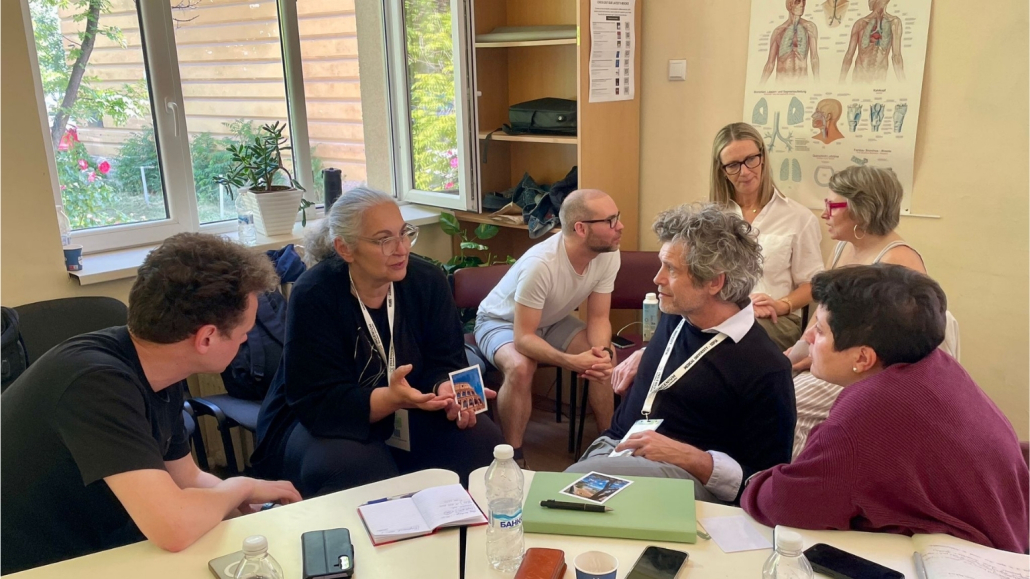
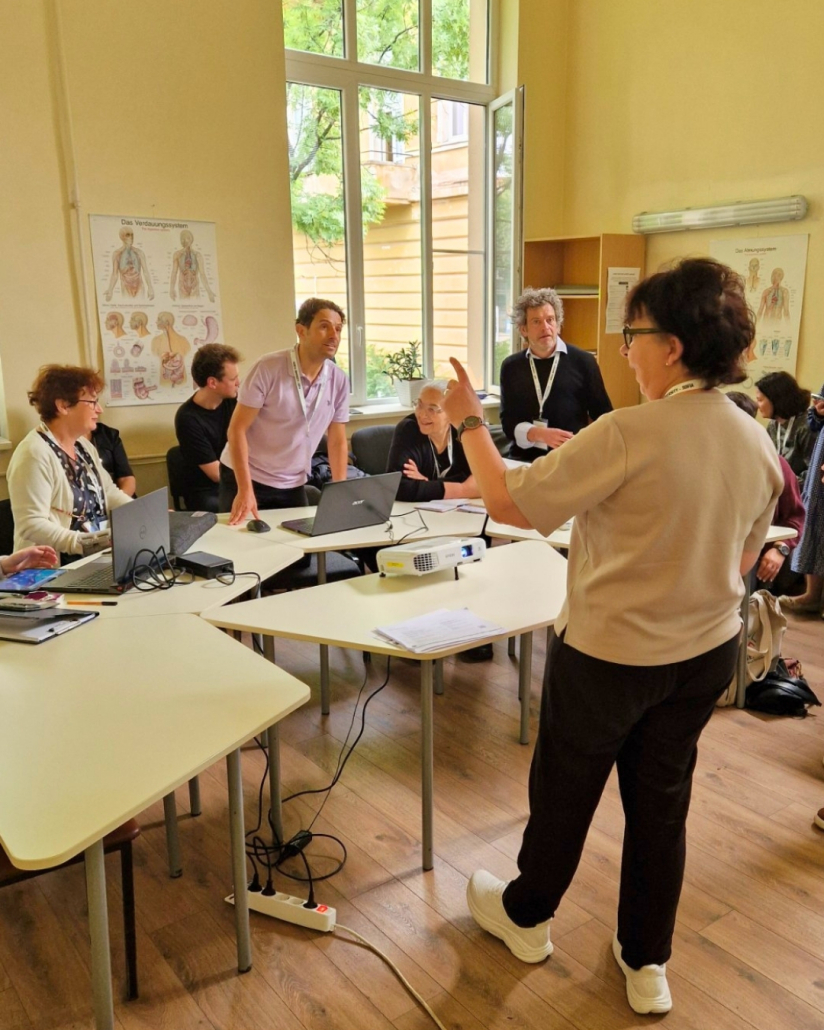
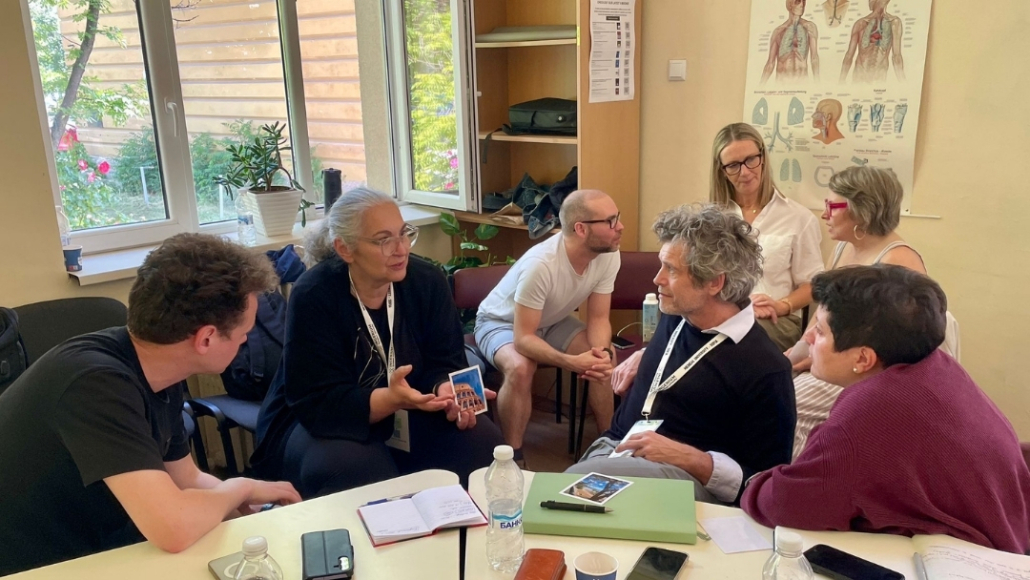
The seventh Staff Academy event was organized at the Medical University of Sofia, in Bulgaria, during the 10 Days of INGENIUM in June 2026. Educators from all our 10 partner universities gathered in Sofia to share best teaching practices and methods. Now it’s your time to get to know them and what they showcased in the workshops!
Special thanks go to the organizing team from Medical University of Sofia (MUS) and South-Eastern Finland University of Applied Sciences (Xamk) and the warm hosts, Simeon Slavchev, Chief Assistant Professor and WP5 Innovation Leader, and Elisaveta Petrova-Geretto, Associate Professor, from MUS, and our presenters, whose efforts made the Staff Academy a truly memorable experience. There were great facilities to share best practices and network with European colleagues!
Workshop moderator Tiina Luukkainen, senior lecturer from Xamk, tells that INGENIUM’s Staff Academy workshops served its purpose as the workshop sessions in Sofia were interactive and focused on student centered pedagogy. The feedback from the participants was also strongly encouraging as they wish that this kind of collaboration between educators continues!
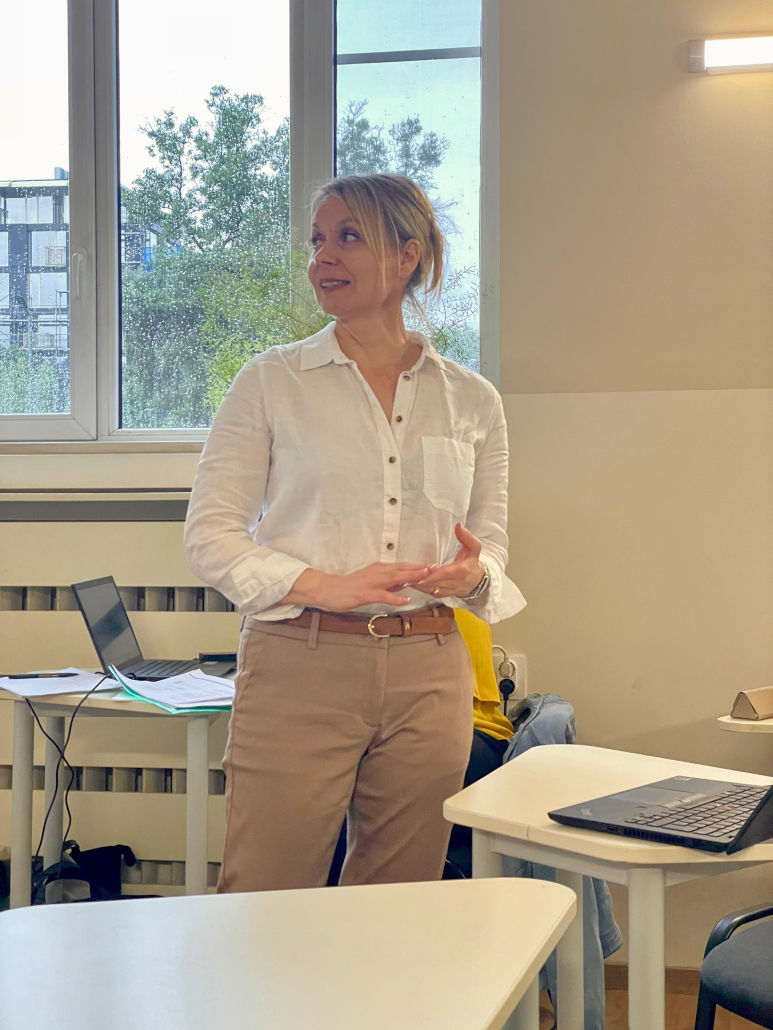
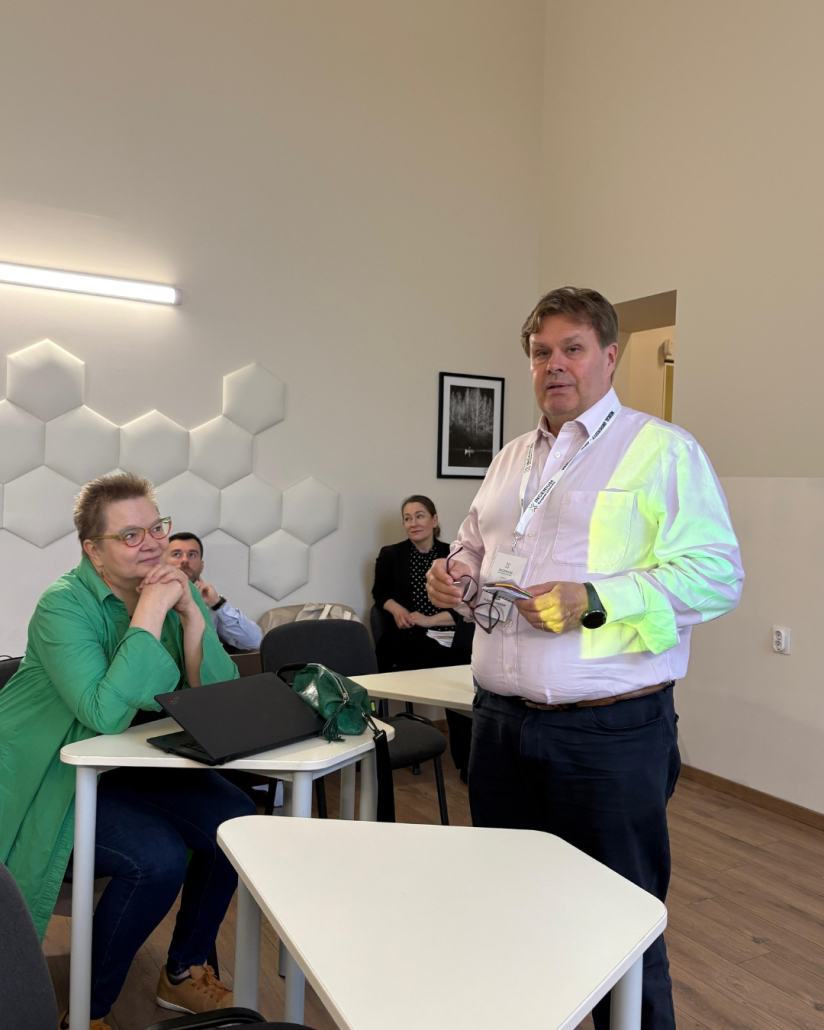
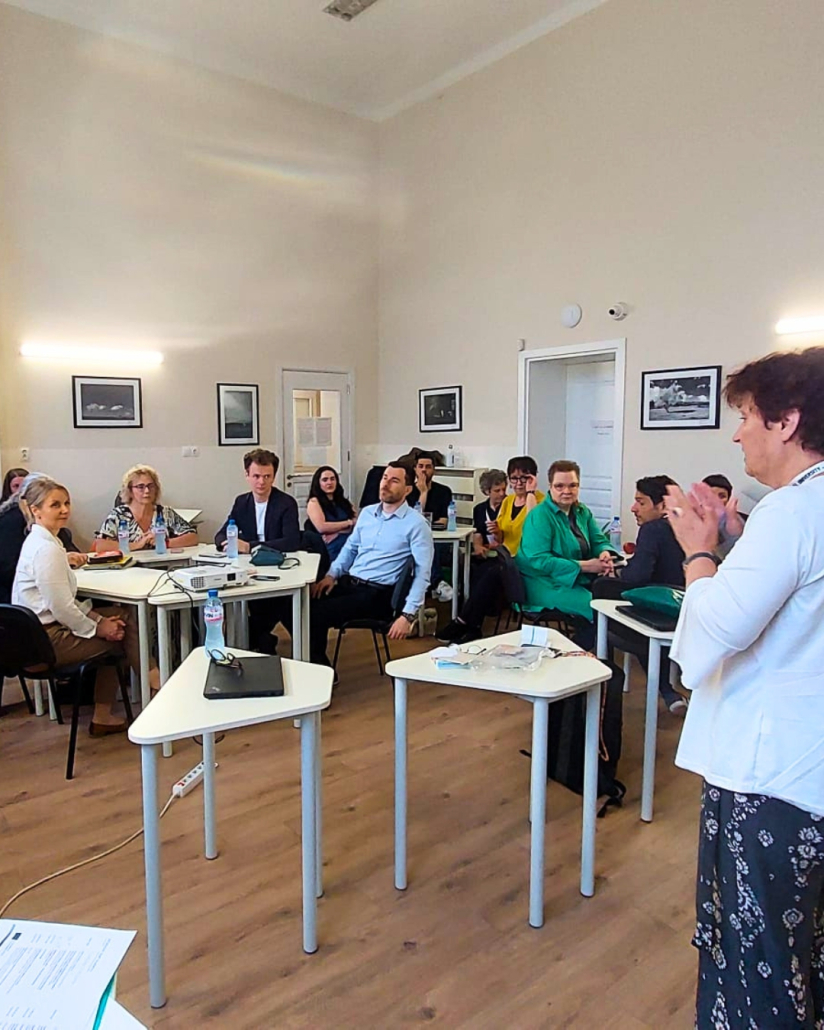
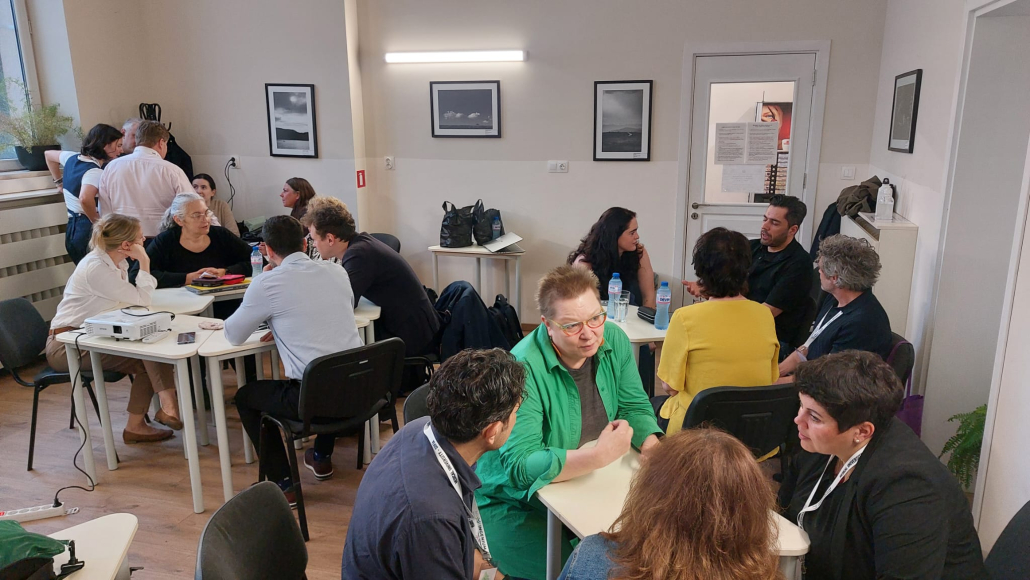
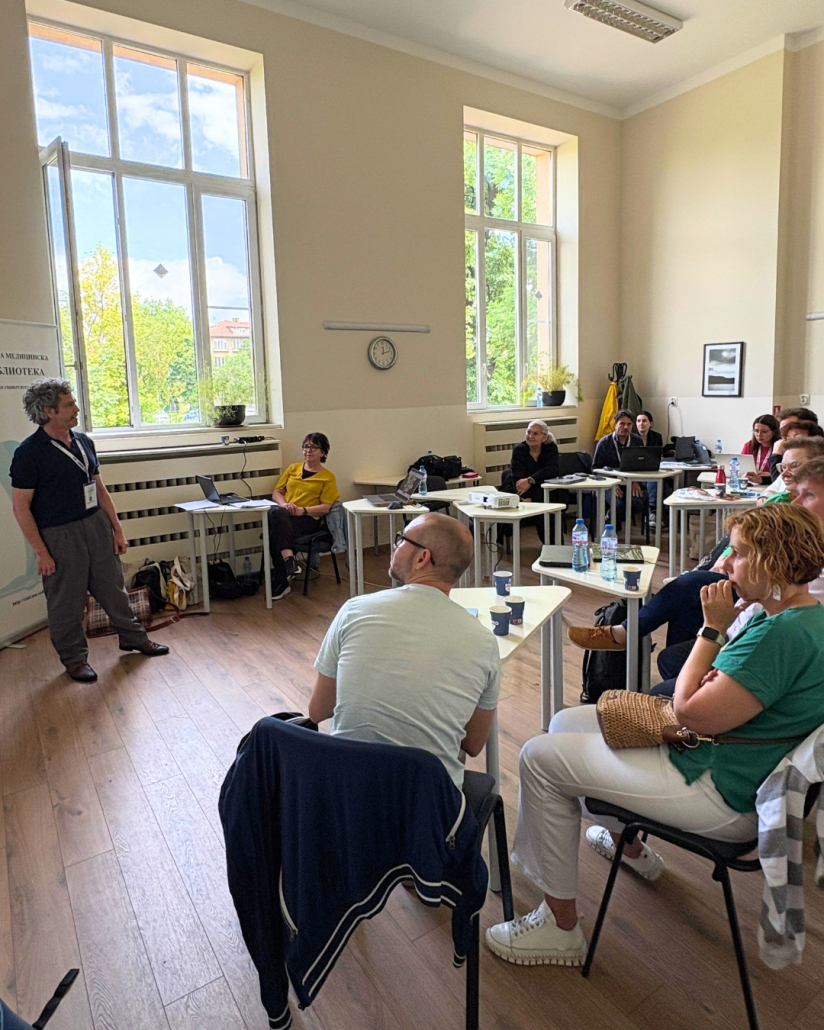

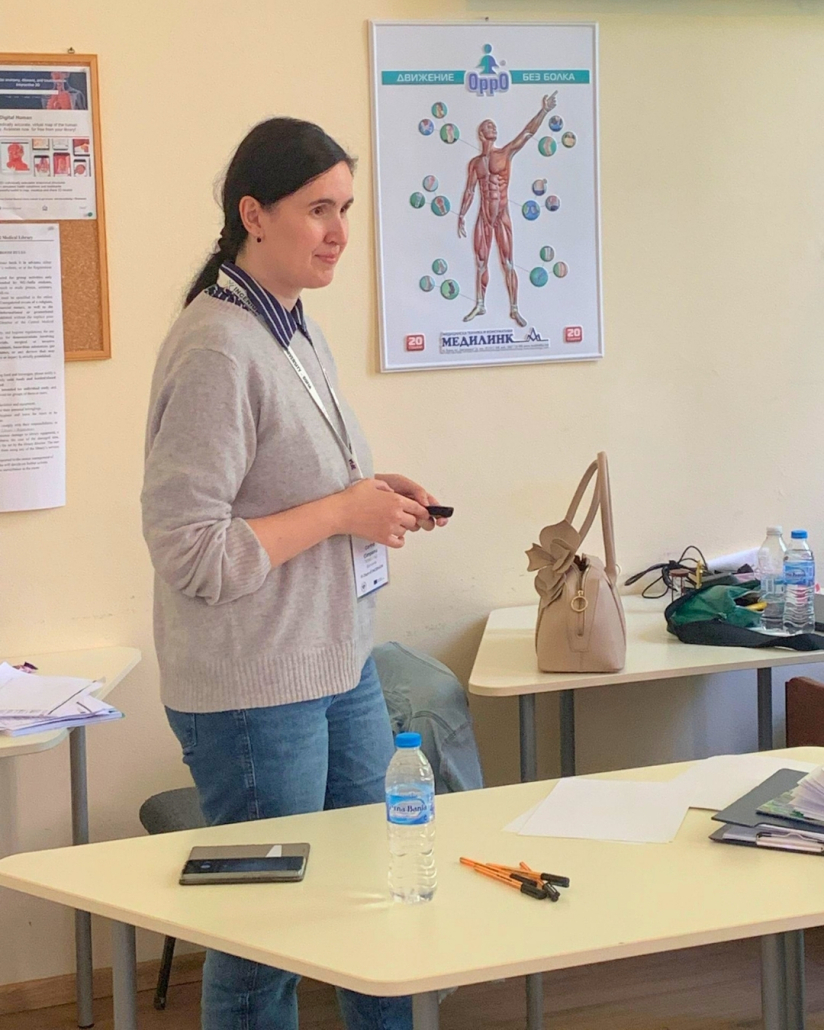
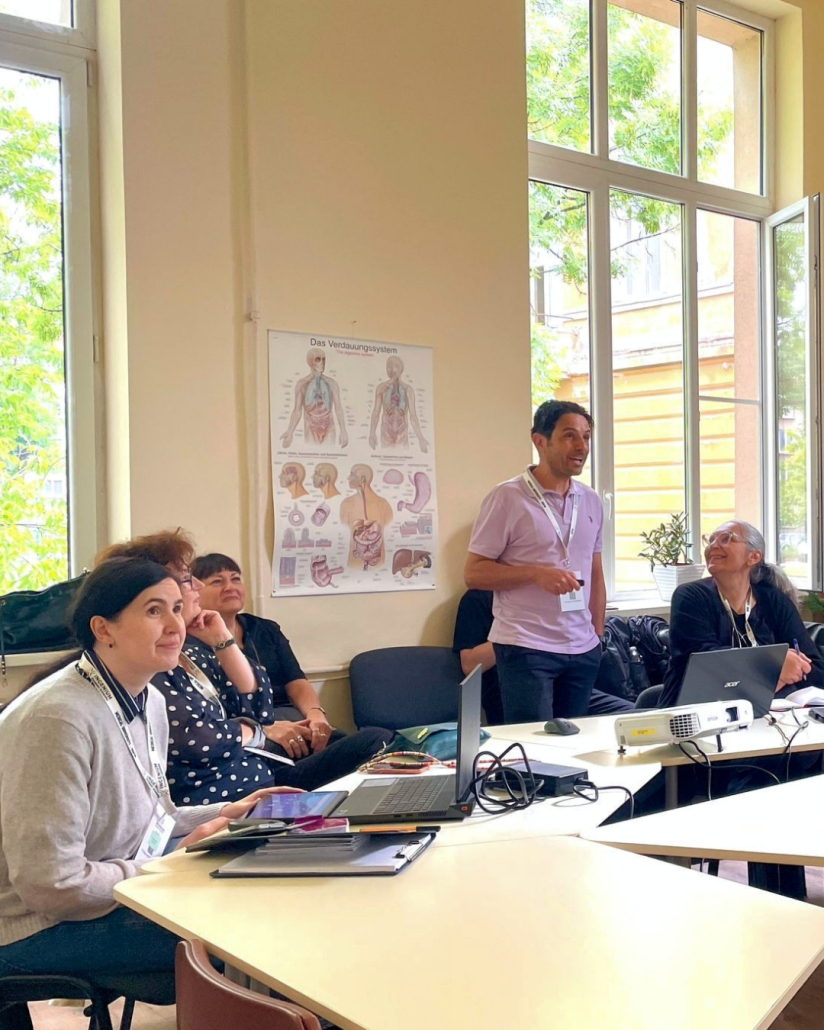
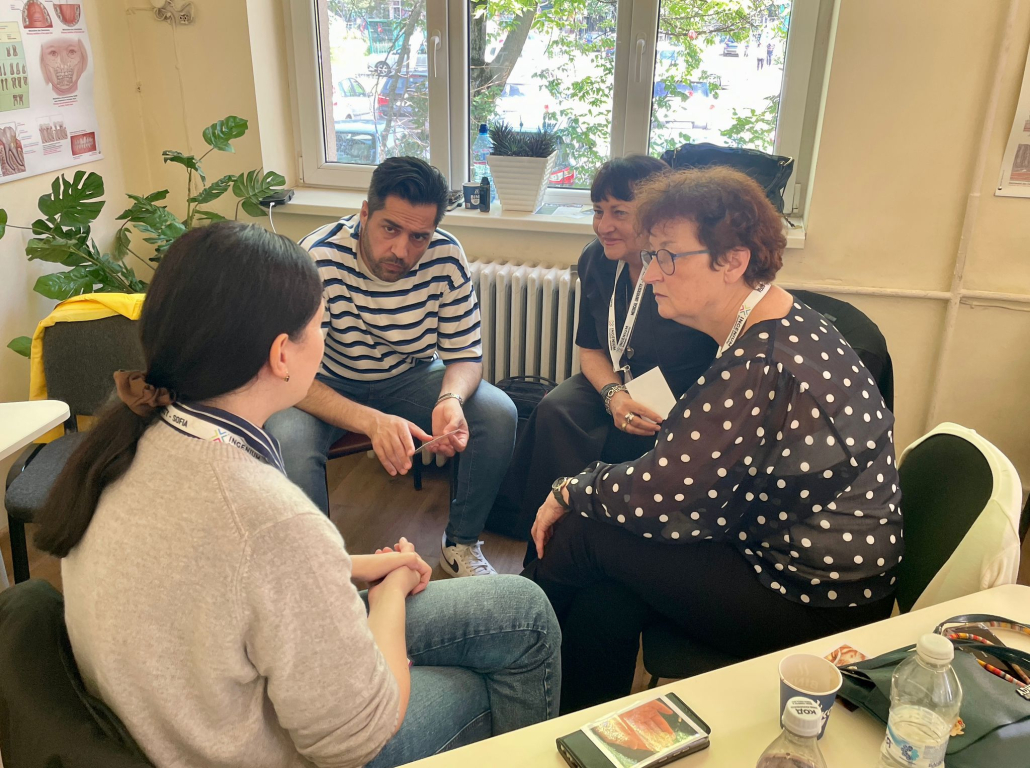
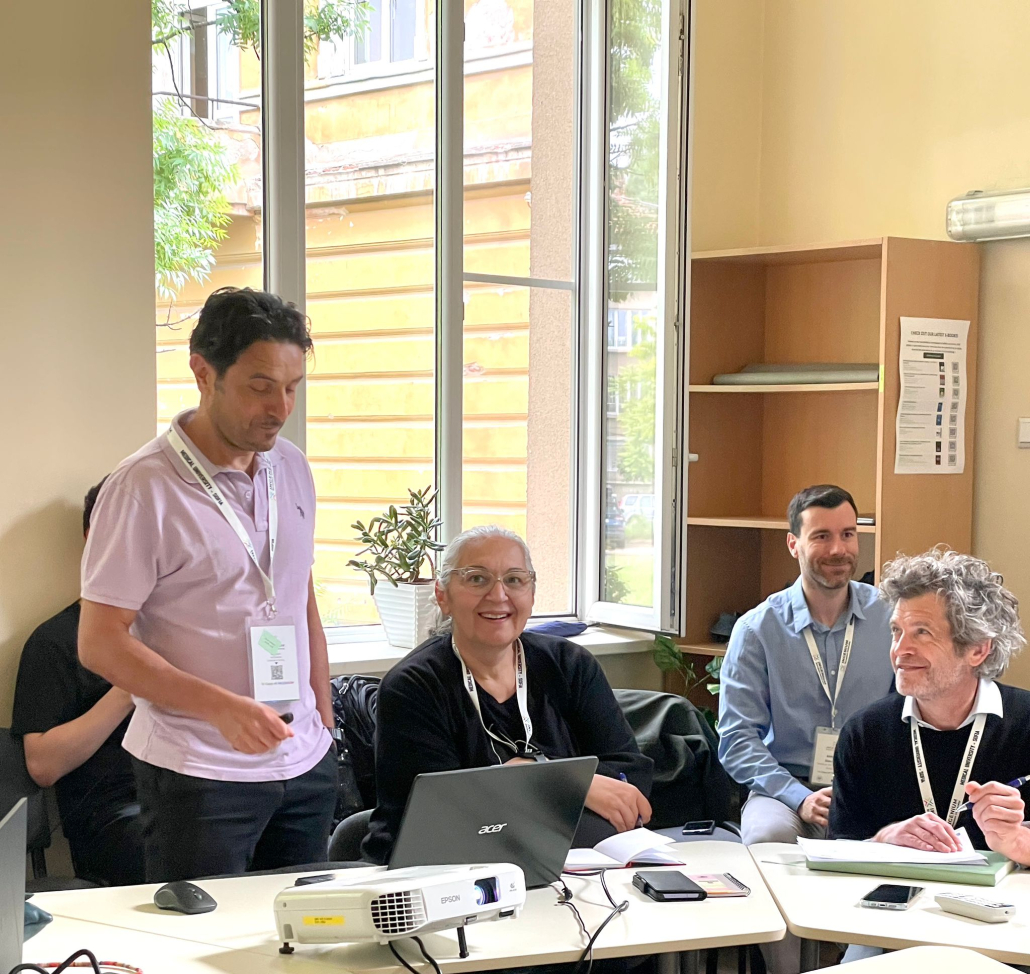
In the Staff Academy opening session Eeva Kuoppala, project director, and Mika Ruponen, Director of Commercial and International Affairs, from Xamk shared insights into pedagogical transformation in INGENIUM. Ruponen focused on the significance of co-operation and emphasized that transformation also requires letting go of certain things to create space for the new. Kuoppala’s key message was that European Universities are at the forefront of pedagogical change. INGENIUM’s pedagogical strategy and institutional transformation plans are essential tools for driving this chance. Kuoppala continued that every day in practice the transformation needs pedagogical decisions that align with our shared principles.
Learn about the methods via our YouTube channel
Now is your chance to get inspiration for your own teaching! The Staff Academy presenters share about their methods in the following videos. Attached with the videos you can also find a brief description of their method or presentation.
You can also find more interviews and recordings of the previous staff academy workshops and webinars on our YouTube channel; there are over 100 methods for you to learn from!
Gamified teaching methods
Pascale Greene (URN):Tell me and I forget. Teach me, I may remember, Involve me and I learn
1)Using a language card game provided, learners were asked to converse in small teams to question each other in a limited time on their life experiences communicating in “ only English” practicing reading skills, revision of question forms, verb tenses, vocabulary, direct and indirect speech, in adaptable size / exchangeable groups to gain confidence in improvisational language skills.
1) Students justified their choice of game methods.
2) Voluntary or designated students “ reported back “ to other groups The teacher’s purpose was to give instructions, facilitate, guide, and subtly correct errors. No preparation or note taking needed.
And / or
2) “WILTYIE “ Would lie to You, in English ? adapted from a TV panel game. Presenting 3 personal experiences , only one of which is true, the aim is to see how convincing students are when responding to class questions. Short individual personal preparation in note form is possible, or improvisation according to levels. The game requires oral production and presentation for individuals and oral comprehension and improvisational production skills for an attentive group of listeners who must determine the veracity of the 3 situations presented, “catching out” the speaker and initiating a debate on the “ Truth or lie” to evaluate and come to conclusions justifying their answers. (Points affected ( or not ) to most convincing students after a vote.)
Pascale Greene
English as a second language teacher
University of Rouen Normandy
Email: pascale.greene@icloud.com
Daniel Schwarz (HKA): T Minus Ten
„T minus Ten“ („t-10“) is a 10-year-project in which generations of students develop a Serious Game that recreates the real world and tries to save it. „t-10“ is designed as a long-term project that spans the „decisive decade“ from 2020 to 2030. The current work in progress of the project was presented in the staff Academy session and the workshop gave hands-on insights how such an „inter-generational“ project fosters sustainable and project-based learning.
Daniel Schwarz
Professor for Interactive Media
HKA – The Karlsruhe University of Applied Sciences
Email: daniel.schwarz@h-ka.de
Corina Cimpanu (TUIASI): Smart Health, Smart Earth
Cimpanus interactive workshop explored how digital health innovations can drive sustainability in healthcare. Participants acted as “Green Health Innovation Startups,” designing e-health projects—such as telemedicine platforms, remote patient monitoring, or digital record systems—that reduce resource use, emissions, and waste while improving patient access and care quality.Through a gamified format, teams faced real-world scenarios and surprise challenges, using mini project plans to balance innovation, feasibility, and measurable sustainability impact. A fast-paced “Pitch Battle” let teams showcase their projects in 60 seconds, with participants voting for the most innovative, sustainable, and well-managed solutions. The session combined project management principles with creative problem-solving, ethical decision-making, and sustainability metrics, showing how smart design can simultaneously enhance healthcare delivery and environmental responsibility. Participants left with practical strategies to embed sustainability in digital health projects, tools to measure impact, and an appreciation of how innovation can heal both patients and the planet.
Corina Cîmpanu
Lecturer PhD Engineer
Gheorghe Asachi Technical University of Iasi
Email: corina.cimpanu@academic.tuiasi.ro
ORCID: 0000-0002-8792-5115
ResearcherID: C-8178-2015
Scopus Author ID: 56038487000
LinkedIn: ro.linkedin.com/in/agrigoroaie- corina-b3367a44
Maria Del Pilar Castro-García, Andrés Meana Fernández (UNIOVI): Gamified Digital Comics for Active Learning in Education
During their workshop, participants explored practical examples and actively engaged in the design of a short teaching activity using gamified digital comics, adaptable to different disciplines and educational contexts. The workshop was aimed at educators interested in integrating new digital media into their teaching practice in a feasible and transferable way, promoting student-centered methodologies aligned with current challenges in higher education. This workshop presented an active learning experience based on gamified digital comics as an innovative pedagogical resource in higher education. By combining visual storytelling, interactive elements, and game mechanics, digital comics were used to enhance student motivation, engagement, and critical thinking. The proposal is grounded in principles of gamification and media literacy, demonstrating how narrative-based digital environments can support the understanding of complex content and promote more meaningful learning experiences.
Andrés Meana Fernández
Senior Lecturer
University of Oviedo
Email: andresmf@uniovi.es
AI in higher education
Sophia Mårtensson, Rajna Knez, Charlotte Hveem (HIS): Experiential Learning in Humanitarian Crisis Response: Teaching Psychological First Aid through the Innovative Technological Tool Crises support Virtual Reality
The increasing complexity of humanitarian crises necessitates innovative, student-centered educational approaches to strengthen societal well-being (1). In alignment with the WHO’s mhGAP-HIG (2), training in Psychological First Aid (PFA) constitutes a core component of effective humanitarian response and is guided by Hobfoll et al., (3) five principles: safety, calming, self- and community efficacy, social connectedness, and hope. Traditionally, PFA training has relied on classroom based or instructor-led simulation that are resource-intensive and dependent on facilitator expertise, leading to variability in learning outcomes (4 – 6).
Generative AI-based virtual patient (genAI-VP) systems address these limitations by providing safe, repeatable, and structured learning environments in which learners can practice communication, decision-making, and crisis management skills without risk to real individuals (7,8). Grounded in Dewey’s philosophy (9,10) and further developed through Kolb’s (11) experiential learning theory, learners engage through four interconnected stages: concrete experience, reflective observation, abstract conceptualization, and active experimentation. By centering the learner in realistic, interactive simulations, communication, self-efficacy, and psychomotor skills are enhanced (4 -6), offering an innovative student-centered educational approach that facilitates learners preparedness in responding to humanitarian crises
Sophie Mårtensson
PhD, RN, MSc
Lecturer University of Skövde
ORCID: 0000-0002-0262-2217
Email: sophie.martensson@his.se
Stamatis Papadakis: AI for All: Sustainable Creativity and No-Code App Design in Higher Education
The 1.5-hour interactive workshop blended short demonstrations, collaborative design, and guided reflection. Participants experienced how university students—especially those from non-technical disciplines—can use generative AI (ChatGPT, Gemini) to create meaningful educational apps without writing code. Working in small groups, attendees designed mini-apps responding to authentic learning challenges, from inclusive classroom activities to sustainable education awareness. Each group moved through ideation, AI-assisted prototyping, and peer feedback cycles. Reflection points linked the process to digital literacy, creative pedagogy, and sustainability in higher education. The format models a fully transferable practice adaptable to any field where educators wish to bridge creativity, technology, and active learning.
Stamatios Papadakis
Assistant Professor in Educational Technology
University of Crete
Email: stpapadakis@uoc.gr
ORCID: 0000-0003-3184-1147
LinkedIn: www.linkedin.com/in/stamatis-papadakis/
Improving learning on digital platforms
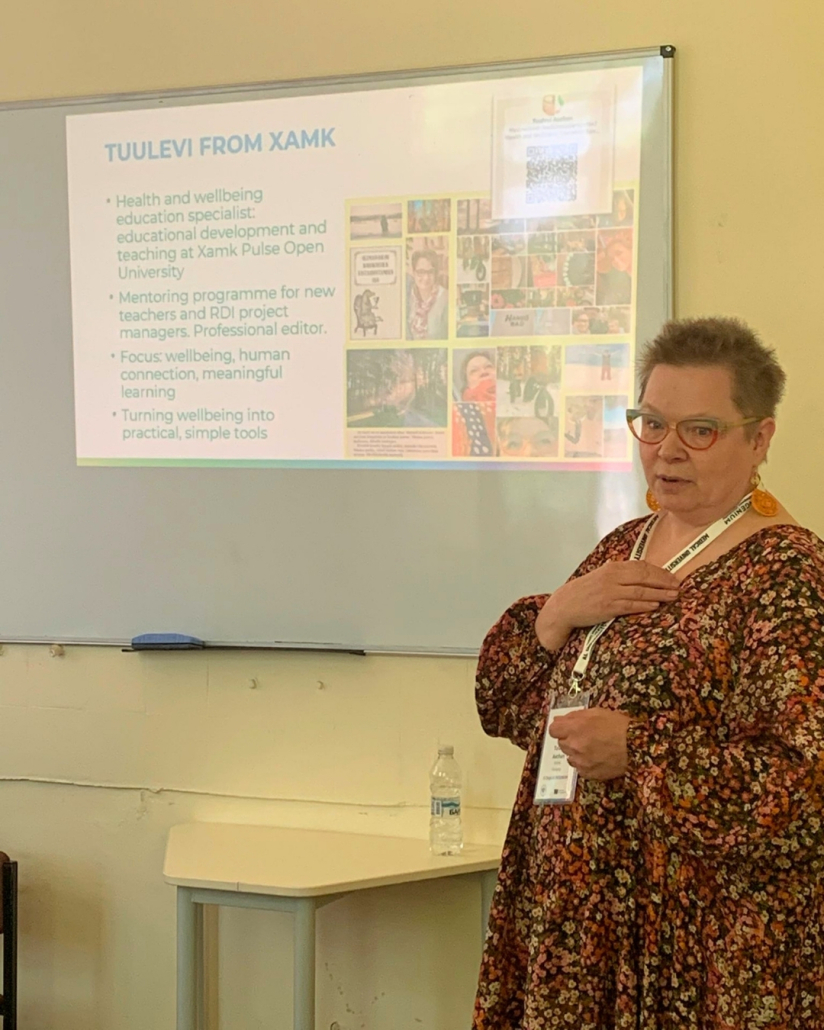
Tuulevi Aschan (Xamk): Empowerment tools
Empowerment tools is a participatory, asynchronous learning model that adds an emotionally engaging, human-centered layer to subject-specific teaching. It supports psychological safety, self-determination, and learner participation in digital environments. Grounded in research from positive psychology (Seligman), self-determination theory (Deci & Ryan), and psychological safety (Edmondson), the model is adaptable across disciplines and learner groups.
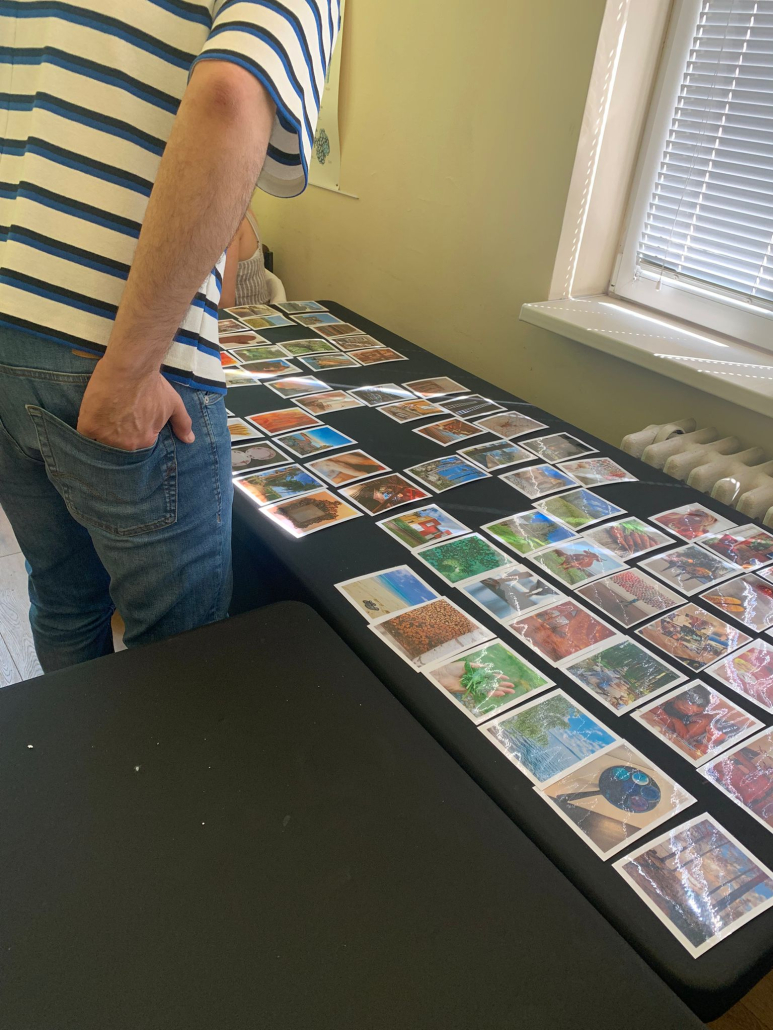
The approach emphasizes multidimensional teacher presence through visual and audio elements (e.g., Canva, audio greetings in Moodle/Learn), fostering trust and modeling safe interaction. Learners share personal empowerment tools—images, sounds, or memories that evoke positive emotions—via platforms like Padlet. These are followed by appreciative peer feedback, enhancing emotional engagement and relatedness.
Reflective tasks and feedback in Moodle / Learn forums further support strengths-based interaction and recognition. The model does not require real-time participation, making it flexible and inclusive. While the teacher cannot learn on behalf of the student, the model offers tools to activate and support learner engagement. It promotes autonomy, competence, and connection—and provides a scalable foundation for humanizing digital learning.
Tuulevi Aschan
Health and Wellbeing Education Specialist
South-Eastern Finland University of Applied Sciences
ORCID: 0009-0009-0456-873X
Email: tuulevi.aschan@xamk.fi
LinkedIn: www.linkedin.com/in/tuuleviaschan/
Improving teaching by reflection
Gabriella Mincione (UdA): The Quality of the Educational Relationship, Il Piccolo Ascolto
Il Piccolo Ascolto is a web platform (Ida Verna, SIAE, 2021, 2026) designed for use by teachers and students, aimed at providing teachers with information on the quality of the “educational relationship” determined by teaching and learning processes. Specifically, the teacher administers a course satisfaction questionnaire to students, focused on several critical areas of teaching quality (Van Dijk et al., 2020), while simultaneously completing a similar self-assessment questionnaire. Upon completion of both questionnaires, the Il Piccolo Ascolto platform provides the teacher (in real-time) with aggregate information on the distance (gap) between the students’ opinions and those of the teacher, highlighting areas of teaching quality where a discrepancy of opinions, a “relational gap” (Verna I., 2020), emerges.
The aim is to trigger a process of reflection-on-action in the teacher, guided by the “relational gap” and supported by a further reflective stage represented by an in-depth questionnaire on the critical issues identified. In particular, the platform provides an additional moment of reflection-on-action which, starting from the “relational gap,” investigates potential problems from which the gap originates through a further questionnaire focused only on those areas where criticalities emerged. The goal is to facilitate and support the teacher in the process of improving teaching quality by listening to the needs that emerge within a specific teaching-learning context and doing so in itinere (ongoing) with respect to the development of educational processes. Although Student Evaluation of Teaching is widely used, international literature often highlights a low correlation between teachers’ self-assessment and student judgment (Matthews, 2025). Studies such as those by Wisniewski et al. (2021) confirm that teachers have “privileged access” to their own thoughts but not always to the behavioral signals they send, leading to considerable divergences with students. Furthermore, literature recognizes the existence of a widespread “perception problem” (Wisniewski et al., 2021) and a systematic lack of alignment between self-assessment and student judgment (Daumiller et al., 2022); in this sense, Il Piccolo Ascolto can represent a contribution to overcoming this limitation. Ultimately, the originality of Il Piccolo Ascolto lies in transforming the “relational gap” from a simple “datum” into a driver for reflection-on-action, allowing for the overcoming of overestimation biases typical of teacher self-reports (Fitzgerald et al., 2020).
Gabriella Mincione
Associate Professor of General Pathology, Ph.D.
University “G. d’Annunzio” of Chieti-Pescara
Email: gabriella.mincione@unich.it
ORCID: 0000-001-7127-0938
Instagram: gabriellamincione
Values-led education
Gwen Lettis (MTU): Croí – Your Life, Your Career
Croí – Your Life, Your Career is an innovative, values-based reflective process designed to support both Education for Sustainable Development (ESD) and professional development. Developed by Dr. Gwen Lettis at Munster Technological University (MTU), Croí empowers students to explore their core personal values and align them with their academic and professional goals. Croí fosters intrinsic motivation, ethical reflection, and long-term thinking—key attributes for preparing responsible, future-focused graduates.
This interactive workshop introduced participants to the Croí framework and demonstrated how it supports both personal and societal transformation. Participants experienced selected activities from the student workshop, including a values prioritisation exercise and structured reflection. The session also showcased a suite of open educational resources developed to support implementation, including a Reusable Learning Resource (RLR), an educator guide, a Canvas module, and student-facing videos.Participants left with a practical understanding of how Croí can be integrated into teaching to advance sustainability goals, professional identity, and learner wellbeing. The session encouraged reflection on how values-led education can enhance curriculum design across diverse disciplines and cultural contexts.
Denise McSweeney
Lecturer
Munster Technological University
Email: denise.mcsweeney@mtu.ie
Gwen Lettis
Lecturer
Munster Technological University
Email: gwen.lettis@mtu.ie
RDI facilities combined with education
Todor Bogdanov (MUS): Building the Next Generation of Learning Environments with In-House Technology Labs
The establishment of in-house technology laboratories within higher education institutions is a key factor in modernizing the learning process and preparing a new generation of specialists equipped to meet the real-world challenges of contemporary practice. These centers—encompassing 3D printing, digital modeling, simulation technologies, and other innovative tools—enable the integration of practical, experimental, and problem-based learning from the early stages of student training.
At the Medical University of Sofia, the 3D Laboratory has become a successful example of in-house infrastructure that combines research potential with the aim of improving the quality of medical education. Our experience shows that having an internal center for 3D technologies significantly accelerates the development of educational models, prototyping, and support for clinical practice, while also fostering interdisciplinary collaboration among students, faculty, and researchers.
The seminar examined the role of in-house technology laboratories in building the next generation of learning environments, presented the accumulated experience of MU–Sofia, and outlined future development prospects, including infrastructure expansion, integration of new digital platforms, and the creation of a sustainable model for innovation in medical education.
Todor Bodganov Chief
Assistant Professor
Medical University of Sofia
ORCID: 0000-0002-2808-4280
Email: tbogdanov@medfac.mu-sofia.bg
LinkedIn: www.linkedin.com/in/todor- bogdanov-b597a295
Instagram: www.instagram.com/3dlab.mu/
Webinars for you this autumn
This autumn there will be one more Staff Academy webinar but before that Education Lab projects share their successes and progress in webinars. You can get tools, teaching materials and more inspiration to your teaching from the projects!
Join the webinars in the autumn:
 https://ingenium-university.eu/wp-content/uploads/2026/06/Social-Sciences-Public-Policy.jpg
1365
2048
Chiara Pintus
https://ingenium-university.eu/wp-content/uploads/2024/03/ingenium-main-logo.svg
Chiara Pintus2026-10-09 16:17:582026-10-09 16:17:58Announcement of the Results of the INGENIUM PhD Mobility and Co-Supervision Scholarships Call
https://ingenium-university.eu/wp-content/uploads/2026/06/Social-Sciences-Public-Policy.jpg
1365
2048
Chiara Pintus
https://ingenium-university.eu/wp-content/uploads/2024/03/ingenium-main-logo.svg
Chiara Pintus2026-10-09 16:17:582026-10-09 16:17:58Announcement of the Results of the INGENIUM PhD Mobility and Co-Supervision Scholarships Call https://ingenium-university.eu/wp-content/uploads/2026/10/sustainable-week-2026-scaled.jpg
1164
2560
Mattias Pettersson
https://ingenium-university.eu/wp-content/uploads/2024/03/ingenium-main-logo.svg
Mattias Pettersson2026-10-08 13:53:272026-10-08 13:53:27INGENIUM Sustainability Week: A call for action
https://ingenium-university.eu/wp-content/uploads/2026/10/sustainable-week-2026-scaled.jpg
1164
2560
Mattias Pettersson
https://ingenium-university.eu/wp-content/uploads/2024/03/ingenium-main-logo.svg
Mattias Pettersson2026-10-08 13:53:272026-10-08 13:53:27INGENIUM Sustainability Week: A call for action https://ingenium-university.eu/wp-content/uploads/2026/10/Ingenium_130224_085-scaled.jpg
1707
2560
Liuba Kopp
https://ingenium-university.eu/wp-content/uploads/2024/03/ingenium-main-logo.svg
Liuba Kopp2026-10-06 13:13:382026-10-06 17:25:10Discover the new INGENIUM Student Calendar 2026/2027
https://ingenium-university.eu/wp-content/uploads/2026/10/Ingenium_130224_085-scaled.jpg
1707
2560
Liuba Kopp
https://ingenium-university.eu/wp-content/uploads/2024/03/ingenium-main-logo.svg
Liuba Kopp2026-10-06 13:13:382026-10-06 17:25:10Discover the new INGENIUM Student Calendar 2026/2027 https://ingenium-university.eu/wp-content/uploads/2026/10/ISP-2026-call-image-landscape-v1.jpg
1200
2400
Alberto Esparza
https://ingenium-university.eu/wp-content/uploads/2024/03/ingenium-main-logo.svg
Alberto Esparza2026-10-05 12:32:002026-10-05 12:32:00INGENIUM launches the third edition of the Student Partnerships, the programme that funds student ideas with up to €10,000
https://ingenium-university.eu/wp-content/uploads/2026/10/ISP-2026-call-image-landscape-v1.jpg
1200
2400
Alberto Esparza
https://ingenium-university.eu/wp-content/uploads/2024/03/ingenium-main-logo.svg
Alberto Esparza2026-10-05 12:32:002026-10-05 12:32:00INGENIUM launches the third edition of the Student Partnerships, the programme that funds student ideas with up to €10,000 https://ingenium-university.eu/wp-content/uploads/2026/10/DSC2160.jpg-1-1-scaled.jpeg
1707
2560
Alberto Esparza
https://ingenium-university.eu/wp-content/uploads/2024/03/ingenium-main-logo.svg
Alberto Esparza2026-10-05 12:05:362026-10-05 12:09:17Applications open for the first INGENIUM Ambassadors. Create content for the Alliance and earn a trip to another European campus
https://ingenium-university.eu/wp-content/uploads/2026/10/DSC2160.jpg-1-1-scaled.jpeg
1707
2560
Alberto Esparza
https://ingenium-university.eu/wp-content/uploads/2024/03/ingenium-main-logo.svg
Alberto Esparza2026-10-05 12:05:362026-10-05 12:09:17Applications open for the first INGENIUM Ambassadors. Create content for the Alliance and earn a trip to another European campus https://ingenium-university.eu/wp-content/uploads/2026/10/ingenium-student-conference-call.jpg
630
1500
Alberto Esparza
https://ingenium-university.eu/wp-content/uploads/2024/03/ingenium-main-logo.svg
Alberto Esparza2026-10-01 15:24:402026-10-01 16:04:08Applications open for the INGENIUM Student Conference in Oviedo (20-25 November)
https://ingenium-university.eu/wp-content/uploads/2026/10/ingenium-student-conference-call.jpg
630
1500
Alberto Esparza
https://ingenium-university.eu/wp-content/uploads/2024/03/ingenium-main-logo.svg
Alberto Esparza2026-10-01 15:24:402026-10-01 16:04:08Applications open for the INGENIUM Student Conference in Oviedo (20-25 November)