Tag Archive for: INGENIUM BIPs 26/27

BIP Sustainable Cosmetics & Entrepreneurship

Virtual Sessions:
September 2026

Credits:
3 ECTS

BIP Type:
Discipline specific

Fields of Study:
Chemistry, Chemical Engineering, Pharmacy, Biotechnology – Cosmetic Science and Formulation, Sustainability & Entrepreneurship

Level of Experience:
Bachelor / Master

Sending partners:
UdA, UNIOVI (+ other INGENIUM Universities)

Available Places: 
2-5 UdA students
4-8 UNIOVI students

BIP Coordinator
Ana Simona Barna
isimonabarna@yahoo.com

BIP Sustainable Cosmetics & Entrepreneurship

October 5 - October 9

About the programme

Sustainable Cosmetics & Entrepreneurship is a practical, interdisciplinary Blended Intensive Programme (BIP) focused on cosmetic product formulation, bridging scientific knowledge with sustainability, innovation, and entrepreneurial development.

The programme is designed for students from chemistry, pharmacy, biotechnology, and engineering backgrounds and aims to strengthen their ability to formulate and evaluate cosmetic products, understand sustainable production processes, and assess the commercial potential of their own solutions by connecting laboratory expertise with real industrial and market contexts.

A key focus is to provide both theoretical foundations and hands-on experiential learning in areas such as cleansing agents, skincare and haircare formulation, dermacosmetic emulsions, quality and stability testing, and the regulatory pathway for bringing cosmetic products to market, including product documentation and CPNP notification.

How you will learn

Learning activities are based on plenary lectures, hands-on laboratory workshops, and industrial and research centre visits. Students work in international and interdisciplinary teams throughout the programme:

  • Formulating cleansing, skincare, and haircare products
  • Visiting industrial facilities and advanced research centres
  • Exploring entrepreneurial and lab-to-market pathways for sustainable cosmetic solutions

Special emphasis is placed on regulatory literacy and market readiness, supported by quality, stability, and safety testing sessions and regulatory documentation exercises.

Competences you will develope

  • Sustainability and sustainable production processes in the cosmetics industry
  • Entrepreneurship and lab-to-market approach (including Product Information File and CPNP notification)
  • Health, well-being, and emerging technologies (INGENIUM Pathway Programme)
  • Hands-on laboratory skills: cosmetic formulation, stability, safety, and quality testing
  • Innovation and modern research methodologies
  • Intercultural collaboration and international teamwork
  • Interdisciplinarity: Chemistry, Pharmacy, Biotechnology, Engineering

Learning Outcomes

After successful completion of the BIP, students will be able to:

  • LO1. Formulate and evaluate cosmetic products (cleansing agents, decorative cosmetics, dermacosmetic emulsions) using sustainable and innovative approaches
  • LO2. Apply experimental skills and modern research methodologies in cosmetic science and product development
  • LO3. Understand sustainable production processes and quality control systems in the cosmetics industry
  • LO4. Assess the commercial potential of cosmetic formulations and identify strategies for bringing sustainable solutions to market
  • LO5. Navigate regulatory requirements for cosmetic products, including product documentation and CPNP notification/certification steps
  • LO6. Collaborate effectively in international and interdisciplinary teams, integrating diverse scientific and cultural perspectives

BIP's Programme

Virtual component (online activities)

Period: September 2026 (two days prior to on-site phase)

Schedule / Contents: 

Two days of online sessions: 

  • Session 1: Kick-off. TUIASI and co-partners introduction. Programme overview.
  • Session 2: Plenary Lectures — including: Vegetal Extracts in Cosmetics; Natural Compounds and Green Solvents in the Development of New Cosmetics; Formulation Design for Sustainable Cosmetics; Stability, Safety, and Quality: Practical Testing Across the Product Lifecycle; Sustainable Sourcing and Circularity in the Cosmetic Industry; etc.

Duration: 6 hours of e-learning

Physical component (on-site at TUIASI) 

Period: 5 – 9 October 2026

Programme / Contents: 

  • Day 1 — EXPLORING THE DERMATOCOSMETIC INDUSTRY: Visit to Antibiotice Iași (leading Romanian pharmaceutical and topical/dermacosmetic products manufacturer)
  • Day 2 — EXPLORING SCIENTIFIC RESEARCH: Visit to the “Petru Poni” Institute of Macromolecular Chemistry (flagship Romanian research centre in polymer and macromolecular science)
  • Day 3 — WORKSHOP: Formulation of cleansing products
  • Day 4 — WORKSHOP: Formulation of skincare products and haircare products
  • Day 5 — QUALITY & REGULATORY SESSION: Stability testing of formulated cosmetic products + introduction to market placement requirements, including product documentation and notification/certification steps via the CPNP portal

Duration: 5 days = 25 hours of on-site activities 

Application requirements

To apply for this BIP you must:

  • Be enrolled at one of the INGENIUM partner universities at the time of the programme.
  • Apply through your home (sending) institution.
  • Have a sufficient level of English (typically B2 or equivalent).
  • Be available to participate in both the virtual and physical components of the BIP.
  • Meet any specific academic or eligibility requirements indicated for this programme.

As this BIP includes a physical mobility period hosted at TUIASI (Iasi, Romania), it is intended for students coming from other INGENIUM partner institutions. Therefore, students enrolled at TUIASI are not eligible to apply for this specific BIP.

How to apply

Applications for this BIP are managed by each INGENIUM partner university.

To apply, please select your home university from the list below and follow the application process indicated on their page. Each institution has its own application platform and procedure.

BIP Exploring Ethical, Effective and Efficient Uses of AI to Support Health and Social Sciences Researchers

Virtual Sessions:
05-24 October 2026

Credits:
3-5 ECTS

BIP Type:
Transversal

Fields of Study:
Health and Social Sciences / Transversal — Artificial Intelligence, Research Methods, Ethics 

Level of Experience:
Undergraduate (UG) and Postgraduate (PG) — also open to Research Supervisors 

Sending partners:

Medical University-Sofia (Bulgaria) , Gheorghe Asachi” Technical University of Iași (Romania) (+ other INGENIUM Universities)

Available Places: 25 total
5-15 TUAISI students
5-15 MUS students
5-15 other INGENIUM Universities

BIP Coordinator
João Costa

joao.costa@mtu.ie

BIP Exploring Ethical, Effective and Efficient Uses of AI to Support Health and Social Sciences Researchers
October 26 - October 30

About the programme

Exploring Ethical, Effective and Efficient Uses of AI to Support Health and Social Sciences Researchers- The purpose of the BIP is to combine different disciplinary experiences and backgrounds from students and staff at the partner institutions to identify and address common questions around ethical, effectiveness and efficiency aspects of AI. Participants will share their understanding and learning on development and use of AI in Health and Social Sciences research, covering: 

  • Ethical principles and boundaries of collecting, analysing and reporting on different types of quantitative and qualitative data relative to Health and Social Sciences disciplines (e.g. biological markers, psychological dispositions, demographic features)
  • Validity requirements for quantitative and qualitative data collection, analysis and reporting that make AI tools effective
  • Types, trade-offs and gains of efficiency in collecting, analysing and reporting quantitative and qualitative data with AI tools 
  • Integration and interaction of AI tools with other digital tools and environments (e.g. Virtual Reality, Augmented Reality) in relation to collection, analysis and reporting of quantitative and qualitative data in Health and Social Sciences 

        How you will learn

        Learning activities are based on problem-based and case-based learning, including scenarios inspired by applied sciences. Students work in international teams through three phases: 

        • Guest Lectures delivered by experts in artificial intelligence and health and social sciences research 
        • Interactive Workshops featuring digital technologies, brainstorming activities, experience sharing, case studies, and live demonstrations 
        • Interdisciplinary learning groups combining learning experience and expertise from different disciplines and levels of AI knowledge 

        Special emphasis is placed on reflection and metacognition, supported by guided self-reflection tools and group discussions.

        Competences you will develope

        • Ethical, effective, and efficient use of AI in health and social sciences research 
        • Digital competences and responsible AI integration in academic research 
        • Interdisciplinary and intercultural collaboration 
        • Research integrity and validity in data collection, analysis and reporting 
        • Inclusiveness: accessible support for students and supervisors from diverse disciplinary backgrounds 
        • Potential integration into INGENIUM Doctoral School 

                Learning Outcomes

                After successful completion of the BIP, students will be able to:

                • LO1. Critically evaluate the ethical principles and boundaries of using AI tools in the collection, analysis and reporting of quantitative and qualitative data in Health and Social Sciences research 
                • LO2. Assess the validity requirements for data collection, analysis and reporting that ensure AI tools are used effectively in health and social sciences research 
                • LO3. Analyse the types, trade-offs and efficiency gains of AI tools in collecting, analysing and reporting qualitative and quantitative research data 
                • LO4. Evaluate the integration of AI tools with other digital environments (e.g. VR, AR) in the context of health and social sciences research 
                • LO5. Collaborate effectively in interdisciplinary and international teams to address shared research challenges around ethical, effective, and efficient AI use 

                BIP's Programme

                Virtual component (online activities)

                Period:  Two online sessions each on the week of 12th and 19th October 

                Schedule / Contents: 

                  • 2 to 3 online guest lecture sessions delivered by experts in AI and health and social sciences research 
                  • Programme design meetings: Academic Coordinators meet regularly online to finalise the full programme outline by late May / early June 
                  • BIP Setup / Erasmus agreements confirmed by May/June 
                  • Student and staff allocation confirmed by late September; travel, accommodation and Learning & Teaching agreements arranged

                  Duration: online lectures, self-study and/or group work = 50 hours

                  Physical component (on-site at MTU) 

                  Period: 26-30 October

                  Programme / Contents: 

                  • Interactive Workshops exploring digital technologies, brainstorming activities, experience sharing, case studies, and live demonstrations 
                  • Interdisciplinary learning groups combining expertise from different disciplines and levels of AI knowledge 
                  • Five consecutive days of in-person engagement at MTU Cork Campus 

                  Duration: 5 days = 40 hours of on-site activities 

                  Application requirements

                  To apply for this BIP you must:

                  • Be enrolled at one of the INGENIUM partner universities at the time of the programme.
                  • Apply through your home (sending) institution.
                  • Have a sufficient level of English (typically B2 or equivalent).
                  • Be available to participate in both the virtual and physical components of the BIP.
                  • Meet any specific academic or eligibility requirements indicated for this programme.

                  As this BIP includes a physical mobility period hosted at MTU (Ireland, Cork) it is intended for students coming from other INGENIUM partner institutions. Therefore, students enrolled at MTU are not eligible to apply for this specific BIP.

                  How to apply

                  Applications for this BIP are managed by each INGENIUM partner university.

                  To apply, please select your home university from the list below and follow the application process indicated on their page. Each institution has its own application platform and procedure.

                  BIP – CLARITY-AI: Critical Learning in the Technology Age of AI

                  Virtual Sessions:
                  05-24 October 2026

                  Credits:
                  3 ECTS

                  BIP Type:
                  Transversal

                  Fields of Study:
                  Chemistry, Chemical Engineering, Pharmacy, Biotechnology – Cosmetic Science and Formulation, Sustainability & Entrepreneurship

                  Level of Experience:
                  Bachelor / Master

                  Sending partners:
                  MUS, HKA (+ other INGENIUM Universities)

                  Available Places: 25 total
                  5-15 HKA students
                  5-15 MUS students
                  5-15 other INGENIUM Universities

                  BIP Coordinator
                  Irina Ignatescu-Manea
                  irina.ignatescu-manea@academic.tuiasi.ro

                  TUIASI

                  Iasi, Romania

                  BIP – CLARITY-AI: Critical Learning in the Technology Age of AI

                  November 2 - November 6

                  About the programme

                  CLARITY-AI: Critical Learning in the Technology Age of AI is a practical, interdisciplinary Blended Intensive Programme (BIP) focused on developing critical thinking skills by comparing human reasoning with AI-supported outputs.

                  The programme is designed for students from different fields and educational backgrounds and aims to strengthen their ability to analyse problems, formulate and evaluate hypotheses, and take responsible decisions by comparing human reasoning with AI-supported outputs.

                  A key focus is to provide a theoretical foundation and to create practical contexts for analysis, critical thinking, and problem-solving in areas such as physics, life and social sciences, engineering, drawing, design and 3D printing.

                  How you will learn

                  Learning activities are based on problem-based and case-based learning, including scenarios inspired by applied sciences. Students work in international teams through three phases: 

                  • Using only human reasoning
                  • Using AI-supported inquiry 
                  • Performing a structured comparative and critical analysis 

                  Special emphasis is placed on reflection and metacognition, supported by guided self-reflection tools and group discussions.

                  Competences you will develope

                  • Critical thinking and problem-solving in interdisciplinary contexts 
                  • Digital competences and responsible AI use 
                  • Intercultural collaboration and international teamwork 
                  • Innovation, creativity, and design thinking (including 3D printing) 
                  • Inclusiveness and equitable academic support 
                  • Sustainability and lifelong learning competences 

                  Learning Outcomes

                  After successful completion of the BIP, students will be able to:

                  • LO1. Critically evaluate and compare human reasoning and AI-supported solutions in complex problem-solving contexts 
                  • LO2. Apply structured methods of critical thinking, hypothesis formulation and validation in interdisciplinary teams 
                  • LO3. Identify limitations, biases and uncertainties in AI-generated outputs 
                  • LO4. Justify technical, scientific and design decisions using evidence-based and transparent criteria 
                  • LO5. Collaboratively develop and prototype solutions using digital design and 3D printing technologies 
                  • LO6. Reflect on their own cognitive processes and decision-making strategies through structured self-assessment 

                  BIP's Programme

                  Virtual component (online activities)

                  Period: 5 – 24 October 2026 

                  Schedule / Contents: 

                  5–8 October 2026: 

                  • Session 1: Introductory & interactive – Icebreaking and Critical Thinking 
                  • Session 2: Fundamentals and properties of magnets and magnetic sensors 
                  • Session 3: AutoCAD 3D 
                  • Session 4: 3D Printing 

                  19-23 October 2026: 

                  • Session 5: Critical Thinking and Methods of Problem-Solving 

                  Duration: online lectures, self-study and/or group work = 50 hours

                  Physical component (on-site at TUIASI) 

                  Period: 2 -6 November 2026

                  Programme / Contents: 

                  • Introduction to AI as a decision-support tool (engineering, medicine, psychology) 
                  • Team-based applied tasks: theoretical/methodological approach followed by AI-assisted problem-solving phase 
                  • Critical thinking techniques to compare, evaluate and reflect on both approaches 
                  • 3D printing materialisation of final team solutions 
                  • Structured teamwork, guided discussions, formal presentations, and facilitated reflection sessions 
                  • Documented debriefing sessions (psychologist-led, using structured self-reflection forms) 

                  Duration: 5 days = 40 hours of on-site activities 

                  Application requirements

                  To apply for this BIP you must:

                  • Be enrolled at one of the INGENIUM partner universities at the time of the programme.
                  • Apply through your home (sending) institution.
                  • Have a sufficient level of English (typically B2 or equivalent).
                  • Be available to participate in both the virtual and physical components of the BIP.
                  • Meet any specific academic or eligibility requirements indicated for this programme.

                  As this BIP includes a physical mobility period hosted at TUIASI (Iasi, Romania), it is intended for students coming from other INGENIUM partner institutions. Therefore, students enrolled at TUIASI are not eligible to apply for this specific BIP.

                  How to apply

                  Applications for this BIP are managed by each INGENIUM partner university.

                  To apply, please select your home university from the list below and follow the application process indicated on their page. Each institution has its own application platform and procedure.

                  BIP Non-technical skills for Accountants

                  Virtual Sessions:
                  From 26/9/2026 for 6 weeks

                  Credits:
                  5 ECTS (free choice module — can also be taken as an extra credit module)

                  BIP Type:
                  Transversal

                  Fields of Study:

                  Business, Administration and Law — Accounting / Non-Technical (Soft) Skills for Business; drawing also from Entrepreneurship, HR, and Social Studies

                  Level of Experience:
                  Bachelor (Accounting / Business programmes) 

                  Sending partners:
                  URN, UNIOVI (+ other INGENIUM Universities)

                  Available Places: 25 total
                  5-15 URN students
                  5-15 UNIOVI students
                  5-15 other INGENIUM Universities

                  BIP Coordinator

                  Ruth Vance Lee

                  ruth.vancelee@mtu.

                  BIP Non-technical skills for Accountants

                  November 9 - November 13

                  About the programme

                  Non-technical skills for accountants – This Erasmus Blended Intensive Programme is a dynamic and challenge-based learning experience designed to strengthen the non-technical skills essential for accountants in today’s global business environment.

                  Students will engage in real-world scenarios, role-play exercises, and case-based challenges that highlight the importance of communication, team-work and leadership, ethics, and adaptability. The program will also incorporate case studies which aim to develop student’s business acumen, critical thinking and problem solving.

                  Through a combination of Collaborative Online International Learning (COIL) and an immersive mobility week, participants will develop the interpersonal and professional skills that complement their technical accounting knowledge. Academic mentors and industry professionals will guide students in applying these skills to practical contexts, preparing them for leadership roles in diverse organisations.

                  How you will learn

                  Learning activities are based on problem-based and case-based approaches, using real-world business scenarios and applied accounting contexts. The programme is designed to develop the non-technical competencies required of accountants, including communication, teamwork, leadership, ethical decision-making, and adaptability. Students work in international teams through phases.

                  Special emphasis is placed on reflection and metacognition, supported by guided self-reflection tools and group discussions.

                  Competences you will develop

                  • Communication & Influence: Building clarity in financial storytelling and stakeholder engagement
                  • Leadership & Teamwork: Developing collaborative leadership styles and managing diverse teams
                  • Critical Thinking & Problem-Solving: Applying structured reasoning to ambiguous business challenges
                  • Adaptability & Innovation: Navigating change, digital transformation, and future-of-work scenarios
                  • Ethics & Professional Integrity: Upholding trust and accountability in decision-making
                  • Cross-Cultural Competence: Working effectively in international and multicultural contexts
                  • Entrepreneurship, HR and social studies perspectives integrated throughout 

                  Learning Outcomes

                  After successful completion of the BIP, students will be able to:

                  • LO1. Strengthen their ability to communicate financial insights to non-specialist audience
                  • LO2. Demonstrate leadership and teamwork in diverse, cross-cultural settings
                  • LO3. Apply ethical reasoning and integrity to complex business dilemmas
                  • LO4. Enhance adaptability and resilience in dynamic organisational environments
                  • LO5. Build confidence in problem-solving and decision-making beyond technical accounting tasks

                  BIP's Programme

                  Virtual component (online activities)

                  Period: From 26/9/2026 for 6 weeks

                  Schedule / Contents:

                  Six thematic online sessions (Collaborative Online International Learning — COIL): 

                  • Theme 1 — Communication & Influence: building clarity in storytelling and stakeholder engagement 
                  • Theme 2 — Leadership & Teamwork: developing collaborative leadership styles and managing diverse teams 
                  • Theme 3 — Critical Thinking & Problem-Solving: applying structured reasoning to ambiguous business challenges 
                  • Theme 4 — Adaptability & Innovation: navigating change, digital transformation, and future-of-work scenarios 
                  • Theme 5 — Ethics & Professional Integrity: upholding trust and accountability in decision-making 
                  • Theme 6 — Cross-Cultural Competence: working effectively in international and multicultural contexts

                        Duration: online lectures, self-study and/or group work = 50 hours

                        Physical component (on-site at MTU)

                        Period: 9-13 November 2026

                        Programme / Contents: 

                        • Live case studies designed to test and refine non-technical skills in real-world settings  
                        • Attendance at MTU’s International Accounting Day event: local professionals deliver content and help students acquire non-technical skills 
                        • Presentations to qualified accounting managers, with feedback 

                        Project Types during mobility week: 

                        • Business Challenges: role-play scenarios requiring negotiation, persuasion, and decision-making under pressure 
                        • Charity & Social Enterprise Cases: applying empathy, ethical reasoning, and communication skills to socially impactful projects 
                        • Cross-Cultural Collaboration: multinational team projects highlighting cultural awareness, adaptability, and inclusive leadership 

                        Duration: 5 days = 40 hours of on-site activities 

                        Application requirements

                        To apply for this BIP you must:

                        • Be enrolled at one of the INGENIUM partner universities at the time of the programme.
                        • Apply through your home (sending) institution.
                        • Have a sufficient level of English (typically B2 or equivalent).
                        • Be available to participate in both the virtual and physical components of the BIP.
                        • Meet any specific academic or eligibility requirements indicated for this programme.

                        As this BIP includes a physical mobility period hosted at MTU (Cork, Ireland), it is intended for students coming from other INGENIUM partner institutions. Therefore, students enrolled at MTU are not eligible to apply for this specific BIP.

                        How to apply

                        Applications for this BIP are managed by each INGENIUM partner university.

                        To apply, please select your home university from the list below and follow the application process indicated on their page. Each institution has its own application platform and procedure.

                        BIP SeismicX: Engineering Structures for the Real World

                        Virtual Sessions:
                        mid-October / mid-November

                        Credits:
                        3 ECTS

                        BIP Type:
                        Discipline-specific

                        Fields of Study:
                        Civil Engineering / Structural Engineering — Structural Dynamics, Earthquake Engineering, Seismic Design; transversal skills in international collaboration, communication, and systems thinking

                        Level of Experience:
                        Bachelor / Master

                        Sending partners:
                        MTU, UdA (+ other INGENIUM Universities)

                        Available Places: 
                        5-10 MTU  students
                        5-10 UdA students
                        5-10 other INGENIUM Universities

                        BIP Coordinator
                        Ioana Olteanu
                        ioana.olteanu@academic.tuiasi.ro

                        BIP SeismicX: Engineering Structures for the Real World

                        November 16 - November 20

                        About the programme

                        SeismicX: Engineering Structures for the Real World is a practical, interdisciplinary Blended Intensive Programme (BIP) focused on developing a scientifically grounded understanding of structural behaviour during seismic events, bridging the gap between theoretical knowledge and real-world engineering practice.

                        The programme is designed for Bachelor’s and Master’s students in Civil Engineering and related fields and aims to strengthen their ability to analyse structural dynamic response, evaluate seismic design choices, and interpret experimental results by combining hands-on demonstrations, physical models, and laboratory experiments with fundamental theoretical foundations.

                        A key focus is to provide both conceptual grounding and experiential learning in areas such as structural dynamics, earthquake engineering, seismic protection strategies, numerical simulation, and systems thinking, exploring how seismic performance is shaped not only by individual structural components but also by the wider built environment.

                        How you will learn

                        Learning activities are based on experiential and project-based learning, combining virtual theoretical modules with intensive on-site hands-on activities. Students work in international and interdisciplinary teams throughout the programme: 

                        • Designing, building and testing a 3D structural model on a shaking table
                        • Performing numerical simulations and comparing predictions with experimental seismic responses
                        • Applying iterative design refinement based on experimental feedback

                        Special emphasis is placed on systems thinking and critical analysis, supported by interactive demonstrations, live laboratory experiments, and poster presentations.

                        Competences you will develope

                        • Structural dynamics and earthquake engineering: degrees of freedom, stiffness, damping, equation of motion, natural frequencies, modal shapes
                        • Seismic design principles and modern structural protection strategies (ductile design, energy dissipation devices, adaptive systems — TLD, TMD — and base isolation)
                        • Experiential and hands-on learning: physical models, laboratory experiments and shaking-table tests
                        • Systems thinking and societal awareness: seismic performance in the wider built environment
                        • International and intercultural collaboration: knowledge exchange and professional networking across INGENIUM institutions
                        • Critical thinking: evaluating design choices, interpreting experimental results and comparing engineering strategies
                        • Transversal skills: communication, dissemination, and collaborative teamwork

                        Learning Outcomes

                        After successful completion of the BIP, students will be able to:

                        • LO1. Explain the fundamental principles of structural dynamics and earthquake engineering, including degrees of freedom, stiffness, damping, natural frequencies, modal shapes, and seismic response spectra
                        • LO2. Design, build and test a 3D structural model on a shaking table, interpreting experimental results and comparing simulated with real seismic responses
                        • LO3. Apply numerical simulation tools (LinPRO, Python, Matlab) to model structural behaviour under seismic loading and iteratively refine designs based on experimental feedback
                        • LO4. Evaluate modern seismic protection strategies (ductile design, energy dissipation devices, TLD, TMD, base isolation) and apply critical thinking when comparing engineering design choices across seismic contexts
                        • LO5. Collaborate effectively in international, intercultural teams, sharing local seismic engineering perspectives and developing professional networks across INGENIUM partner institutions

                        BIP's Programme

                        Virtual component (online activities)

                        Period: mid-October / mid-November

                        Schedule / Contents: 

                        VM 1 — Introduction to Structural Dynamics: 

                        • Essential theoretical foundations: degrees of freedom, stiffness, damping, equation of motion for SDOF systems, natural frequencies and modal shapes
                        • Behaviour of damped and undamped systems under forced vibration: harmonic loading, resonance and amplitude ratios
                        • Interactive demonstrations using numerical and finite element software (LinPRO, Python, Matlab)

                        VM 2 — Understanding Earthquakes: From Ground Motion to Structural Systems: 

                        • Introduction to seismology: Earth’s structure, seismic zones, causes and types of earthquakes, seismic waves and measurement scales
                        • Key engineering concepts: ground-motion parameters (PGA), response spectra, structural systems, soil dynamics and soil–structure interaction
                        • Modern seismic protection strategies: ductile design, energy dissipation devices, adaptive systems (TLD, TMD) and base isolation

                        VM 3 — Feedback session and evaluation

                        Physical component (on-site at TUIASI) 

                        Period: November 2026

                        Programme / Contents: 

                        • Introduction to the shaking table: initial experiment and review of the first numerical assignment
                        • Introduction to damping devices and project requirements briefing; team formation
                        • Working sessions: teams design, build and test a small 3D building model on a shaking table
                        • Numerical simulations: teams perform structural modelling and compare predictions with shaking-table test results
                        • Guided design refinement: iterative improvement of structural models and analyses based on experimental feedback
                        • Final model testing: conclusive shaking-table test comparing simulated and experimental seismic responses
                        • Concise poster presentations by each team
                        • Team evaluation session

                        Duration: 5-day on-site module (09:00–17:30 daily)

                        Application requirements

                        To apply for this BIP you must:

                        • Be enrolled at one of the INGENIUM partner universities at the time of the programme.
                        • Apply through your home (sending) institution.
                        • Have a sufficient level of English (typically B2 or equivalent).
                        • Be available to participate in both the virtual and physical components of the BIP.
                        • Meet any specific academic or eligibility requirements indicated for this programme.

                        As this BIP includes a physical mobility period hosted at TUIASI (Iasi, Romania), it is intended for students coming from other INGENIUM partner institutions. Therefore, students enrolled at TUIASI are not eligible to apply for this specific BIP.

                        How to apply

                        Applications for this BIP are managed by each INGENIUM partner university.

                        To apply, please select your home university from the list below and follow the application process indicated on their page. Each institution has its own application platform and procedure.

                        BIP Academic Communication

                        Virtual Sessions:
                        05 October- 25 November 2026

                        Credits:
                        5 ECTS

                        BIP Type:
                        Transversal

                        Fields of Study:
                        all fields of study

                        Level of Experience:
                        Bachelor / Master

                        Sending partners:
                        MTU, XAMK, URN (+ other INGENIUM Universities)

                        Available Places:  15-20 total
                        5 MTU students
                        5 XAMK students
                        5 URN students

                        Up to 5 students from other INGENIUM partner universities

                        BIP Coordinator

                        Mila Koretnikov: mila.koretnikov@h-ka.de

                        Alexander Kim+ Anna Tillhon: ingenium@h-ka.de

                        BIP Academic Communication

                        November 30 - December 4

                        About the programme

                        Academic Communication is an interdisciplinary Blended Intensive Programme (BIP) that brings together students from different countries and fields of study to strengthen their academic, intercultural, and digital communication skills.

                        The programme combines interactive workshops, group projects, discussions, and presentations with periods of guided self‑study. Its core idea is to create a space where students can experiment with different forms of academic communication, exchange perspectives, and reflect on how communication works in international and multicultural contexts.

                        A central focus is on developing practical competencies: delivering interactive seminar presentations, participating constructively in discussions, tailoring communication to diverse audiences, and giving and receiving feedback across cultural boundaries. Students also explore intercultural communication frameworks and apply them directly in international teams.

                        By blending online sessions with an intensive on‑site week in Karlsruhe, the programme offers a dynamic learning environment that supports independent, collaborative, and inquiry‑based learning. Depending on the interests of the cohort, outcomes may include short texts, presentations, posters, digital contributions, or joint reflection pieces—laying the groundwork for future international collaboration.

                        How you will learn

                        Learning activities combine interactive workshops, group projects, discussions, and guided self‑study, creating a dynamic environment for experimenting with academic communication in an international context. You will work in diverse, cross‑cultural teams throughout both the virtual and on‑site phases.

                        Your learning journey unfolds in several modes:

                        • Collaborative exploration
                          You engage in groupwork with international peers, developing presentations, short texts, multimodal outputs, and applied communication projects.
                        • Interactive practice
                          Through seminar presentations, peer feedback, and structured discussions, you practice tailoring communication to different audiences and contexts.
                        • Intercultural analysis
                          You apply intercultural communication frameworks—such as Erin Meyer’s dimensions—to understand how communication styles vary across cultures and how to navigate them effectively.
                        • Reflection and metacognition
                          Reflection is embedded throughout the programme: you participate in self‑assessment activities, peer evaluation, and guided reflection sessions to deepen your understanding of your own communication strategies.

                        By combining synchronous online sessions with an intensive on‑site week, the programme supports independent, collaborative, and inquiry‑based learning—building a sustainable international learning community that continues beyond the BIP itself.

                        Competences you will develop

                        • Academic communication across formats: presenting, discussing, and adapting messages to diverse audiences.
                        • Intercultural collaboration: working effectively in international teams using established communication frameworks.
                        • Digital and multimodal communication: using online and hybrid formats confidently.
                        • Feedback & reflection skills: giving, receiving, and integrating feedback across cultures.
                        • Inclusive and globally aware communication:  navigating diverse perspectives with sensitivity and clarity.

                        Learning Outcomes

                        After successful completion of the BIP, students will be able to:

                        • LO1. Deliver clear, engaging and interactive seminar presentations that communicate academic content effectively across disciplines.
                        • LO2. Participate constructively and critically in academic discussions, contributing well‑reasoned arguments and responding to diverse viewpoints.
                        • LO3. Analyze and apply intercultural communication frameworks (e.g., Erin Meyer’s dimensions) to navigate cultural differences in academic and collaborative settings.
                        • LO4. Tailor verbal and written communication to diverse audiences, adapting tone, structure and format to context, purpose and cultural background.
                        • LO5. Give and receive feedback effectively across cultural boundaries, using structured reflection to improve their own communication strategies.

                        BIP's Programme

                        Virtual component (online activities)

                        Period: 05 October – 25 November 2026
                        Schedule: Mondays–Wednesdays, 18:00–19:30 (CET)

                        Sessions:

                        Session 1: Programme introduction, intercultural icebreaking & expectations

                        Session 2: Foundations of academic communication in international contexts

                        Session 3: Discussion and argumentation strategies

                        Session 4: Written, oral and multimodal academic expression

                        Session 5: Intercultural communication frameworks (e.g., Erin Meyer’s dimensions)

                        Session 6: Tailoring communication to diverse audiences

                        Session 7: Giving and receiving feedback across cultures

                        Session 8: Preparation for on‑site group projects and presentations

                        Duration:
                        Online lectures, synchronous sessions, guided self‑study and group work = approx. 50 hours (part of the total 140 hours / 5 ECTS)

                        Physical component (on-site at HKA) 

                        Period: 30 November – 4 December 2026
                        Location: Karlsruhe University of Applied Sciences (HKA)

                        Programme / Contents:

                        • Interactive workshops and seminars on academic communication, presentation strategies, and intercultural collaboration
                        • Team-based applied projects in international groups, building on the work from the virtual phase
                        • Practice-focused sessions on written, oral and multimodal academic expression
                        • Guided discussions and peer-feedback activities to strengthen critical engagement and communication across cultures
                        • Cultural visits and cross‑institutional exchange, fostering international community building
                        • Preparation and delivery of student presentations, including structured peer and self‑evaluation

                        Duration:
                        5 days = 40 hours of on-site activities

                        Application requirements

                        To apply for this BIP you must:

                        • Be enrolled at one of the INGENIUM partner universities at the time of the programme.
                        • Apply through your home (sending) institution.
                        • Have a sufficient level of English (typically B2 or equivalent).
                        • Be available to participate in both the virtual and physical components of the BIP.
                        • Meet any specific academic or eligibility requirements indicated for this programme.

                        As this BIP includes a physical mobility period hosted at HKA (Karlsruhe, Germany), it is intended for students coming from other INGENIUM partner institutions. Therefore, students enrolled at HKA are not eligible to apply for this specific BIP.

                        How to apply

                        Applications for this BIP are managed by each INGENIUM partner university.

                        To apply, please select your home university from the list below and follow the application process indicated on their page. Each institution has its own application platform and procedure.

                        BIP Sustainable Development and Corporate Responsibility

                        Virtual Sessions:
                        November – December  2026 (TBA)

                        Credits:
                        3 ECTS

                        BIP Type:
                        Cross – disciplinary

                        Fields of Study:
                        Econimics, Sustainability & Entrepreneurship, Corporate responsibility

                        Level of Experience:
                        Master / PhD

                        Sending partners:
                        All INGENIUM Universities

                        Available Places: 25 total

                        Partners and academic coordinators
                        Constantine Manasakis, UoC, manasakis@uoc.gr
                        Danilo Brozovic, HiS, danilo.brozovic@his.se
                        Silvia Gómez Ansón, UNIOVI, sgomez@uniovi.es

                        BIP Sustainable Development and Corporate Responsibility

                        November 30 - December 4

                        About the programme

                        More and more companies are investing in responsibility and sustainability actions in order to be, or at least appear to be, socially and environmentally responsible.

                        The motivations of companies for responsibility and sustainability actions vary: differentiation from competitors, attracting aware customers, participation in international value chains, pressure from stakeholders, strengthening reputation, regulatory compliance, etc.

                        Responsibility and sustainability actions are now a dominant business practice: Companies contribute to addressing environmental and social problems and at the same time strengthen their reputation, competitiveness and profitability.

                        The modern framework for developing business strategy and practice is structured in the ESG (Environment – Society – Governance) triptych. In this context, there are ESG management tools, the use of which by a company can guarantee that: the path that begins with the selection of the issues for which it will implement responsibility and sustainability actions, and ends with the publication of a sustainability report, will create shared value for the company itself and its stakeholders.

                        Moreover, EU rules require large companies and listed companies to publish regular reports on the social and environmental risks they face, and on how their activities impact people and  the environment.

                        The Corporate Sustainability Reporting Directive (CSRD) updates the rules concerning the social and environmental information that companies have to report. Companies subject to the CSRD will have to report according to European Sustainability Reporting Standards (ESRS).

                        Learning Outcomes

                        • LO1. Explain the motivations, frameworks, and business strategies underpinning corporate responsibility and sustainable development in a global context
                        • LO2. Apply the ESG (Environment – Society – Governance) triptych and related management tools to analyse and develop sustainability strategies for companies
                        • LO3. Understand and navigate the requirements of the Corporate Sustainability Reporting Directive (CSRD), European Sustainability Reporting Standards (ESRS), and the VSME standard for SMEs
                        • LO4. Analyse real-world case studies of corporate responsibility and sustainability, evaluating their impact on reputation, competitiveness, stakeholder relations, and access to sustainable finance
                        • LO5. Collaborate effectively with peers from diverse disciplinary and cultural backgrounds to address shared challenges in sustainable development and corporate responsibility

                        BIP's Programme

                        Virtual component (online activities)

                        Period: November & December 2026 (two days prior to on-site visit and one after)

                        Schedule / Contents: Dates to be announced

                        Physical component (on-site at UoC) 

                        Period: 30 November – 4 December 2026

                        Programme / Contents: 

                        • Day 1 — “Introducing sustainability into business practice: The rise of ESG”, Constantine Manasakis (Associate Professor, University of Crete).
                        • Day 2 — “Strategy, value, and sustainable business models”, Danilo Brozović (Associate Professor, University of Skövde).
                        • Day 3 — “Corporate governance mechanisms, ESG engagement, and firm value”, Silvia Gómez Ansón (Professor, University of Oviedo).
                        • Day 4 —“Reporting ESG performance”, Constantine Manasakis (Associate Professor, University of Crete).
                        • Day 5 — Study visit at the Natural History Museum of Crete – University of Crete (https://www.nhmc.uoc.gr/en/): Focusing to climate change and biodiversity.

                        Duration: 5 days

                        Application requirements

                        To apply for this BIP you must:

                        • Be enrolled at one of the INGENIUM partner universities at the time of the programme.
                        • Apply through your home (sending) institution.
                        • Be available to participate in both the virtual and physical components of the BIP.

                        How to apply

                        Applications for this BIP are managed by each INGENIUM partner university.

                        To apply, please select your home university from the list below and follow the application process indicated on their page. Each institution has its own application platform and procedure.

                        BIP: International Project Challenge (IPC) – An Integrated Cross-Sector and International Collaborative Initiative

                        Virtual Sessions:
                        FEB-MAY 2027

                        Credits:
                        4 ECTS

                        BIP Type:
                        Transversal / Cross-disciplinary 

                        Fields of Study:
                        Industrial Organization Engineering, Electrical Engineering and Automation, Bio-Pharmaceutical Sciences; Project Management, International Collaboration, and Innovation

                        Level of Experience:
                        Bachelor 

                        Sending partners:
                        UNIOVI, URN, Xamk (+ other INGENIUM Universities)

                        Available Places: 25 total
                        3-6 UNIOVI students
                        3-6 URN students
                        3-6 Xamk students
                        3-6 other INGENIUM Universities

                        BIP Coordinator
                        1st edition host — Xamk (Finland): Kalle Pesonen, kalle.pesonen@xamk.fi

                        University of Oviedo (Spain): Vicente Rodríguez Montequín,  montequi@uniovi.es

                        Université de Rouen Normandie (France): Jorge César Brändle de Motta, jorge-cesar.brandle-de-motta@univ-rouen.fr

                        BIP: International Project Challenge (IPC) – An Integrated Cross-Sector and International Collaborative Initiative

                        April 12 - April 16

                        About the programme

                        This BIP, International Project Challenge (IPC): An Integrated Cross-Sector and International Collaborative Initiative,  brings together four universities to deliver a challenge-based, international project experience in which students collaborate across borders and disciplines to develop a joint project design package.

                        Partner institutions and roles:

                        • Rouen students act primarily as Project Owners, issuing requirements and validating design decisions against constraints
                        • Oviedo students develop the integrated project concept and engineering solution, coordinating inputs across teams
                        • Xamk students develop electrical, automation and building service elements and iterate closely with Oviedo to ensure coherence and feasibility
                        • Students from the additional university will participate as members of the project groups.

                        Students work in international mixed teams with clear role separation and structured interactions. While the theme may evolve each year, the collaboration model and roles remain stable. The first edition may focus on a facility such as a bioterium.

                        The BIP combines a virtual collaboration phase (online teamwork, meetings, shared documentation) supporting requirements elicitation, iterative design, coordination and progress reviews, with a physical mobility week ( 5 days) providing intensive co-creation, intercultural teamwork, and skills workshops (communication, agile practices, stakeholder management, and project coordination in international settings). The programme ends with a final presentation.

                        The BIP is designed to be replicable annually, rotating the host university for the physical week, and supports Erasmus+ objectives of short-term blended mobility and innovative, collaborative learning.

                        How you will learn

                        • Challenge-based and project-based learning (real-world project design challenge)
                        • Role-based collaborative learning with clear role separation (Project Owner, engineering design, automation)
                        • Virtual collaboration: online teamwork, meetings, shared documentation, iterative design reviews
                        • Agile project management practices
                        • Intercultural and interdisciplinary teamwork in international mixed groups
                        • Skills workshops during the physical mobility week (communication, stakeholder management, project coordination)

                        Competences you will develope

                        • Challenge-based and project-based international learning
                        • Cross-disciplinary collaboration: engineering, automation, and bio-pharmaceutical sciences
                        • Project management: agile practices, stakeholder management, project coordination in international settings
                        • Intercultural teamwork and communication in multinational teams
                        • Role-based learning: Project Owner, engineering design, electrical and automation integration
                        • Requirements elicitation, iterative design, and validation against constraints

                        Learning Outcomes

                        After successful completion of the BIP, students will be able to:

                        • Collaborate effectively in international, cross-disciplinary project teams with clearly defined roles (Project Owner, engineering design, electrical and automation integration), applying structured project management methodologies
                        • Develop and integrate a joint project design package addressing user requirements, engineering constraints, and regulatory considerations across disciplinary boundaries
                        • Apply agile practices, iterative design, and requirements elicitation techniques to manage scope, progress, and design decisions in a multinational team context
                        • Communicate effectively in international and intercultural professional settings, including stakeholder management, progress reporting, and final project presentation
                        • Demonstrate intercultural competence and adaptability when working in blended (virtual and in-person) international collaborative environments

                        BIP's Programme

                        Virtual component (online activities)

                        Period: February-May 2027 

                        Schedule / Contents: 

                        • January (Project Owner definition): Rouen students (linked to a year-long course) define project context, functional requirements, regulatory constraints and acceptance criteria as Project Owners
                        • February (Joint virtual kick-off): Oviedo and Xamk students join; all teams align on scope, roles, specifications and working methods in a joint online kick-off meeting
                        • February–March (Virtual collaboration | Design and coordination): international mixed teams work remotely — Oviedo develops the overall project and engineering design; Xamk designs electrical and automation components and HVAC systems; Rouen validates progress against requirements as Project Owners
                        • May (Virtual closure | Final presentation): mixed teams finalise project documentation and deliver an online final presentation of joint project outcomes

                        Physical component (on-site at Xamk, Finland) 

                        Period: 12-16 April 2027  

                        Programme / Contents: 

                        • Intensive co-creation sessions: integration of all teams’ outputs into the final project design package
                        • Intercultural teamwork workshops: communication, agile project coordination, and stakeholder management in international settings
                        • Final presentation of the joint project design package
                        • Focus on integration, teamwork, communication, and agile project coordination

                        Application requirements

                        To apply for this BIP you must:

                        • Be enrolled at one of the INGENIUM partner universities at the time of the programme.
                        • Apply through your home (sending) institution.
                        • Have a sufficient level of English (typically B2 or equivalent).
                        • Be available to participate in both the virtual and physical components of the BIP.
                        • Meet any specific academic or eligibility requirements indicated for this programme.

                        How to apply

                        Applications for this BIP are managed by each INGENIUM partner university.

                        To apply, please select your home university from the list below and follow the application process indicated on their page. Each institution has its own application platform and procedure.

                        BIP Multidisciplinary Approaches to Digital Competence and Innovation in Health and Social Care

                        Virtual Sessions:
                        05-24 October 2026

                        Credits:
                        3 ECTS

                        BIP Type:
                        Transversal

                        Fields of Study:

                        Health and Social Care, Digital Health and Welfare Technology, Informatics, Health Technology Innovation, Interdisciplinary Engineering, and Person‑Centred Integrated Care, with a focus on digital competence, innovation, and transdisciplinary collaboration

                        Level of Experience:
                        Undergraduate and Graduate — Sciences in Health and Social Care, Informatics, and Engineering 

                        Sending partners:
                        XAMK, MTU, MUS, TUIASI

                        Available Places:

                        Minimum 2 and maximum 5 students from each of the 5 coordinating and sending partner universities, with a mix of different disciplines. 

                        Total maximum of students for the BIP: 30

                        BIP Coordinator

                        Catharina Gillsjö catharina.gillsjo@his.se 

                        BIP Multidisciplinary Approaches to Digital Competence and Innovation in Health and Social Care

                        April 12 - April 18

                        About the programme

                        Multidisciplinary Approaches to Digital Competence and Innovation in Health and Social Care  addresses one of the major challenges facing modern health care: how to maintain high-quality, person-centred care in the context of an ageing population, increased life expectancy, and a shrinking health‑care workforce. As health care increasingly shifts from institutions to people’s homes, digital technologies and innovative solutions play a crucial role in ensuring accessibility, safety, and quality of care.

                        The programme focuses on digital competence and innovation in health care, bringing together students from health and social care, informatics, engineering, and related disciplines. Through interdisciplinary collaboration, you will explore how digital technologies can support person‑centred integrated care and contribute to sustainable health‑care systems. The on-site week is hosted by the University of Skövde, with the Skaraborg Health Technology Center (SHC) as a central learning environment.

                        How you will learn

                        Learning takes place through a blend of virtual collaboration and an intensive on-site week in Sweden. Before and after the on-site week, you will participate in three structured online meetings where learning objectives are introduced, interdisciplinary groups are formed, and innovations are evaluated.

                        The core of the programme is multidisciplinary, small-group work using a modified Problem-Based Learning (PBL) approach. Together with students from other disciplines and countries, you will work on real health‑care challenges presented as cases or scenarios. Lectures and workshops provide theoretical grounding and practical tools related to digital health competence, innovation, and technology in care settings.

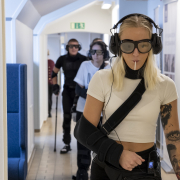
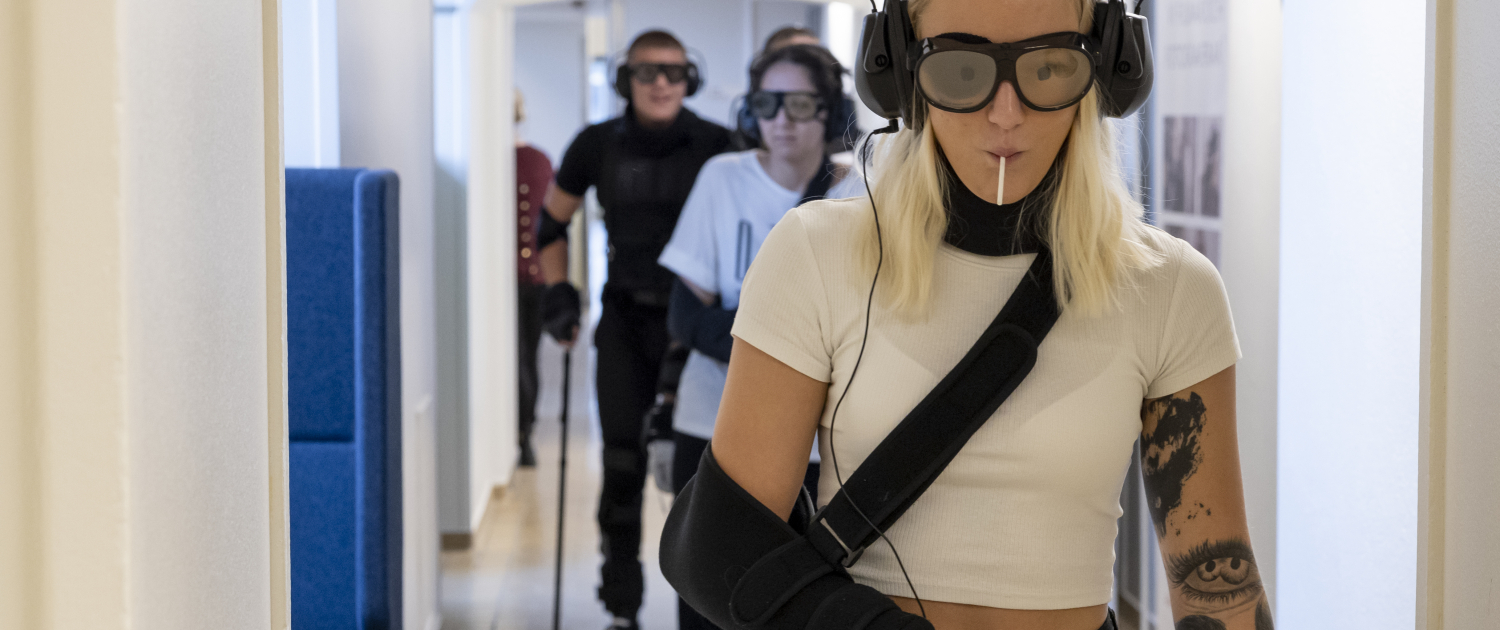
                        During the on-site week, experiential and simulation-based learning plays a key role. You will visit the Skaraborg Health Technology Center and take part in innovative simulations, including experiencing ageing through an age suit in a digitally equipped, highly accessible apartment. Site visits, workshops, and collaborative innovation activities culminate in student presentations and peer evaluation.

                        Competences you will develope

                        By participating in this BIP, you will strengthen your digital health literacy and develop the ability to critically assess and apply digital technologies in health and social care contexts. You will gain experience in identifying problems in real-world health‑care settings and using innovation tools to design technology‑based solutions.

                        The programme emphasises interdisciplinary and transdisciplinary teamwork, helping you understand perspectives ranging from technology developers to end users of digital health solutions. You will also develop competences in international and intercultural collaboration, critical thinking, problem-solving, and constructive peer feedback. These competences are highly relevant both for future studies and for professional roles in health care, technology, and innovation.

                        Learning Outcomes

                        After successful completion of the programme, you will be able to:

                        • Assess your own digital health literacy and competence and identify areas for further development.
                        • Review existing digital technologies in health- and social care, identify challenges, and propose evidence-based and user-centred solutions.
                        • Apply innovation tools and methods to address complex health‑care challenges using digital technology.
                        • Collaborate effectively in international and interdisciplinary teams across health and social care, informatics, and engineering.
                        • Critically evaluate digital health innovations and provide constructive feedback to peers.

                        These learning outcomes are assessed through individual assignments, group innovation projects, active participation in online and on-site activities, student presentations, and structured peer evaluation.

                        BIP's Programme

                        Virtual component (online activities)

                        Start date: End of September / beginning of October 2026   |   End date: after on-site week, November 2026 

                        Schedule / Contents: 

                        Online 1 — before the on-site week (end of September / beginning of October): 

                        • Presentation of learning objectives and course implementation 
                        • Students given two weeks to complete first assignment: presentation of their own field of study within their professional group 

                        Online 2 — before the on-site week: 

                        • Students divided into multidisciplinary small groups (these groups work together throughout the BIP) 
                        • Each student presents their field of study; first assignments presented in small groups 
                        • Individual assignment: assessment of digital health literacy and competence 
                        • Innovation resources provided for review before the on-site week 
                        • Focus on practical arrangements for the on-site week 

                        Online 3 — after the on-site week: 

                        • Students evaluate their own innovations and those of others 
                        • Academic staff present their evaluations 
                        • Students provide feedback and development suggestions for improving the BIP 

                        Physical component (on-site at University of Skövde) 

                        Period: 12-18 april 2027

                        Programme / Contents: 

                        • Introduction to AI as a decision-support tool (engineering, medicine, psychology) 
                        • Team-based applied tasks: theoretical/methodological approach followed by AI-assisted problem-solving phase 
                        • Critical thinking techniques to compare, evaluate and reflect on both approaches 
                        • 3D printing materialisation of final team solutions 
                        • Structured teamwork, guided discussions, formal presentations, and facilitated reflection sessions 
                        • Documented debriefing sessions (psychologist-led, using structured self-reflection forms) 

                        Duration: 5 days = 40 hours of on-site activities 

                        Application requirements

                        To apply for this BIP you must:

                        • Be enrolled at one of the INGENIUM partner universities at the time of the programme.
                        • Apply through your home (sending) institution.
                        • Have a sufficient level of English (typically B2 or equivalent).
                        • Be available to participate in both the virtual and physical components of the BIP.
                        • Meet any specific academic or eligibility requirements indicated for this programme.

                        As this BIP includes a physical mobility period hosted at HiS (Skövde, Sweden), it is intended for students coming from other INGENIUM partner institutions. Therefore, students enrolled at HiS are not eligible to apply for this specific BIP.

                        How to apply

                        Applications for this BIP are managed by each INGENIUM partner university.

                        To apply, please select your home university from the list below and follow the application process indicated on their page. Each institution has its own application platform and procedure.

                        BIP School Community Development and Youth Work Approaches

                        Virtual Sessions:
                        Academic year 2026-2027

                        Credits:
                        3 ECTS

                        BIP Type:
                        Transversal / Social Sciences

                        Fields of Study:
                        Social Sciences — Community Education, Social Care, Community Development, Youth Work, School Community Development, Well-being in Education

                        Level of Experience:
                        Bachelor 

                        Sending partners:
                        MTU(+ other INGENIUM Universities)

                        Available Places: 25 total
                        Max 6 per partner university  

                        BIP Coordinator

                        Katri Schadewitz (Academic Coordinator),  katri.schadewitz@xamk.fi

                        Mirka Lähdeniemi (Academic Coordinator)

                        BIP School Community Development and Youth Work Approaches

                        May 10 - May 14

                        About the programme

                        This BIP, School Community Development and Youth Work Approaches, is built around lectures, workshops and workplace visits. During the BIP, students become familiar with various practical exercises and meet local school youth workers. Students work in multicultural and multiprofessional teams. 

                        Main themes covered: 

                        • Good school community — theory, action, practices 
                        • School-based youth work — theory, action, practices 
                        • Peer and group relationships — theory, action, practices 
                        • School satisfaction — theory, action, practices
                        • Case Saimaanportti: exploring the well-being work and the promotion of community spirit at comprehensive school (classes 1 to 9) 
                        • Case Esedu: well-being work at vocational college 
                        • Work in multicultural and multiprofessional student teams 

                        The BIP has a transversal focus and is not embedded in a curriculum. It targets Community Educator students, Social Care students, and Community Development students. 

                        How you will learn

                        • Lectures (theory on school community development, youth work, peer relationships, school satisfaction) 
                        • Practical workshops (action and practice components for each theme) 
                        • Workplace visits and meetings with local school youth workers 
                        • Case study analysis (Saimaanportti and Esedu) 
                        • Multicultural and multiprofessional team work 
                        • Experiential and place-based learning in Finnish educational and community settings 

                        Competences you will develope

                        • School community development and community spirit promotion
                            • School-based and community youth work theory and practice 
                            • Peer and group relationship dynamics in educational settings 
                            • Well-being in school and vocational college environments 
                            • Multicultural and multiprofessional collaborative teamwork 
                            • Experiential learning through workplace visits and meeting local practitioners 
                            • Intercultural competence across Community Education, Social Care and Community Development disciplines 

                                    Learning Outcomes

                                    After successful completion of the BIP, students will be able to: 

                                    • LO1. Explain and apply theories, approaches and practical methods of school community development and school-based youth work in diverse educational contexts 
                                    • LO2. Analyse peer and group relationship dynamics and school satisfaction, connecting theory with practical action in school community settings 
                                    • LO3. Evaluate real-world well-being and community development practices through case study analysis (Saimaanportti and Esedu) and workplace visits with local practitioners 
                                    • LO4. Collaborate effectively in multicultural and multiprofessional international student teams, drawing on complementary expertise from community education, social care and community development 
                                    • LO5. Reflect critically on different European approaches to school community development and youth work, connecting learning from the BIP with their own professional and academic background 

                                            BIP's Programme

                                            Virtual component (online activities)

                                            Period: During academic year 2026-2027

                                            Schedule / Contents: 

                                            As part of the blended format, pre- and/or post-mobility online activities are expected to be defined by Xamk for this BIP.

                                            Students must complete at least one Micro-Credential (three × 2 ECTS options available from the host institution) before joining the BIP intensive week.

                                            Physical component (on-site at Xamk, Finland) 

                                            Period: 10-14 May 2027

                                            Programme / Contents: 

                                            • Lectures on school community development, youth work, peer and group relationships, and school satisfaction 
                                            • Workshops: practical exercises on all main themes (theory, action, practices) 
                                            • Workplace visits: students meet local school youth workers in authentic professional settings 
                                            • Case study — Saimaanportti: well-being work and promotion of community spirit at a comprehensive school (classes 1–9) 
                                            • Case study — Esedu: well-being work at a vocational college 
                                            • Multicultural and multiprofessional team work throughout the week 

                                                    Application requirements

                                                    To apply for this BIP you must:

                                                    • Be enrolled at one of the INGENIUM partner universities at the time of the programme.
                                                    • Apply through your home (sending) institution.
                                                    • Have a sufficient level of English (typically B2 or equivalent).
                                                    • Be available to participate in both the virtual and physical components of the BIP.
                                                    • Meet any specific academic or eligibility requirements indicated for this programme.

                                                    Students must complete at least one Micro-Credential (three × 2 ECTS options available from the host institution) before joining the BIP intensive week.

                                                    How to apply

                                                    Applications for this BIP are managed by each INGENIUM partner university.

                                                    To apply, please select your home university from the list below and follow the application process indicated on their page. Each institution has its own application platform and procedure.