14 innovative teaching and learning methodologies developed in INGENIUM! Join the webinars to learn more
Now it’s time to get to know the innovative teaching and learning methodologies developed in INGENIUM and the projects behind them. The projects were selected for funding through the third Joint Education Lab Projects call.
Educators, teachers and higher education professionals are warmly invited to join the upcoming INGENIUM Education Lab webinars this September. Across five lunchtime sessions, colleagues from INGENIUM universities will share inspiring results from their joint Education Lab projects — from inclusive assessment and hybrid learning spaces to AI-supported teaching, green chemistry education, arts-based community learning and more.
Each project talks about their results in a 20-minute presentation, which is followed by questions and discussion. You can have a chance to network with the creators and ask questions.
You can join the webinar at any time, so if your schedule is busy, but you are interested in a specific project, you can join the webinar only to hear their presentation. Remember to register to the webinars to get the links to join. Note that every webinar has its own link to join. Join the webinars to discover practical ideas, fresh pedagogical approaches and examples of international collaboration in action.
See the schedule and read more about the projects below
Tuesday 1 Sept., 12:00-13:30 CEST
At 12:00–12:30 CEST: From MOOC to Action Research and EBOOK: Rewriting Assessment Narratives Through Research-Informed Practice: Insights for European University Higher Education Alliances
Assessment sits at the heart of designing learning environments. It shapes what students study, how they engage with knowledge, and ultimately who succeeds and who is excluded. Yet despite its central role, assessment design often remains surprisingly under-theorised, guided by tradition, convenience, or institutional habit rather than by clear conceptual frameworks, discourse awareness, or research-informed design principles. As this book argues, assessment is not merely a tool for measuring learning or finding ways of detecting AI use. It is a pedagogical architecture that structures opportunities to demonstrate knowledge, participate in disciplinary practices, and develop academic identity.
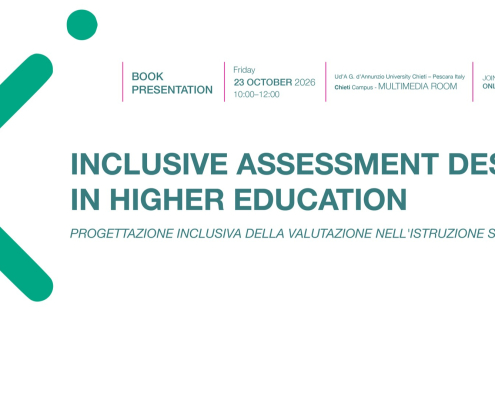
The open access peer-reviewed Ebook we edited, designed and authored entitled Inclusive Assessment Design in Higher Education: Feedback, Partnership, and AI-Supported Design addresses a significant gap in contemporary educational discourse. While universities increasingly speak about inclusion, equity, and innovation, there remains a lack of coherent guidance on how these aspirations translate into concrete assessment design decisions. Many educators face practical questions for which the literature provides fragmented answers: How can assessment systems become genuinely inclusive without lowering intellectual standards? How can feedback move beyond commentary toward meaningful learning processes? How can assessment design respond constructively to the emergence of generative AI while preserving academic integrity and student agency?
This open access book responds to these challenges by bringing together theoretical insight, pedagogical models, and evidence-based case studies developed across the INGENIUM European University Alliance. A distinctive strength of this volume lies in its architecture. Each chapter moves systematically from scholarly foundations, to conceptual frameworks, to practical design models, and finally to applied case studies. For university teachers, programme leaders, educational developers, and policy makers, this book offers more than critique. It provides a language for thinking about assessment as a complex pedagogical system and equips educators with design literacy to rethink entrenched practices. By integrating perspectives from assessment research, multiliteracies, feedback literacy, Universal Design for Learning, and action research, the book situates inclusive assessment within a broader transformation of higher education pedagogy with a clear message: inclusive assessment does not emerge accidentally. It must be designed, researched, and continuously refined.
Kallia Katsampoxaki-Hodgetts, UOC; Thomas O’Mahony, MTU; Cai Weaver, Xamk; Mercedes Bravo Rebolledo, URN; Oana Colt, TUIASI
At 12:30-13:00 CEST: Immersive Design Thinking Lab (iDT-Lab): A Game-Based Simulation for Transnational Pedagogical Innovation
The Immersive Design Thinking Lab (iDT-Lab) is an innovative virtual learning environment that helps students develop innovation and problem-solving skills through hands-on experience. Using a game-based “Virtual Treasure Hunt” approach, students take on the role of innovation consultants and work through real-world challenges by applying Design Thinking methods.
At 13:00–13:30 CEST: Multimodal Artefacts for Reflective Chemistry Learning (MARCheL)
How can laboratory assessment move beyond traditional lab reports? MARCheL introduces an innovative approach that combines reflective practice, co-created assessment rubrics, peer feedback and student-produced multimodal artefacts to enhance learning in STEM laboratories. Building on the successful “MCRs meet Multimodal Assessment” initiative at the University of Crete, the project brings together partners from Greece (UoC) and Spain (OVD) to explore how participatory and digital assessment can strengthen student engagement, scientific communication, and intercultural collaboration. During this webinar, the consortium will present the project’s pedagogical framework, implementation strategy and vision for developing transferable teaching practices across the INGENIUM Alliance.
Ass. Prof Constantinos Neochoritis, UoC; Prof Raquel Maria Gonzalez Soengas, UNIOVI
Wednesday 2 Sept., 12:00-13:30 CEST
At 12:00–12:30 CEST: Active Breaks in University Teaching to Improve Student and Faculty Satisfaction – ActivaDos Project
This project aims to design, implement and investigate the use of short physical activity “snacks” (Active Breaks) during the delivery of predominantly “sedentary” university lessons that usually foster routine, monotony, or even disengagement.
Javier Fernandez-Rio, UNIOVI
At 12:30-13:00 CEST: ESCENA (Educational and Social Laboratory for Community Interventions through the Arts)
This webinar presents Education Lab ESCENA (Educational and Social Laboratory for Community Interventions through the Arts), an international project involving partners from Spain, Sweden, Italy, and Germany. Through arts-based learning and action research, students, teachers, professionals, and local residents collaborate to explore how theatre, music, visual arts, drama, and other creative practices can strengthen community, belonging, and social wellbeing across generations and national borders. Drawing on experiences from an intensive week-long learning laboratory in northern Spain, the webinar will share insights into how collaborative artistic engagement can help address involuntary loneliness and foster more inclusive and connected communities.
The project is coordinated by Professor José Antonio Labra Pérez (Spain) and Professor María Paula Fernández García (Spain), and the webinar will be presented by Kristina Carlén (Sweden).
At 13:00–13:30 CEST: Bridging In-School and Out-of-School Literacy Practices: An Online Toolkit for Teachers
Bridging In-School and Out-of-School Literacy Practices: A Useful Online Toolkit for Teachers is an educational research project developed through the collaboration between the University of Crete and the University of Oviedo under the Educational Lab Project of the INGENIUM European University. The project is grounded in the well-documented mismatch between students’ in-school and out-of-school literacy practices, which often limits meaningful learning and perpetuates educational, and broader social, inequalities. To address this challenge, the project has developed a research-based, user-friendly online toolkit that supports teachers in investigating their students’ literacy practices across different contexts and incorporating these insights into classroom teaching. The toolkit encourages teachers to adopt the role of reflective practitioners and educational researchers, fostering student-centered, inclusive, and socially responsive pedagogies that recognize the diverse experiences, interests, and cultural backgrounds students bring to school. Available in Greek, English, and Spanish, the toolkit aims to promote educational innovation, support teachers’ professional development, and contribute to both research and educational policymaking by advancing more equitable and meaningful literacy education across diverse educational and cultural contexts.
Vasia Tsami, UOC
Friday 4 Sept., 12:00-13:30 CEST
At 12:00–12:30 CEST: Inclusive & Flexible Learning Spaces Academy: Co-Designing Hybrid Environments for Pedagogical Innovation and Accessibility
The INGENIUM Education Lab’s Inclusive & Flexible Learning Spaces Academy brings together MTU (Ireland), HiS (Sweden), Xamk (Finland), and TUIASI (Romania) to rethink hybrid and inclusive learning environments. This webinar presents the ongoing work on practical outcomes regarding: guidelines for hybrid teaching spaces and an inclusive learning environments audit tool, both grounded in Lifeworld Analysis. Join us to explore what makes a learning space work — technically, pedagogically, and for everyone in the room.
Peter Fogel, HIS; Strengell Matti, Xamk; Katie Power MTU; Ancuta Rotaru, TUIASI
At 12:30-13:00 CEST: Virtualising the existing chemical engineering teaching hall to offer immersive practical training sessions
As part of the technological Bachelor’s program in Chemical and Process Engineering at the University of Rouen Normandy (URN), students carry out practical lab work in a process engineering teaching hall to apply concepts learned in tutorials. Virtualization offers the opportunity to support students beyond the physical lab environment, allowing them to deepen their understanding or catch up on missed practical sessions. Combined with gamification and immersive learning through VR headsets, this approach promotes active, student-centered learning and increases motivation, engagement, and curiosity. In cooperation with the Chemical and Process Engineering Department at URN, the XR-Lab for Extended Reality at Karlsruhe University of Applied Sciences is developing a VR Chemical Lab application focused on a production unit. The project serves as a feasibility study and represents the main objective of this collaboration.
At 13:00–13:30 CEST: TEAM-AI: Preparing Students for AI-Augmented Professional Workflows
Artificial intelligence is rapidly changing how students learn and how professionals work. This webinar presents the first outcomes of the INGENIUM TEAM-AI Joint Education Lab, including results from a cross-partner student survey on AI use in higher education and the development of a TEAM-AI classroom assistant. We will discuss current challenges of AI in teaching and demonstrate an approach that promotes transparent, responsible and industry-relevant use of AI as a teammate in student learning.
Speakers Nina Hunter & Martin Klepal, MTU
Tuesday 8 Sept., 12:00-13:30 CEST
At 12:00–12:30 CEST: From UP2Green to UP2Learn: A Green Chemistry Learning Lab for Research-Based Education (UP2Learn).
UP2Learn is an INGENIUM Education Lab project that transforms the research outcomes of the UP2Green initiative into an innovative joint microcredential in green chemistry. Developed collaboratively by the University “G. d’Annunzio” of Chieti-Pescara (Italy), the University of Rouen-Normandy (France) and the Gheorghe Asachi Technical University of Iași (Romania), the project offers research-based and interdisciplinary learning in waste valorization, catalysis, CO2 capture, and sustainable chemical processes. Designed for doctoral students and early-career professionals, UP2Learn promotes transferable skills aligned with the European green and circular economy while strengthening educational cooperation within the INGENIUM Alliance.
Lucia Tonucci, Francesca Coccia, Ud’A; Kateryna Fatyeyeva, URN; Stefano De Luca, UNIOVI; Igor Cretescu, Gabriela Socreanu, Ramona Tataru, TUIASI
At 12:30-13:00 CEST: Living Landscape Lab.
Living Landscape Lab is an interdisciplinary collaboration between the University of Oviedo and the University of Skövde that explores how rural landscapes can become living environments for learning. Building on the ConCiencia Histórica programme, the project understands heritage not as a collection of sites or objects, but as a dynamic relationship between places, communities, and knowledge.
Through collaboration with schools, local communities and researchers, the Lab co-design and test new educational approaches in which the landscape itself becomes the classroom. A digital learning environment will be designed not as an end in itself, but as a tool to prepare, support, document, and extend these place-based learning experiences. By combining participatory heritage education with interactive storytelling and immersive media, Living Landscape Lab aims to developp a model for landscape-based learning that can inspire educational innovation across the INGENIUM alliance.
Jeff Alberghi, UNIOVI
At 13:00–13:30 CEST: Enhancing Work-Integrated-Learning through Collaborative Inquiry: A Cross-European Action Research Micro-Credential
Building on the findings of the INGENIUM-supported i4 Innovative Industry Internships with INGENIUM research group, this project aims to create a cross-institutional learning community for academic staff involved in student work placements.
The project will support evidence-informed innovation in placement education and create a sustainable European network of educators committed to enhancing the quality, inclusivity, and impact of internships and work-based learning.
Wednesday 9 Sept., 12:00-13:30 CEST
At 12:00–12:30 CEST: From UP2Green to UP2Learn: A Green Chemistry Learning Lab for Research-Based Education (UP2Learn).
The goal of the project is to continue a previous Ingenium initiative, ENRICH (Enhancing the Digital Inclusivity of Cultural and Natural Heritage), led by Dr. Rossi. Building on the theoretical framework developed in that previous research project, the new proposal, led by Dr. Rayón, is to create or adapt artwork by young student artists from Asturias, Spain, using digital tools such as 3D scanning and printing, while taking into account the inclusion criteria developed at the University of Pescara. This proposal is also complemented by work on games and storytelling developed by the PlayLab at the University of Skövde, which will organize a game jam based on the artworks created in Spain and working within the inclusion criteria developed in Italy. This will bring the proposal to a close, culminating in an exhibition that overcomes as many barriers as possible, making it accessible to everyone without exception.
Lars Kristensen, HIS; Emilio Rossi, UdA; Beatriz Rayón, UNIOVI
At 12:30-13:00 CEST: Complementarity of experimental and modelling approaches for designing a safe reactor: creation and design of collaborative course
Chemical Engineering Bachelor of Technology program at University of Rouen RN focuses on Quality, Environment, and Process Safety control. Particularly, the safety of chemical reactions and pressurized reactors is studied using calorimetric equipments. This process safety topic is also taught at HKA. The modeling of safety devices to size them, predict their behavior, and optimise their use is emphasized. The process safety aspects of each university appear complementary. The joint development project aims to create synergy between these complementary approaches through a shared poster presentation and practice-oriented collaborative student projects.
Dr. HDR Imed Ben Talouba, URN; Prof. Dr.-Ing. Jens Denecke, HKA; Nicolas Brodu, URN
The webinars are also recorded, and the recording will be added to our Education Lab playlist on YouTube.
INGENIUM Education Lab launched a Joint Education Lab Projects initiative to promote joint innovation projects. This initiative aims to fund collaboration between different faculty, educators, and RDI specialists in two or more INGENIUM universities to develop advanced teaching methods, micro credentials, courses, and educational products.
Latest News
https://ingenium-university.eu/wp-content/uploads/2026/07/130225_Ingenium_kuva-Pihla-Liukkonen-Kontrastia-20-1-scaled.jpg
1440
2560
Kivinen Siru
https://ingenium-university.eu/wp-content/uploads/2024/03/ingenium-main-logo.svg
Kivinen Siru2026-07-30 14:35:392026-07-30 14:35:3914 innovative teaching and learning methodologies developed in INGENIUM! Join the webinars to learn more
https://ingenium-university.eu/wp-content/uploads/2024/10/The-First-Call-for-INGENIUM-PhD-Scholarships-Is-Now-Open-1.jpg
864
1536
Chiara Pintus
https://ingenium-university.eu/wp-content/uploads/2024/03/ingenium-main-logo.svg
Chiara Pintus2026-07-22 13:19:252026-07-22 14:05:02INGENIUM launches its 2026 Call for Joint PhD Programmes
https://ingenium-university.eu/wp-content/uploads/2026/07/10-days-summer-2026-1.jpg
864
1536
Kivinen Siru
https://ingenium-university.eu/wp-content/uploads/2024/03/ingenium-main-logo.svg
Kivinen Siru2026-07-21 11:21:252026-07-21 11:21:25Get inspired by our educators who shared their teaching methods at the Staff Academy in Sofia
https://ingenium-university.eu/wp-content/uploads/2026/07/ed.jpg
852
1280
Messalina Muscalu
https://ingenium-university.eu/wp-content/uploads/2024/03/ingenium-main-logo.svg
Messalina Muscalu2026-07-16 11:31:012026-07-20 13:48:57The INGENIUM – ED selected for funding by the European Commission: INGENIUM takes a major step towards the European Degree Label
https://ingenium-university.eu/wp-content/uploads/2026/07/evaluetion.jpg
852
1280
Alberto Esparza
https://ingenium-university.eu/wp-content/uploads/2024/03/ingenium-main-logo.svg
Alberto Esparza2026-07-09 15:17:402026-07-16 11:27:15INGENIUM Becomes the First Alliance to Complete the Prestigious Institutional Evaluation of the European University Association
https://ingenium-university.eu/wp-content/uploads/2026/07/Cover-photo-scaled.jpg
1703
2560
Alberto Esparza
https://ingenium-university.eu/wp-content/uploads/2024/03/ingenium-main-logo.svg
Alberto Esparza2026-07-09 14:39:052026-07-09 14:39:05INGENIUM Secures Two More Years of Erasmus+ Funding for its Next Phase
https://ingenium-university.eu/wp-content/uploads/2026/06/Social-Sciences-Public-Policy.jpg
1365
2048
Chiara Pintus
https://ingenium-university.eu/wp-content/uploads/2024/03/ingenium-main-logo.svg
Chiara Pintus2026-06-19 14:00:132026-06-22 12:05:38Call for INGENIUM PhD Mobility and Co-Supervision Scholarships is now open!
https://ingenium-university.eu/wp-content/uploads/2026/06/1781682971502.jpeg
1152
2048
Alberto Esparza
https://ingenium-university.eu/wp-content/uploads/2024/03/ingenium-main-logo.svg
Alberto Esparza2026-06-19 12:22:242026-06-22 13:53:36INGENIUM Meets in Rouen to Plan a More Durable Phase of European University Cooperation
South-Eastern Finland University of Applied Sciences
https://ingenium-university.eu/wp-content/uploads/2026/06/healt-promotion-MC.jpg
864
1536
Kivinen Siru
https://ingenium-university.eu/wp-content/uploads/2024/03/ingenium-main-logo.svg
Kivinen Siru2026-06-12 16:44:442026-06-12 16:44:44Apply for INGENIUM’s on-site Health Promotion Micro-Credential and spend a week in Spain in July!